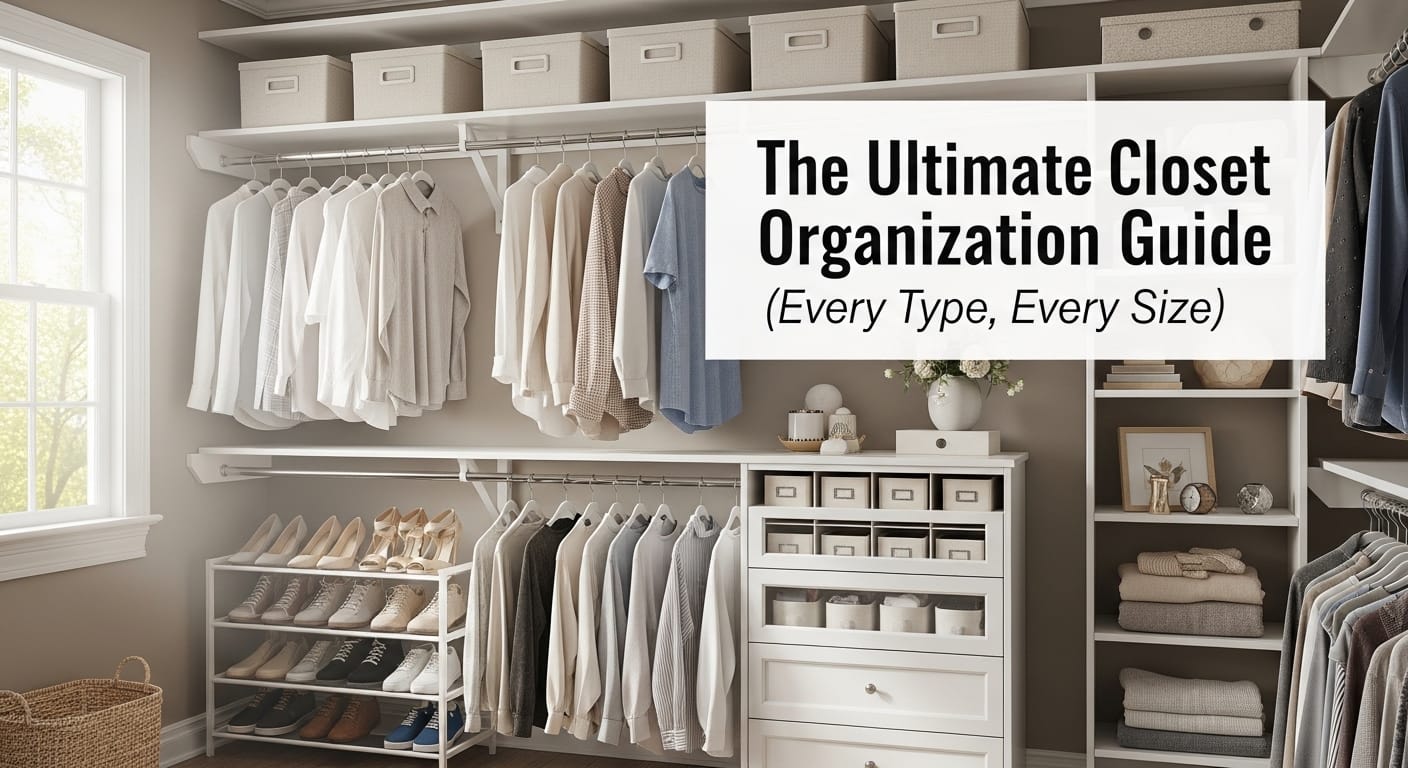
A chaotic closet rarely stays that way by accident. Without a clear system, clothes pile up, items disappear, and space runs out fast. The good news: effective closet organization doesn’t require a renovation.
This guide covers 20 practical solutions suited to every closet type—from tiny reach-in spaces to roomy walk-ins. Each approach is chosen for its real storage value and ease of daily use.
Whether storage is tight or space is plentiful, the right combination of tools makes a lasting difference.
In this post you’ll find:
- Hanging rod systems that double your vertical storage capacity instantly
- Clear bins and labeled containers that make locating items effortless
- Shelf dividers and organizers that keep folded clothing neatly separated
- Over-the-door organizers for accessories, bags, and small folded items
- Shoe storage solutions designed for floors, doors, and tight spaces
- Drawer inserts and dividers that transform cluttered shelves into structured zones
This post contains affiliate links. As an Amazon Associate I earn from qualifying purchases, at no extra cost to you.
01 — Double Hanging Rod Extenders
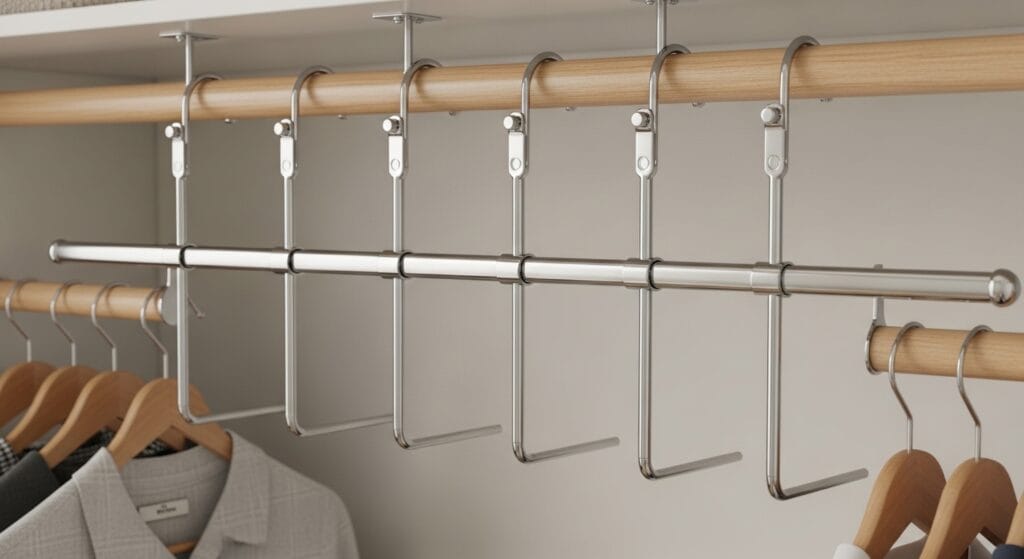
Short garments—blazers, blouses, folded trousers—only use half of a standard rod’s height. A hanging rod extender clips below the existing bar, converting unused lower air into a second hanging lane.
This approach nearly doubles hanging capacity without any hardware installation. It works especially well in reach-in closets where floor space is already limited by shoes or baskets.
02 — Slim Velvet Hangers
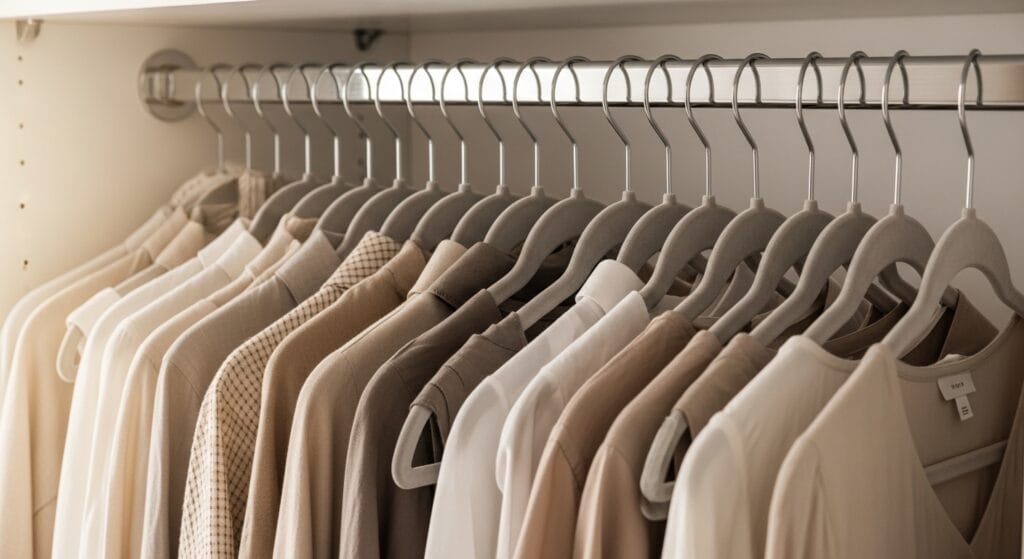
Switching from bulky plastic hangers to slim velvet versions can free up a third of a rod’s horizontal length. The non-slip surface also prevents delicate fabrics from sliding off or stretching at the shoulders.
Uniform hangers also create a visual calm that makes scanning and selecting clothing much faster—a small change with noticeable daily impact in everyday wardrobe management.
03 — Shelf Dividers
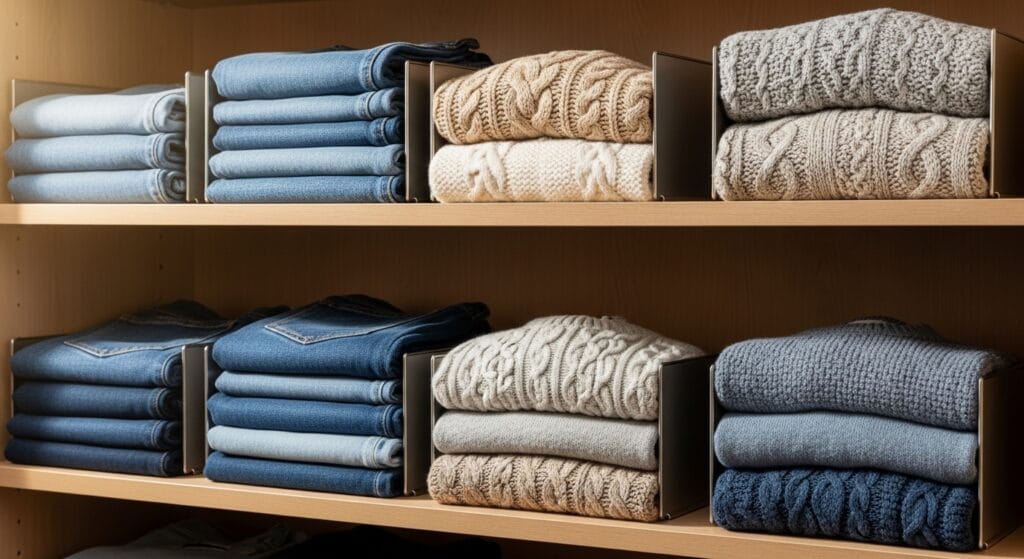
Folded stacks collapse without boundaries. Shelf dividers slide onto existing shelving and create vertical walls that keep sweaters, denim, and linens from toppling into each other.
They’re especially practical on wide shelves shared between multiple categories. Items stay upright, stacks stay visible, and restocking after laundry takes seconds rather than full reorganization.
04 — Stackable Clear Storage Bins
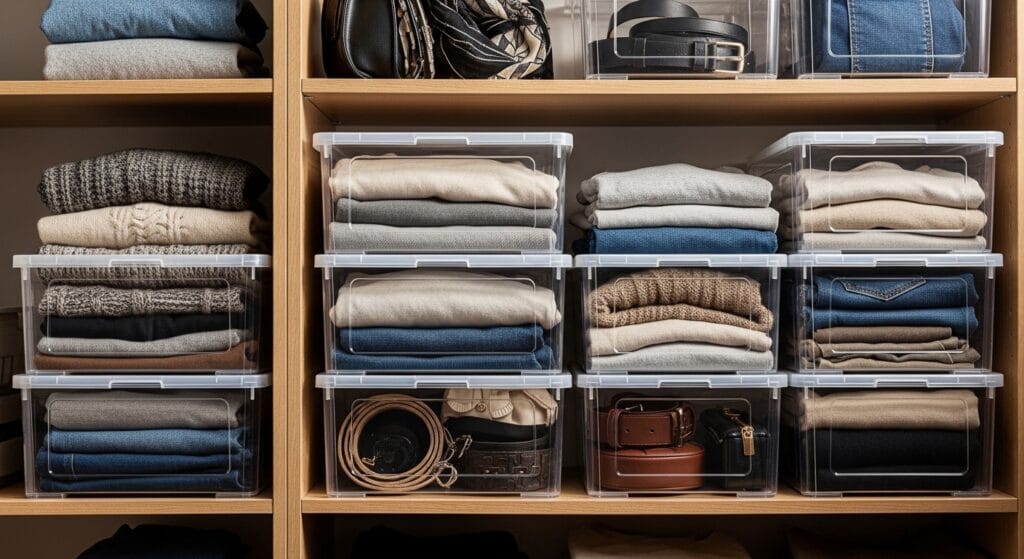
Visibility eliminates the habit of emptying shelves to find one thing. Clear bins let you spot contents immediately, which reduces clutter caused by repeated rummaging through stacked items.
Stackable designs use vertical shelf height efficiently. Seasonal items, accessories, or off-rotation clothing can be stored in labeled bins and stacked without blocking access to the items below.
05 — Tiered Floor Shoe Rack
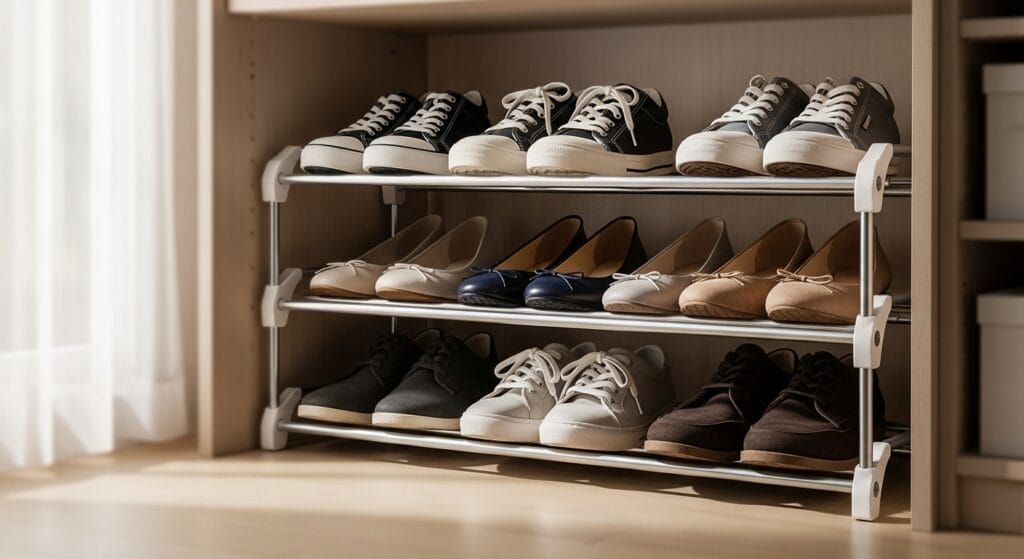
Shoes scattered across a closet floor are both a tripping hazard and a space drain. A tiered rack consolidates pairs into a compact footprint while keeping every shoe accessible without digging.
Angled tiers allow more pairs per row than flat shelving. For narrow closets, a vertical tower-style rack along one wall uses floor space efficiently without blocking hanging garments above.
06 — Over-the-Door Pocket Organizer
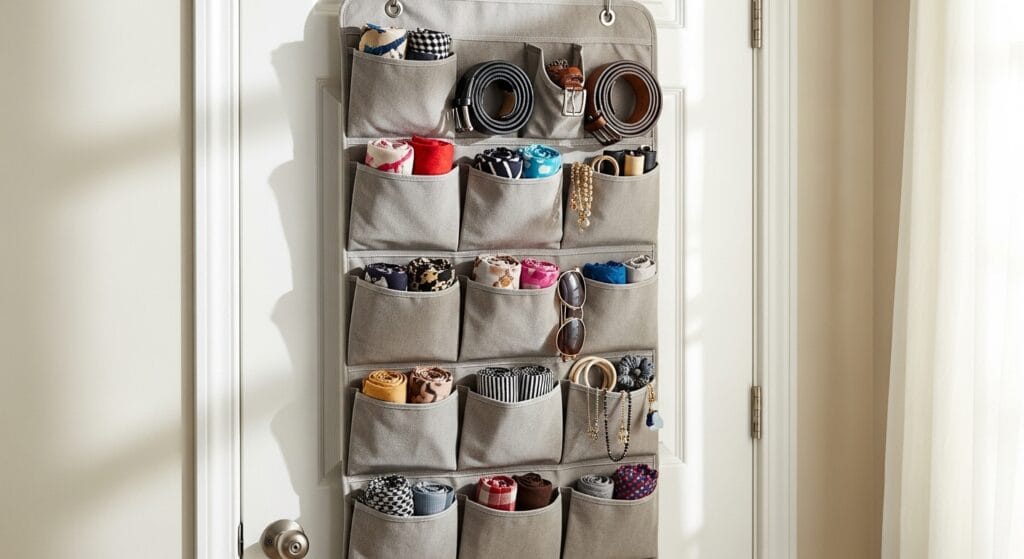
Closet doors are often treated as dead space. A hanging pocket organizer turns the entire door surface into useful storage for accessories, scarves, belts, or small folded items.
No tools or drilling required—most versions hook directly over the door panel. This is one of the most accessible additions for renters or anyone avoiding permanent closet modifications.
07 — Adjustable Drawer Dividers
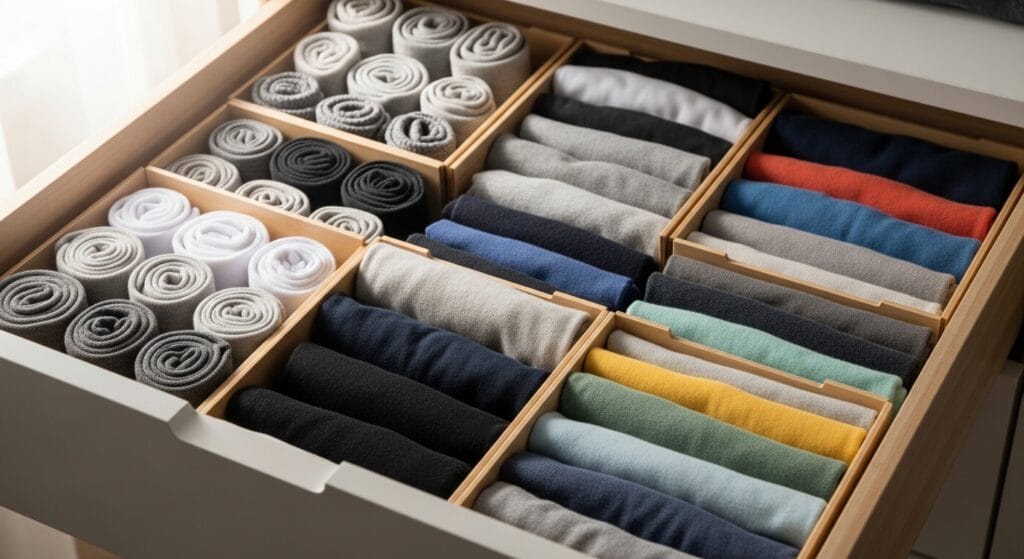
Mixed drawers are a common frustration—everything gets tangled and categories blur together over time. Adjustable dividers create firm lanes that keep each type of clothing separated and easy to locate.
Expandable versions fit most drawer widths without cutting. Combined with vertical folding methods, dividers let each item remain visible from above rather than buried under stacked layers.
08 — Labeled Fabric Storage Bins
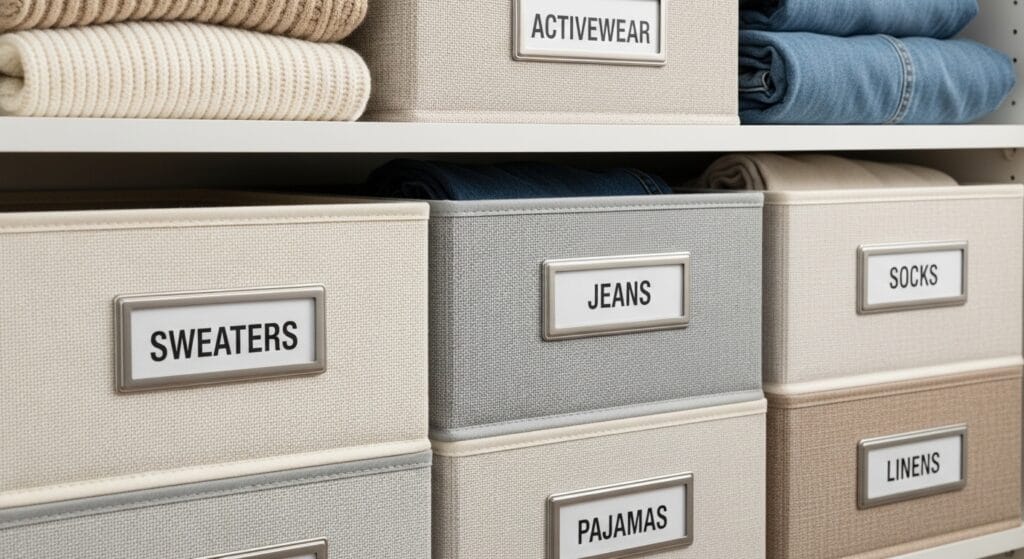
Large open shelves without structure tend to collect random items over time. Fabric bins give each category a defined home and make it easy to return items to the right place consistently.
Labels remove guesswork entirely. Whether shared with a partner or used for children’s closets, labeled bins support the kind of consistent household organization habits that are easier to maintain long term.
09 — Modular Freestanding Shelving
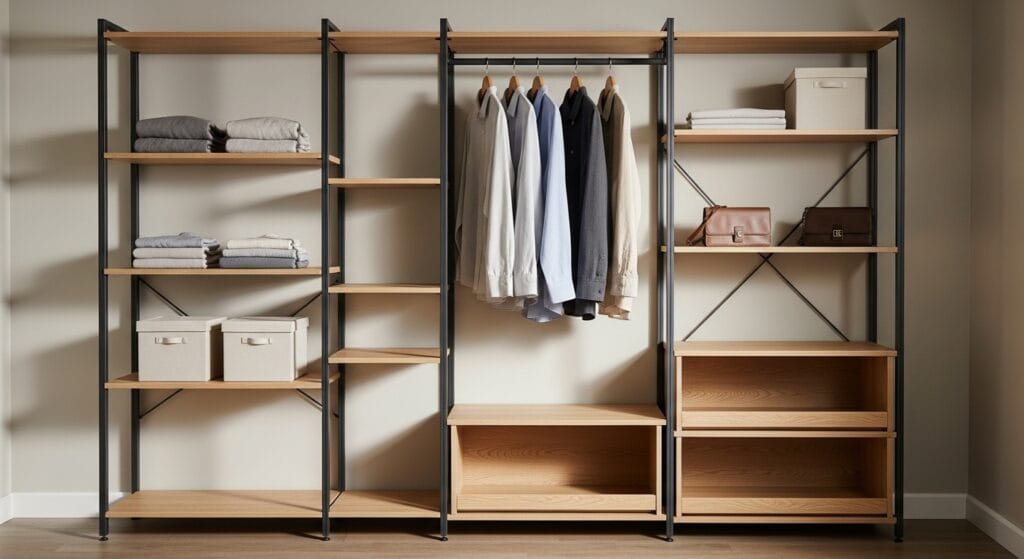
Walk-in closets with only a single rod and one shelf leave the majority of floor and wall space unused. A modular shelving system fills that void with customizable combinations of shelves, rods, and drawers.
Freestanding units require no wall anchoring, making them a flexible choice for renters. Shelves and components can be rearranged as storage needs shift across different seasons or life stages.
10 — Hanging Fabric Shelf Organizer

For closets with no built-in shelving, a hanging fabric organizer provides immediate structure without any installation. It clips onto an existing rod and drops down into tiers for folded clothing.
Each tier acts as a dedicated compartment—sweaters on one level, bags on another, jeans on a third. The compact format suits deep reach-in closets where floor shelving is impractical.
11 — Clear Drop-Front Shoe Boxes
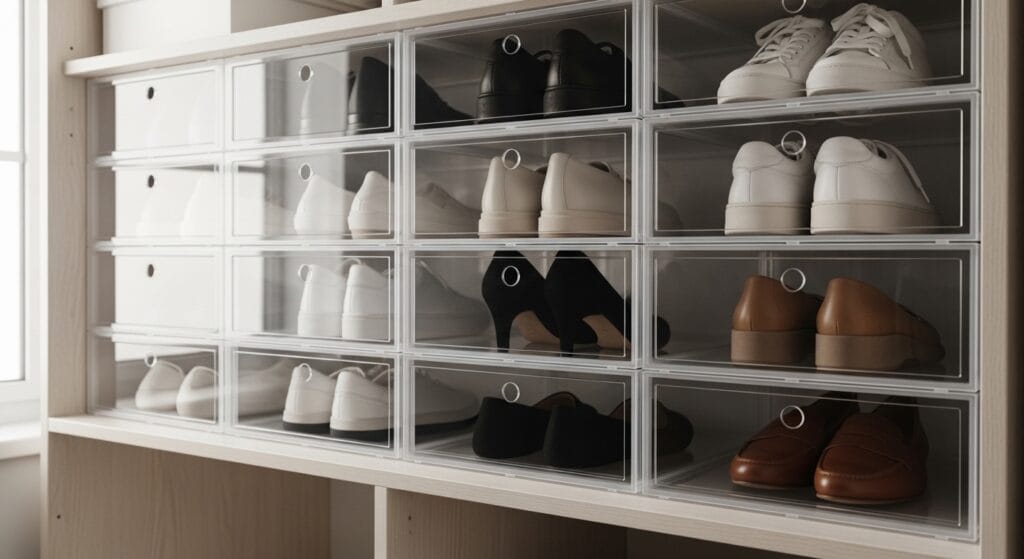
Standard shoe racks can struggle to handle heels, boots, or delicate sneakers without damage. Clear stackable shoe boxes solve this by giving each pair a protected individual compartment.
The drop-front design means you can access any pair without unstacking the whole column. Stacked uniformly, they also create a clean visual line that makes closet shelving look considerably more structured.
12 — Rotating Belt and Tie Rack
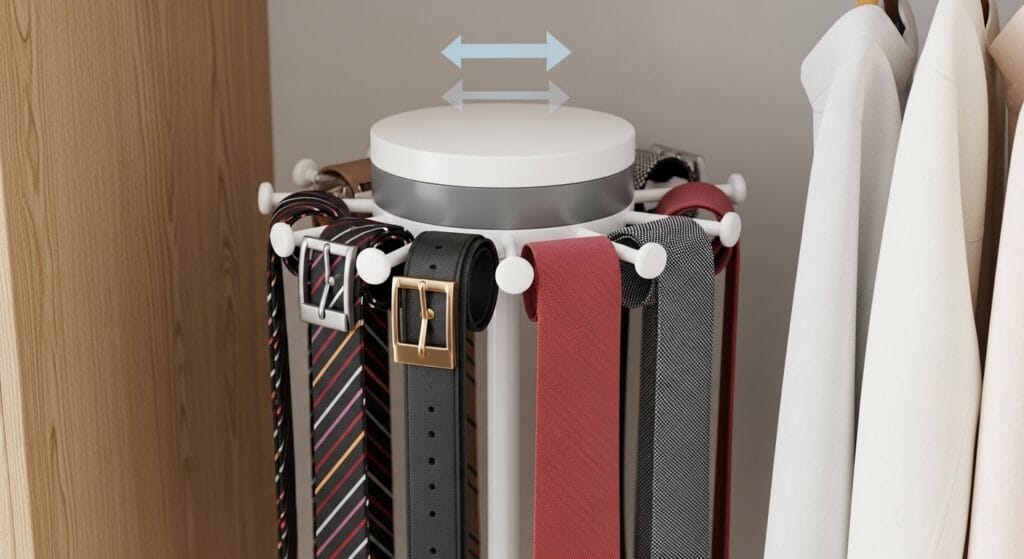
Belts and ties are among the most consistently misplaced items in any wardrobe. They tend to bunch in drawers, tangle on hooks, or vanish entirely when needed.
A dedicated rotating rack mounts to the wall or inside a cabinet door and gives each item its own hook. Spinning access makes selection quick, which reinforces the habit of putting items back correctly.
13 — Vacuum Compression Storage Bags
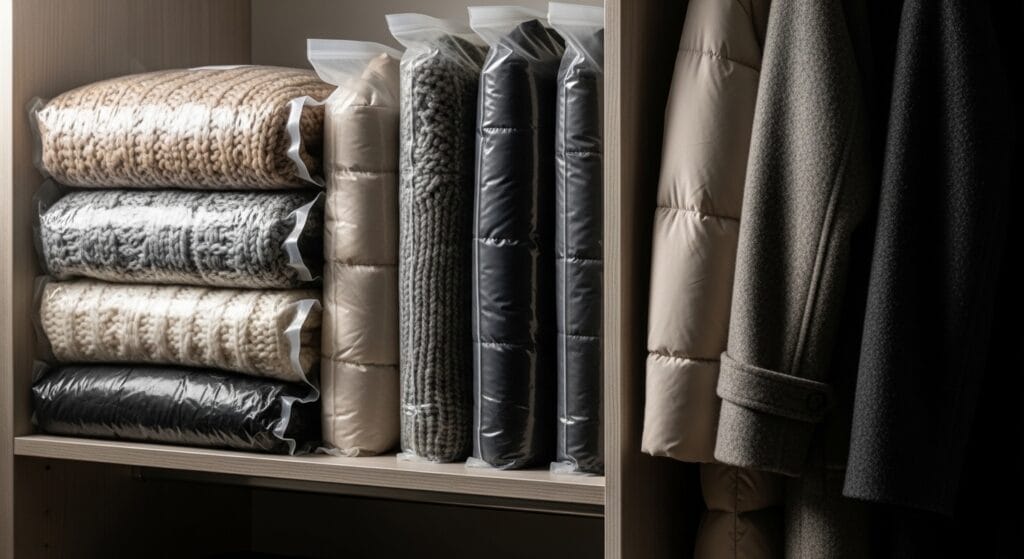
Bulky seasonal items—winter coats, heavy blankets, thick sweaters—consume disproportionate shelf space during off-seasons. Vacuum bags compress these items to a fraction of their original volume.
This frees shelf space for actively worn clothing without requiring additional furniture. Bags stack flat, label cleanly, and protect contents from dust and moisture during longer storage periods.
14 — Adhesive Hook Strips
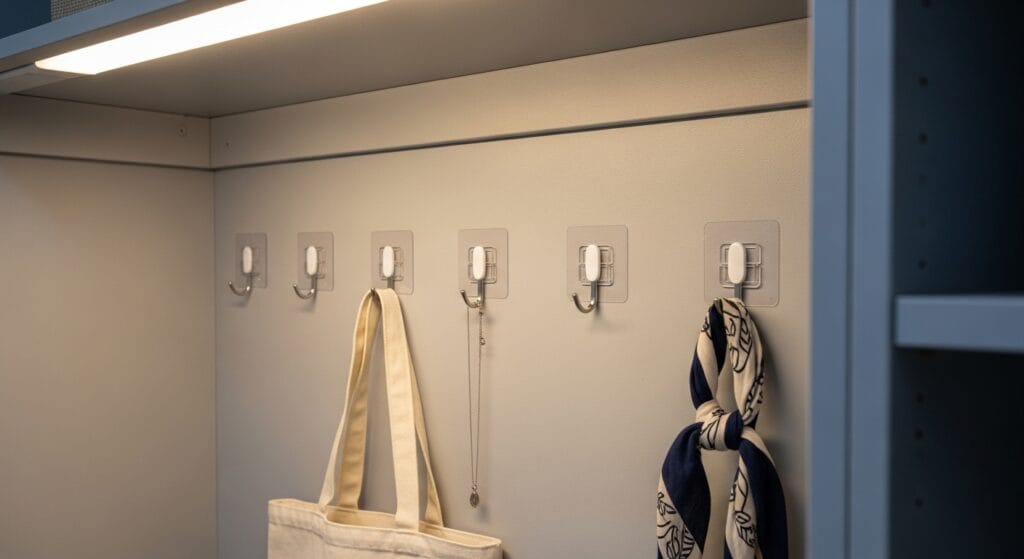
Not everything belongs on a hanger or shelf. Bags, robes, hats, and frequently grabbed items work far better on a wall hook where they’re immediately visible and accessible.
Adhesive hook strips install without drilling and hold significant weight. Placed inside closet walls or on side panels, they use surfaces that would otherwise remain completely empty and wasted.
15 — Hanging Jewelry Organizer

Tangled jewelry is one of the most common and frustrating closet problems. A hanging organizer with individual pockets keeps necklaces separated, earrings paired, and bracelets easy to scan.
Hung from the rod or behind the door, it takes up almost no floor or shelf space. Transparent panels let you see every piece at a glance, which cuts down on daily decision time considerably.
16 — Under-Shelf Wire Baskets
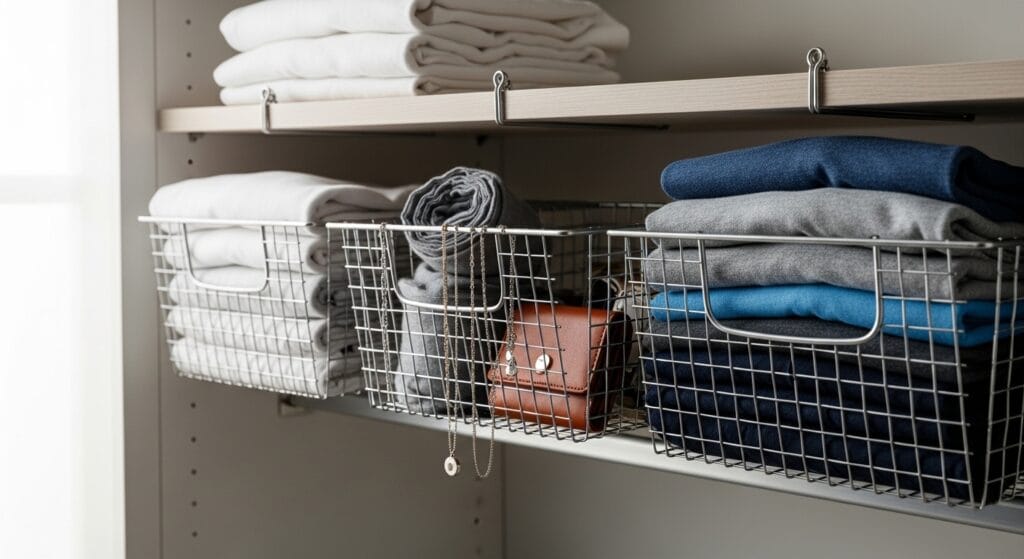
The gap between the underside of a shelf and the items below it is consistently overlooked. Under-shelf wire baskets clip onto existing shelving and turn that gap into usable storage.
They’re well-suited for lightweight items—folded t-shirts, clutches, small accessories, or toiletries in a closet with bathroom adjacency. No permanent installation required; they slide on and off without tools.
17 — Cascading Hanger Hooks
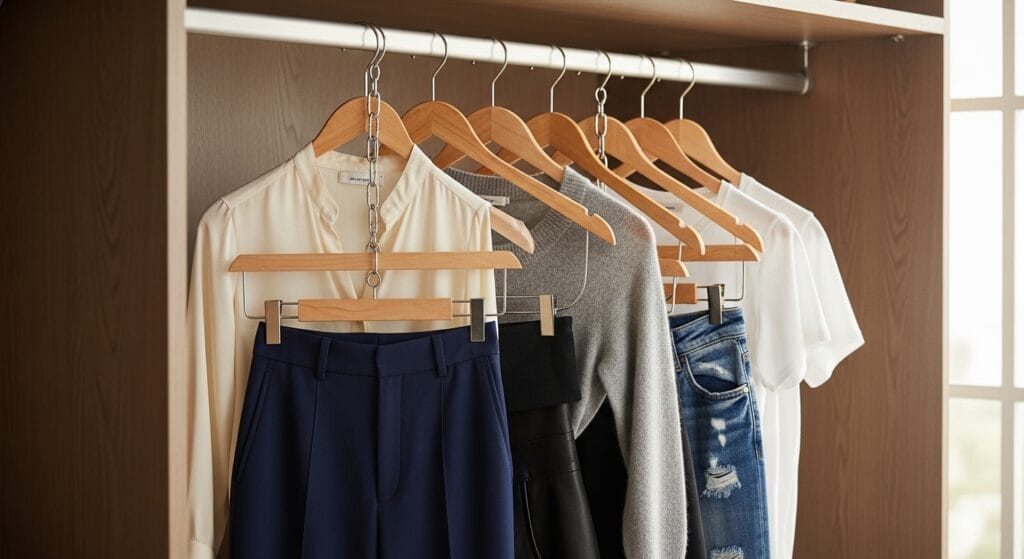
Closet rods fill up quickly when every hanger occupies individual horizontal space. Cascading hooks link multiple hangers in a vertical chain, multiplying how many items hang in a single rod slot.
They work particularly well for grouping complete outfits, similar items, or family members’ clothing in one vertical cluster. This makes daily selection faster and keeps the rod from appearing overcrowded.
18 — Freestanding Rolling Garment Rack
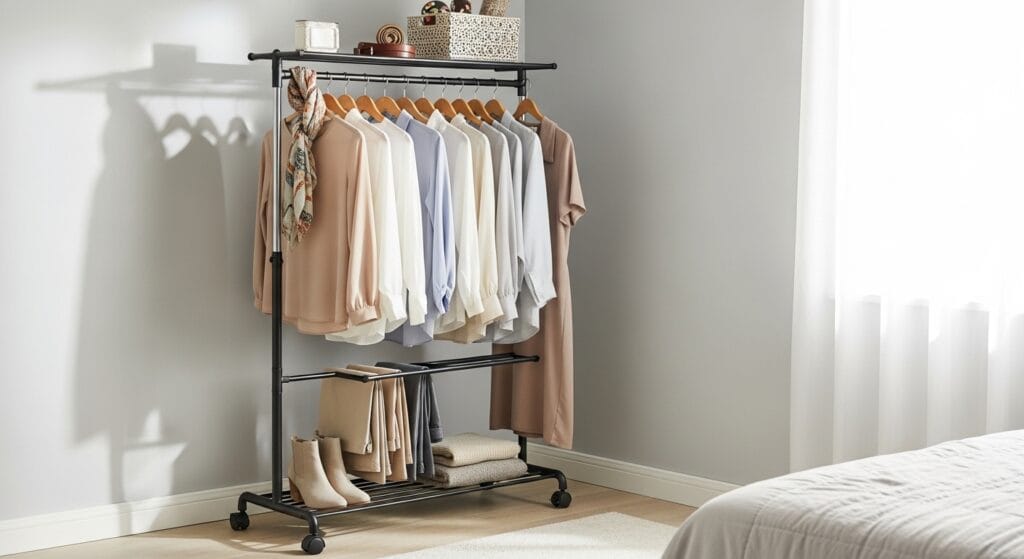
When a main closet is already at capacity, overflow clothing needs a secondary home. A rolling garment rack provides additional hanging space that can be positioned wherever it’s most useful.
Portable and adjustable in height, these racks work equally well in a bedroom corner, a spare room, or a laundry area. Many include a lower shelf for folded items or shoe storage beneath the rod.
19 — Compact Drawer Unit for Closet Floors
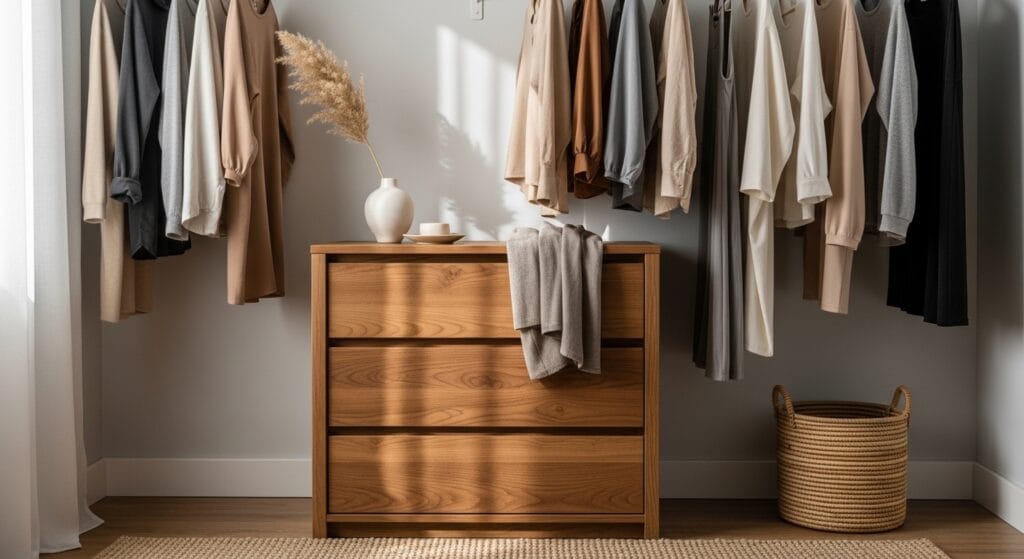
The floor space beneath hanging garments is often the most underused area of a closet. Placing a compact drawer unit there adds significant folded-clothing capacity without consuming bedroom floor space.
Three- or four-drawer configurations fit neatly under most hanging zones. This approach works well in walk-in closets where a thoughtful furniture layout can replace the need for a separate bedroom dresser entirely.
20 — A Consistent Labeling System
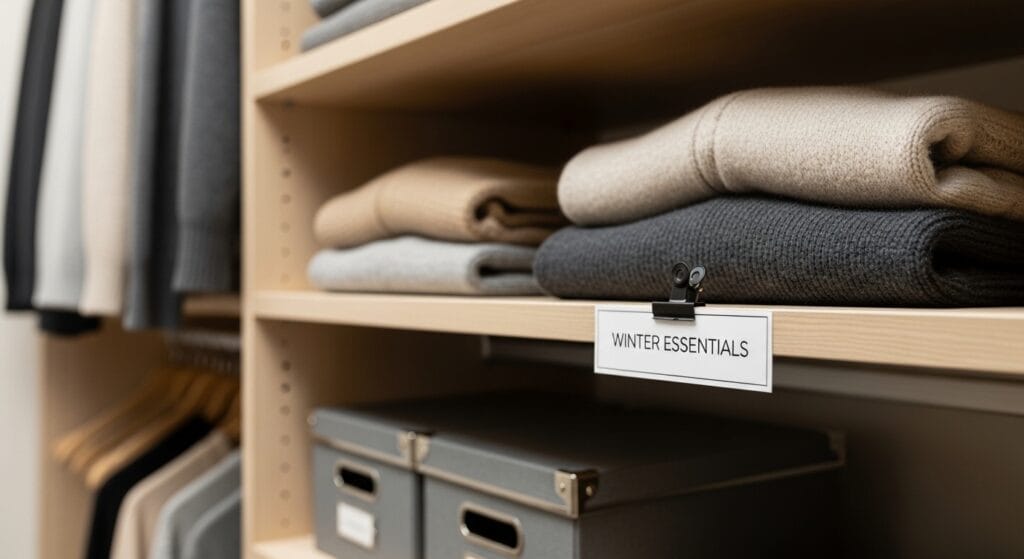
Storage containers only stay organized if users know what goes where. A labeling system—whether handwritten tags, printed labels, or a label maker—removes ambiguity from every storage decision.
Labels are especially effective in shared closets or when reorganizing after a major declutter. Clear naming reinforces the system, reduces the time spent searching, and makes tidying after laundry considerably faster.
Building a System That Holds Over Time
The most effective closet organization approach isn’t the one with the most products—it’s the one that fits how you actually use your space each day. Start with one or two solutions and build gradually.
Revisiting your closet organization setup twice a year keeps the system from drifting back into clutter. Small seasonal adjustments tend to be far more manageable than a full overhaul every few years.