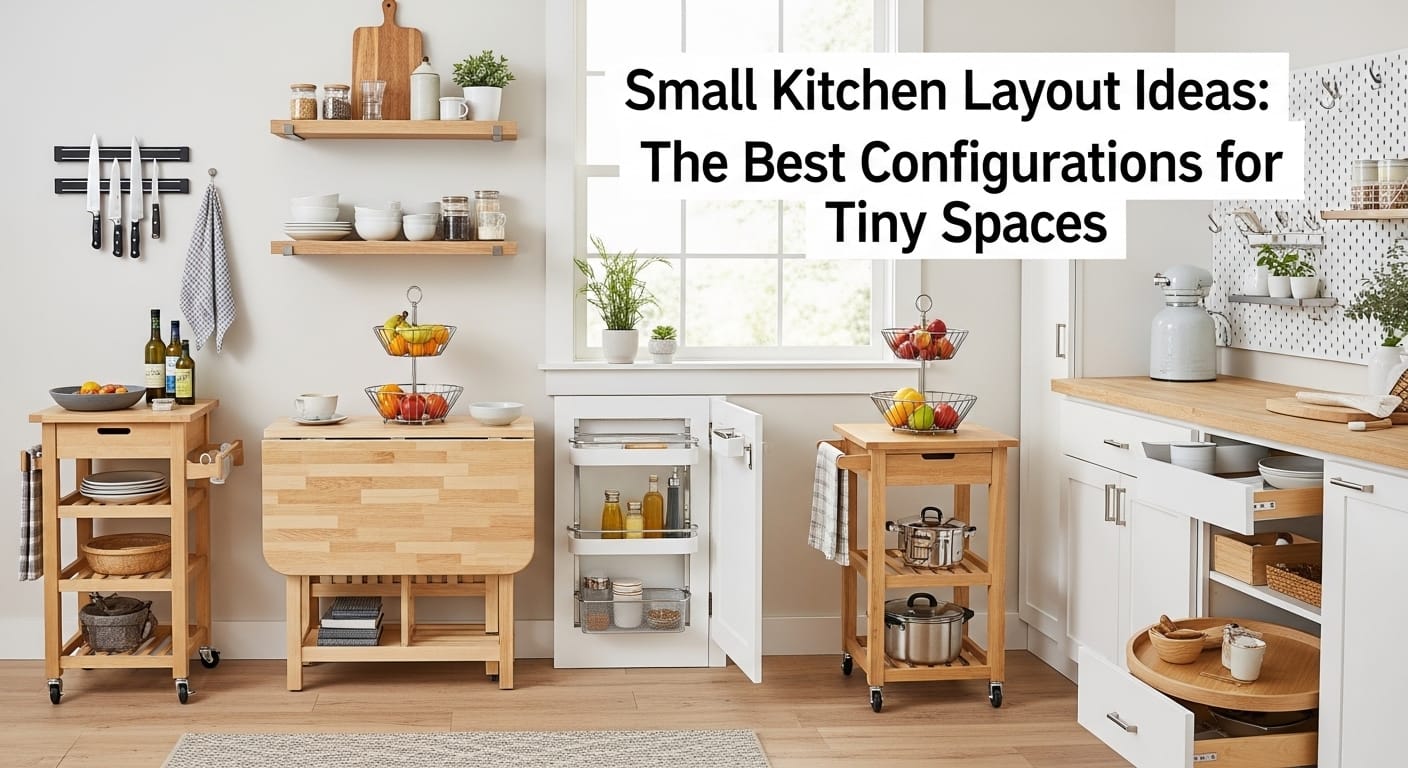
Working with a small kitchen means every centimetre counts. Thoughtful small kitchen layout ideas can transform even the tightest galley or L-shaped space into something genuinely functional.
The right combination of storage, surface area, and visual balance makes a real difference. Compact kitchens reward creative thinking more than large ones ever need to.
From vertical wall solutions to foldable furniture, small adjustments build into big improvements. The sections below walk through nine practical decor items worth considering.
In this post, you’ll find:
- A wall-mounted magnetic knife strip that frees up valuable countertop space.
- An over-the-door organizer turns unused cabinet doors into hidden storage zones.
- Open floating shelves add accessible vertical storage without closing off the room.
- A foldable drop-leaf table balances compact dining needs with space efficiency.
- A rolling kitchen cart offering flexible extra surface and concealed storage options.
- A pegboard wall panel keeps tools visible, reachable, and beautifully organized overhead.
This post contains affiliate links. As an Amazon Associate, I earn from qualifying purchases, at no extra cost to you.
1. Magnetic Knife Strip
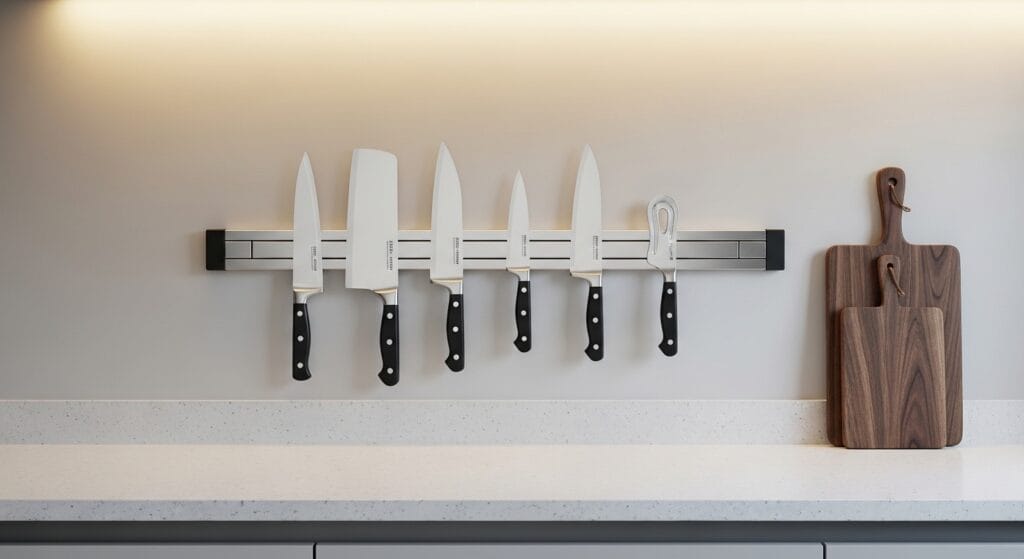
Countertop clutter is one of the fastest ways a small kitchen feels overwhelming. Keeping knives off the surface instantly returns usable prep space.
A magnetic knife strip mounts flush against any wall or the side of a cabinet, holding blades securely in a neat horizontal row. It suits modern, industrial, and Scandinavian-inspired kitchen styles equally well.
The clean, minimal silhouette keeps the wall from feeling busy while making every knife immediately visible and easy to grab.
2. Open Floating Shelves
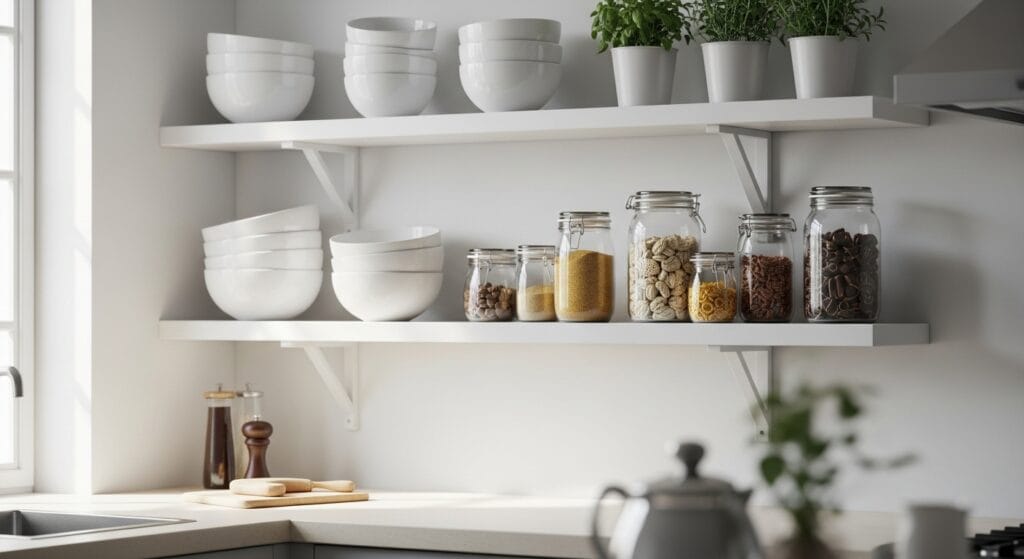
Vertical space is the most underused resource in a compact kitchen. Drawing the eye upward creates a sense of height while adding genuine storage capacity.
Open floating shelves installed above countertops or beside a window keep everyday items within easy reach without the visual weight of full upper cabinets. They work especially well in narrow galley layouts.
Styling them with grouped jars, stacked bowls, and trailing herbs turns storage into a decorative feature.
3. Rolling Kitchen Cart
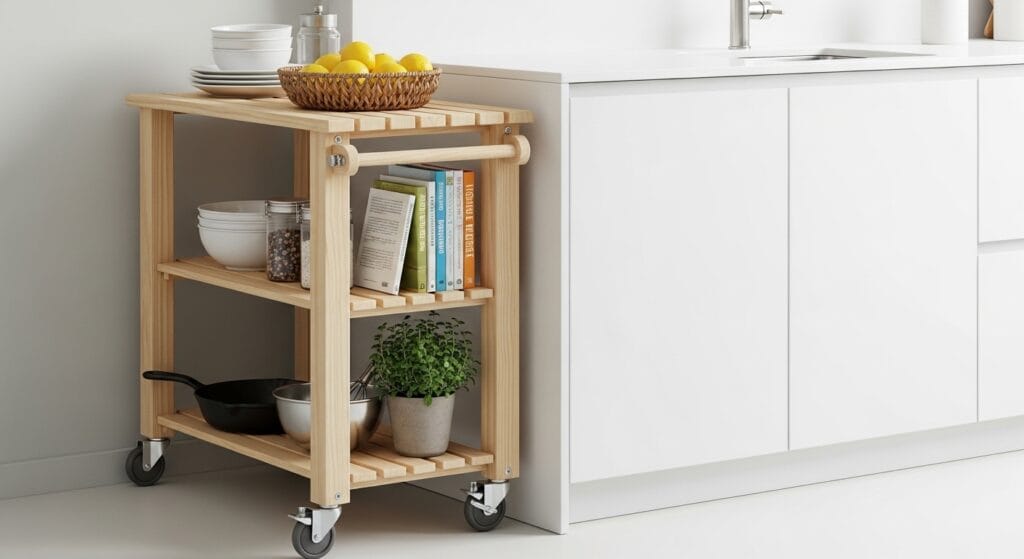
Flexibility matters when a kitchen layout offers very little fixed surface area. A mobile station can move where it is needed most, then tuck away completely.
A rolling kitchen cart with a butcher block or laminate top adds a secondary prep surface that doubles as casual dining or a drinks station. Lower shelves and drawers handle everything from pots to pantry overflow.
Its compact footprint suits galley, one-wall, and studio apartment kitchens particularly well.
4. Over-the-Door Cabinet Organizer
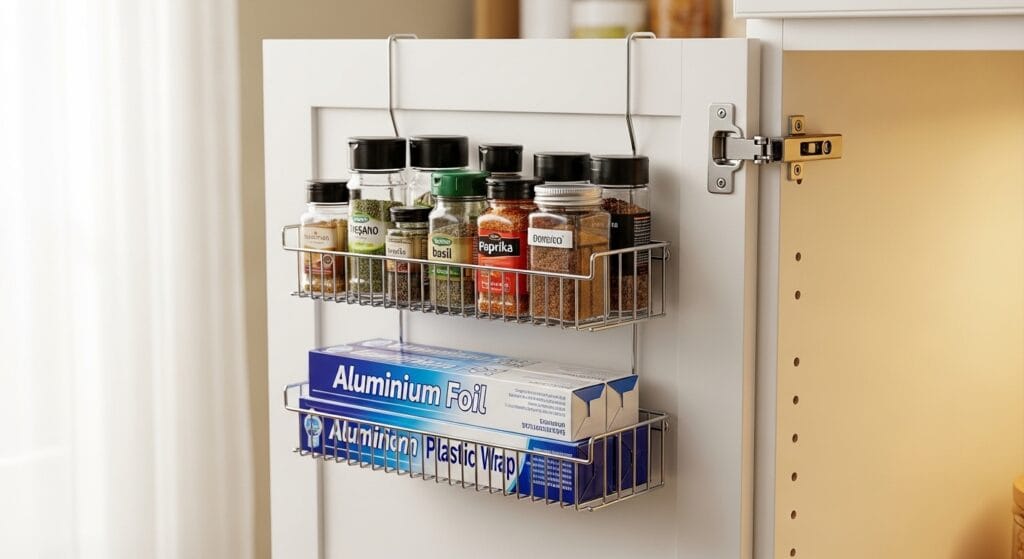
The interior faces of cabinet and pantry doors are consistently overlooked in kitchen planning. Claiming that the surface adds storage without consuming a single square centimetre of floor space.
An over-the-door cabinet organizer typically features tiered wire or plastic pockets that hold spice jars, foil boxes, cleaning supplies, or snack packets. Installation is tool-free in most cases.
It suits any kitchen style and is especially practical in rental spaces where permanent fittings are restricted.
5. Foldable Drop-Leaf Dining Table
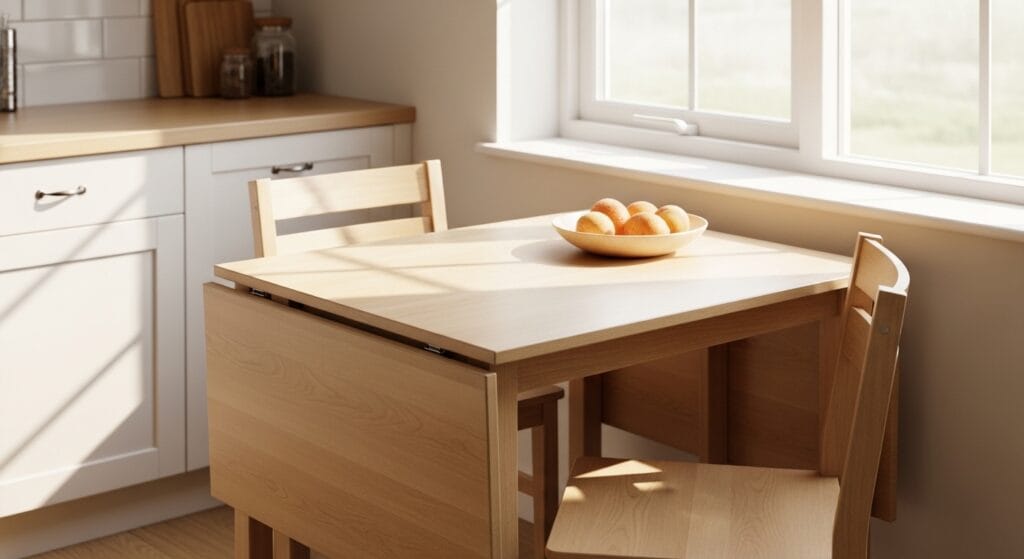
Dining in a small kitchen often means choosing between a permanent table that dominates or skipping a proper eating area altogether. A fold-down solution removes that compromise.
A foldable drop-leaf dining table can seat two to four people when the leaves are raised, then collapse to a slim console depth against the wall when not in use.
Natural wood tones integrate easily with both modern farmhouse and urban minimal kitchen aesthetics.
6. Tiered Countertop Fruit Basket
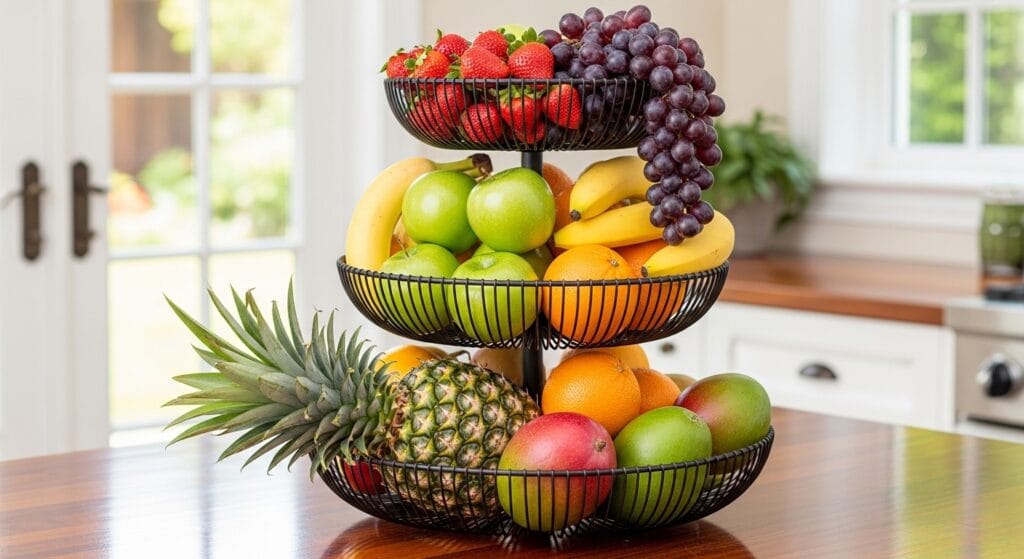
Not every storage solution needs to be hidden away. Some items benefit from remaining on display, particularly fresh produce that should be kept at room temperature.
A tiered countertop fruit basket stacks vertically rather than spreading outward, keeping apples, citrus, and vegetables accessible without occupying a wide footprint. Wire, rattan, and metal versions all bring different textures.
The structure suits farmhouse, Mediterranean, and contemporary kitchens, adding warmth and colour alongside its practical function.
7. Under-Sink Pull-Out Drawer Organizer
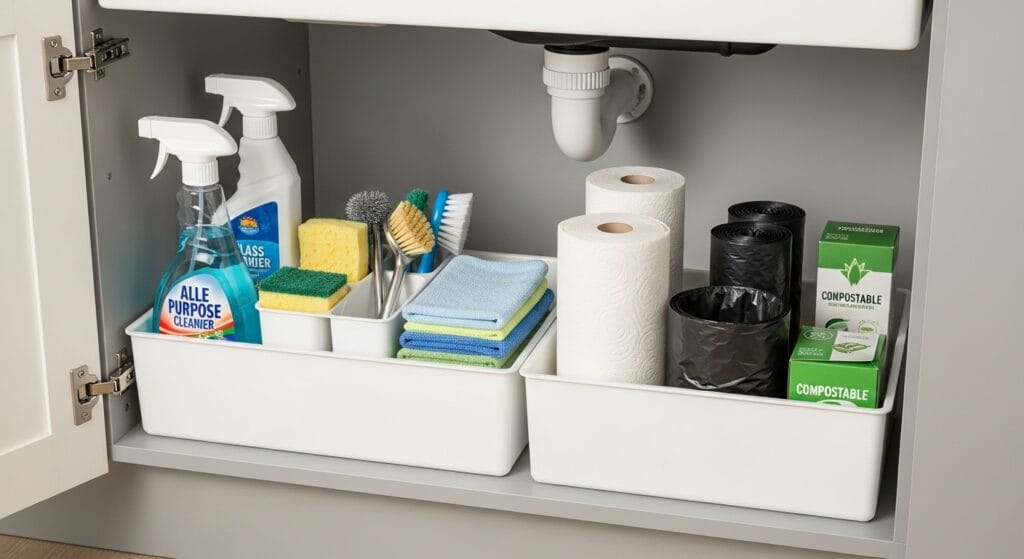
The cabinet beneath the kitchen sink is often wasted on tangled cleaning bottles and awkward gaps around the plumbing. A structured insert changes that entirely.
An under-sink pull-out drawer organizer uses adjustable shelves and rails designed to work around existing pipes, maximizing the irregular space that standard shelving cannot use. Cleaning supplies, bin bags, and dishwasher tablets all have a logical home.
Sliding the unit out rather than crouching to reach inside significantly improves everyday usability.
8. Corner Lazy Susan Turntable
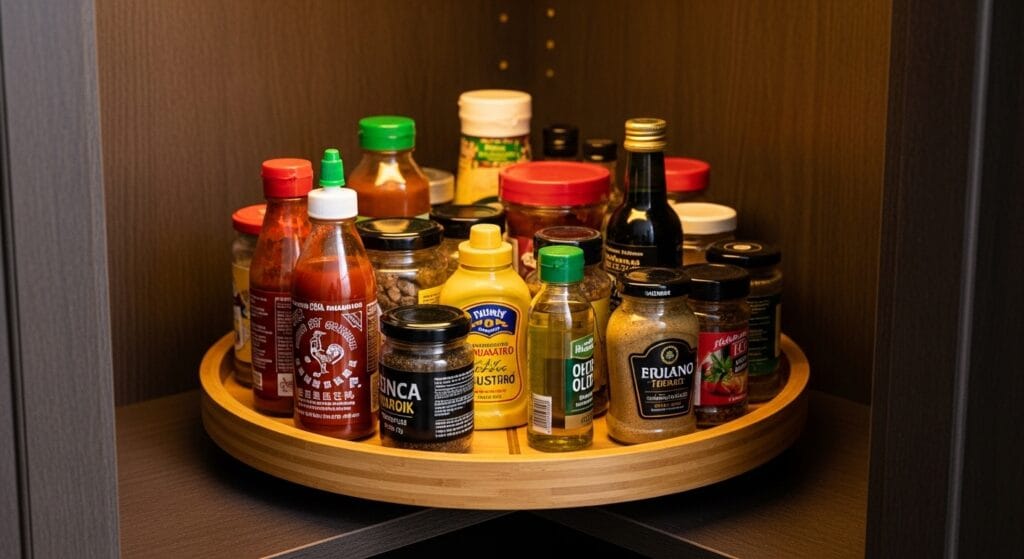
Corner cabinets in an L-shaped or U-shaped kitchen are notorious for swallowing items that become impossible to retrieve. A rotating insert solves the dead-zone problem without any structural changes.
A corner lazy susan turntable spins on a central axis, so everything stored around it comes to the front with one easy rotation. It works inside cabinets, on pantry shelves, or directly on the countertop.
Bamboo and stainless finishes pair well with both natural and contemporary kitchen palettes.
9. Pegboard Wall Panel
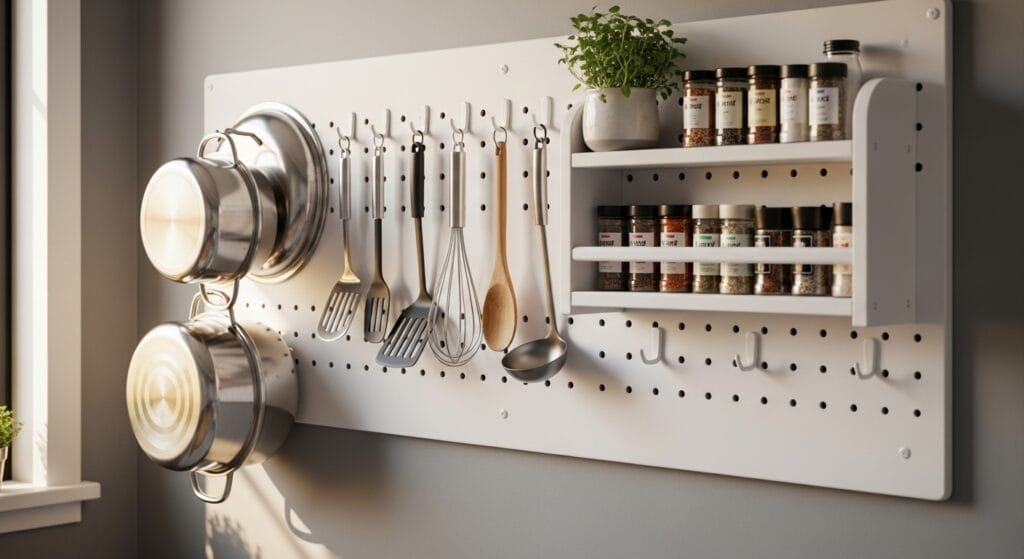
A blank wall between cabinets is an opportunity rather than a limitation. Converting it into an active storage surface keeps tools accessible and the countertop clear.
A pegboard wall panel accepts interchangeable hooks, shelves, and bins that can be rearranged as needs change. Hanging pots, utensils, and cutting boards here frees drawer and cabinet space for less frequently used items.
White and natural wood-framed pegboards complement most kitchen colour schemes without drawing the eye away from the overall design.
Building a Layout That Works for Your Space
Bringing together the right pieces is what makes small kitchen layout ideas genuinely effective. No single item transforms a kitchen on its own, but a curated combination of vertical storage, flexible furniture, and smart organizers creates cohesive function.
Balancing visual openness with practical capacity is the real goal. Choosing decor that earns its place both aesthetically and functionally keeps even the smallest kitchen feeling considered rather than cluttered.