Maintaining an organized backpack is the easiest way to reduce daily stress. When every book and pen has a dedicated home, navigating campus feels much more manageable.
A chaotic bag leads to crumpled assignments and misplaced chargers. Establishing a reliable storage system early in the term protects your gear and saves precious time during busy days.
Consistent routines prevent clutter from taking over.
In this post you’ll find:
- Proven strategies for dividing your main storage compartment effectively.
- Techniques to keep writing tools organized and easy to find.
- Methods to protect important school documents from getting bent.
- Ways to label your notebooks for faster subject identification.
- Smart containment solutions for loose digital cords and chargers.
- Daily routines that keep your bag clean all semester long.
This post contains affiliate links. As an Amazon Associate I earn from qualifying purchases, at no extra cost to you.
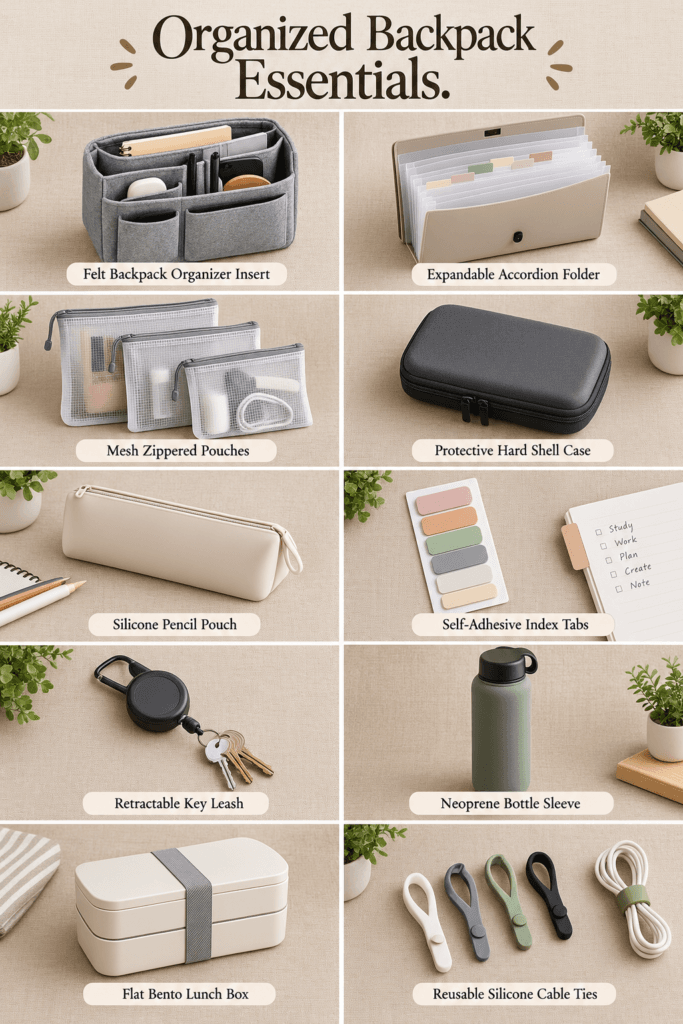
Step 1: Establish Structure in the Main Compartment
Large bag interiors often become black holes where items disappear. Slipping a structured felt insert into the cabin instantly creates upright compartments.
This prevents heavy textbooks from shifting, promoting balanced weight distribution. Your daily school essentials stay upright and visible.
It makes transitions between classrooms seamless.
Step 2: Prevent Paper Damage with Rigid Dividers
Syllabi and assignments easily get crumpled when tossed loose into a bag. Keeping documents safe requires a dedicated barrier.
Using an expandable accordion folder keeps essays flat and organized by course. It slides neatly alongside your laptop, ensuring graded work stays pristine.
This simple habit saves space and prevents document damage.
Step 3: Secure Digital Accessories in Small Pouches
Tangled charging cords waste valuable study time during lectures. Separating cables from heavy textbooks keeps them functional.
Grouping chargers, ear buds, and power banks inside mesh zippered pouches keeps cords untangled. The semi-transparent material lets you check contents instantly.
This easy digital cord management strategy prevents cable fraying and saves desk space.
Step 4: Protect Fragile Items in Hard Cases
Delicate items like sunglasses or scientific calculators need extra defense against accidental drops. Soft bags offer little impact protection.
Stashing these vulnerable items inside a protective hard shell case shields them from crushing pressure. It absorbs impacts during transit.
Your expensive electronics and eyewear remain completely safe inside your crowded pack.
Step 5: Bundle Writing Utensils Together
Loose pens rolling at the bottom of a pack cause frustration when you need to take quick notes.
Using a compact silicone pencil pouch gathers your highlighters and pens into one predictable spot. The flexible material wipes clean easily.
You can grab a pen instantly without digging blindly through deep pockets.
Step 6: Classify Subjects with Color-Coded Labels
Finding the correct lecture notes quickly keeps your focus sharp. Streamlining your daily school organization prevents academic confusion.
Applying colorful self-adhesive index tabs to your notebooks marks different chapters and subjects clearly. You can flip directly to specific lecture notes.
This simple visual labeling system speeds up library study sessions.
Step 7: Keep Keys Accessible on a Leash
Standing outside your dorm door searching for keys is an annoying way to end a long day of classes.
Securing your keyring to a retractable key leash anchored inside a front pocket solves this problem. You can pull them out easily.
Your keys remain permanently attached to your bag, preventing accidental loss on campus.
Step 8: Isolate Water Bottles to Avoid Spills
Condensation from cold drinks can ruin textbooks and sensitive paper assignments. Keeping moisture isolated is crucial for paper protection.
Slipping your bottle into a thick neoprene bottle sleeve traps condensation and absorbs minor leaks before they spread. It provides an insulating layer.
Your homework and textbooks stay entirely dry even on hot, humid afternoons.
Step 9: Contain Meals in Flat Containers
Bringing snacks to campus saves money but risks messy food spills inside your main compartment. Pack bulkier food items strategically.
Using a slim flat bento lunch box keeps your meals sealed tight. It slips vertically into your bag like a textbook.
This space-saving container leaves plenty of room for your essential school gear.
Step 10: Manage Loose Cable Clutter
Long charger cords easily tangle into knots when left free inside backpack pockets. Unraveling them is a tedious chore.
Wrapping cords with reusable silicone cable ties keeps each wire bundled tightly and neatly. They stay compact and organized.
This fast, simple habit extends the overall lifespan of your expensive charging accessories.
Maintaining Your System Throughout the Year
Keeping an organized backpack requires a brief weekly reset. Emptying stray receipts and crumbs every Friday ensures your bag stays clean and ready for class.
This simple routine reinforces your overall academic planning habits, making your study habits far more efficient.