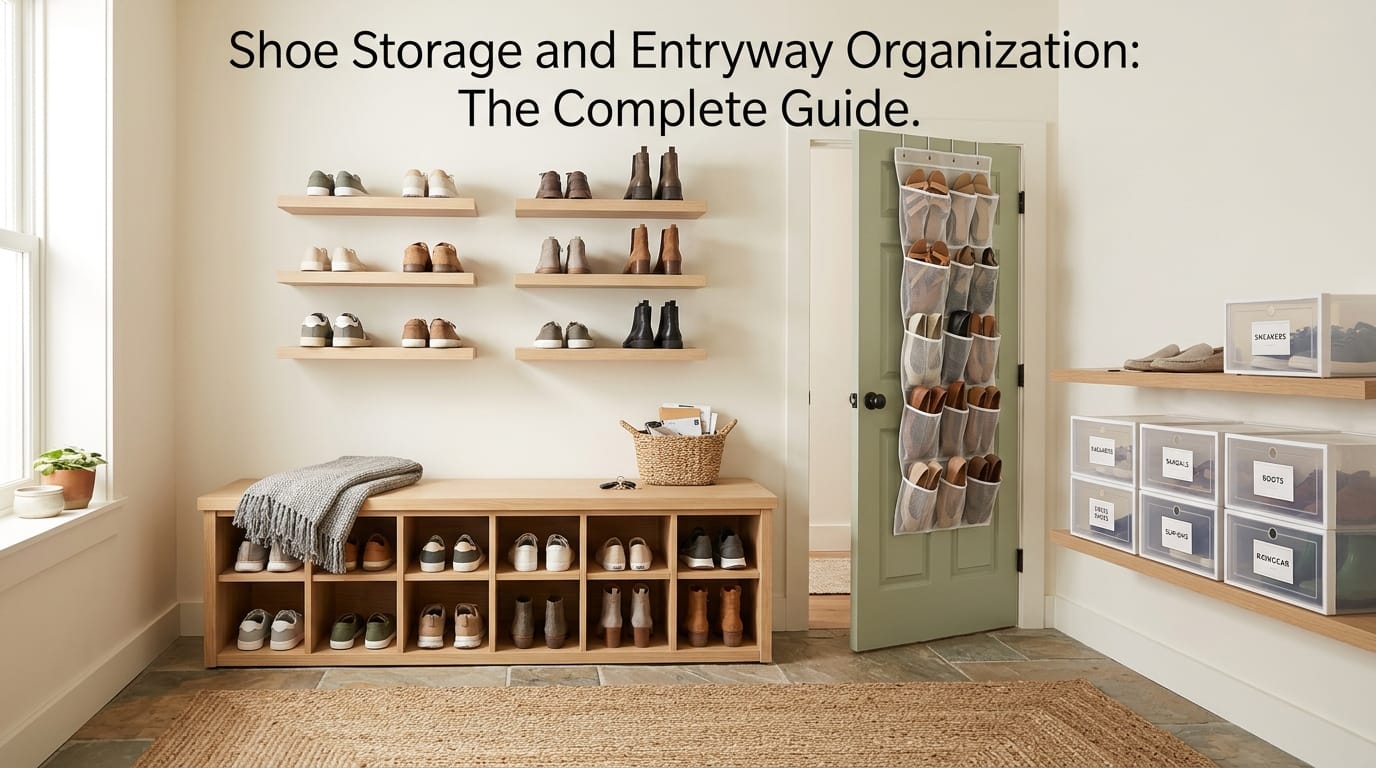
Shoes are one of the most common sources of household clutter, especially near entryways and doorways. Without a clear system, pairs pile up and create daily frustration.
Organized shoe storage ideas range from simple shelf units to multi-functional furniture. The right approach depends on available space, household size, and how shoes are accessed daily.
In this post you’ll find:
- How open shelving creates accessible, clutter-free shoe zones near doorways.
- Bench seating solutions that combine shoe storage with functional everyday comfort.
- Wall-mounted racks that free up floor space in tight entryways.
- Clear box systems that keep shoes visible, protected, and easily retrieved.
- Cabinet-style storage units that conceal shoes behind closed doors neatly.
- Over-door and under-bed organizers for maximizing hidden or overlooked storage space.
This post contains affiliate links. As an Amazon Associate I earn from qualifying purchases, at no extra cost to you.
1. Open Shoe Shelving
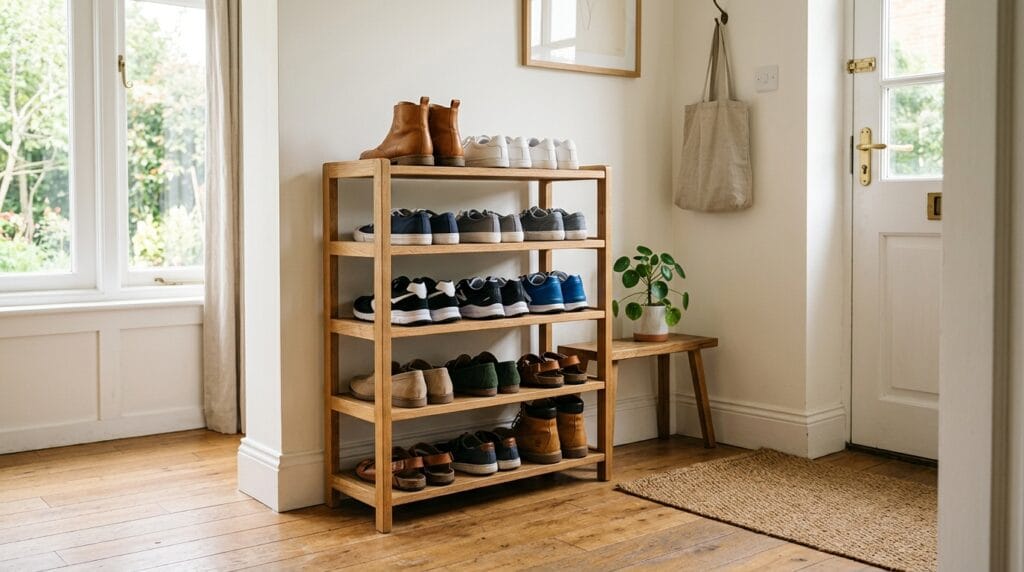
Freestanding and wall-mounted shelving keeps footwear visible and within reach without searching. Tiered designs fit multiple pairs in a compact footprint.
For households managing entryway shoe storage, open shelving allows quick access without opening doors. Shelf spacing adjusts for boots, flats, or children’s shoes on the same unit.
This format scales easily as a household’s footwear collection grows or changes seasonally.
2. Shoe Storage Cabinets with Doors
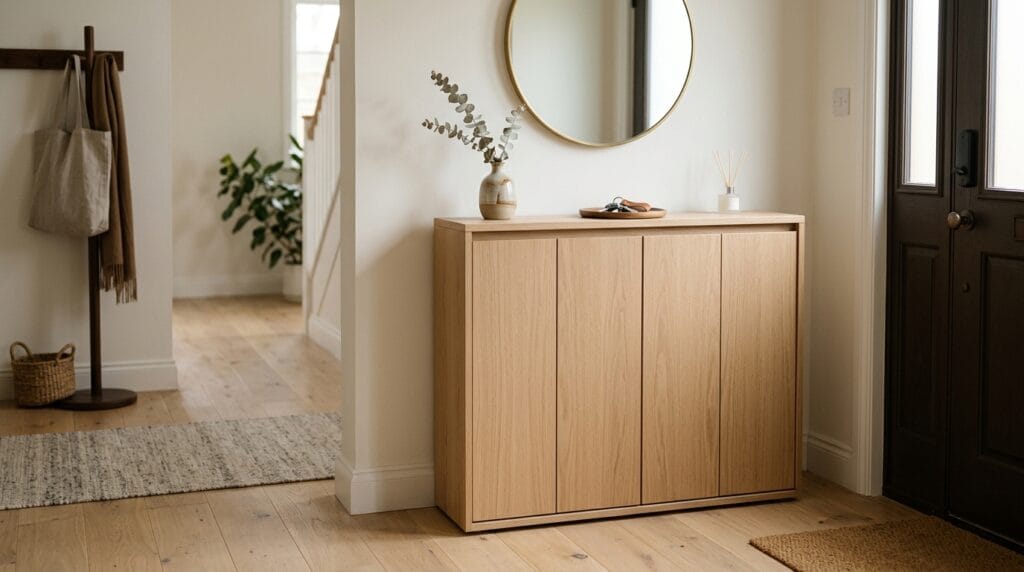
Enclosed cabinet units keep shoes completely out of sight behind solid or slatted doors. This is useful near front doors where open storage can feel visually chaotic.
A shoe storage cabinet with doors works well in living areas where open shelving feels busy. Interior compartments keep pairs organized without being visible from the room.
3. Entryway Storage Bench
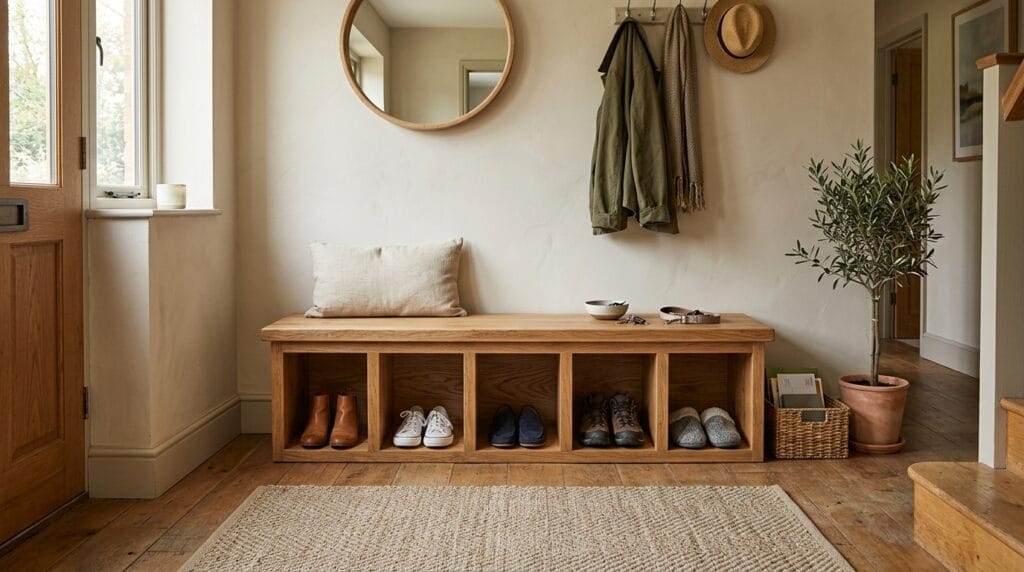
Near a front door, a seating surface with built-in storage solves two problems at once. Shoes stay contained while the seat provides a place to sit during removal.
The entryway shoe storage bench format suits households with children, where quick footwear transitions happen throughout the day. Cubby-style openings beneath the seat keep individual pairs separated.
4. Clear Shoe Box Storage
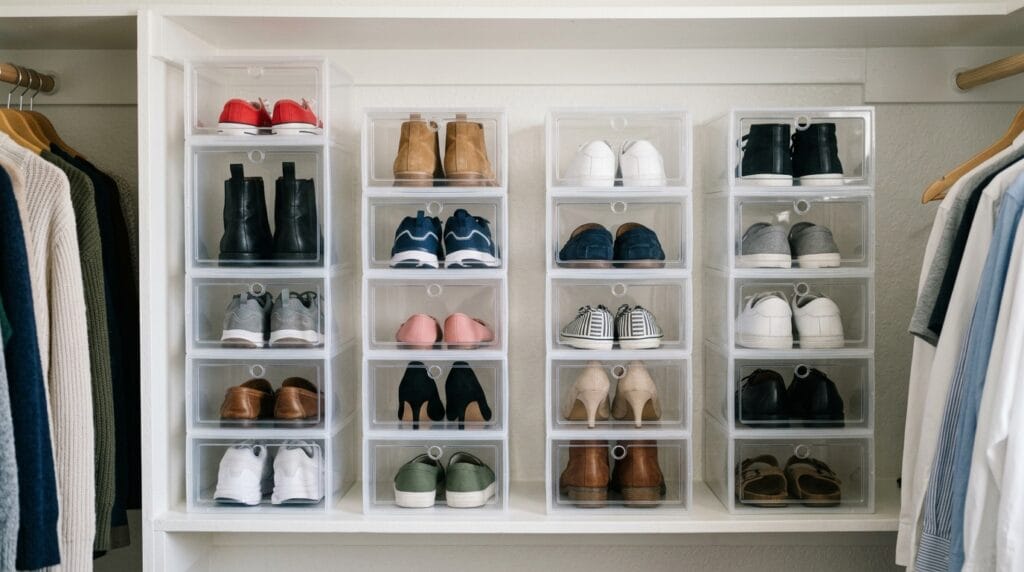
Visibility is one of the most overlooked elements of shoe organization. Opaque containers mean locating one pair requires opening multiple boxes.
Clear shoe boxes storage solves this by making every pair identifiable at a glance. Stackable designs allow vertical storage without sacrificing accessibility in closets or bedrooms.
Drop-front styles make retrieval easy without removing entire boxes from a stack.
5. Over-Door Shoe Organizers
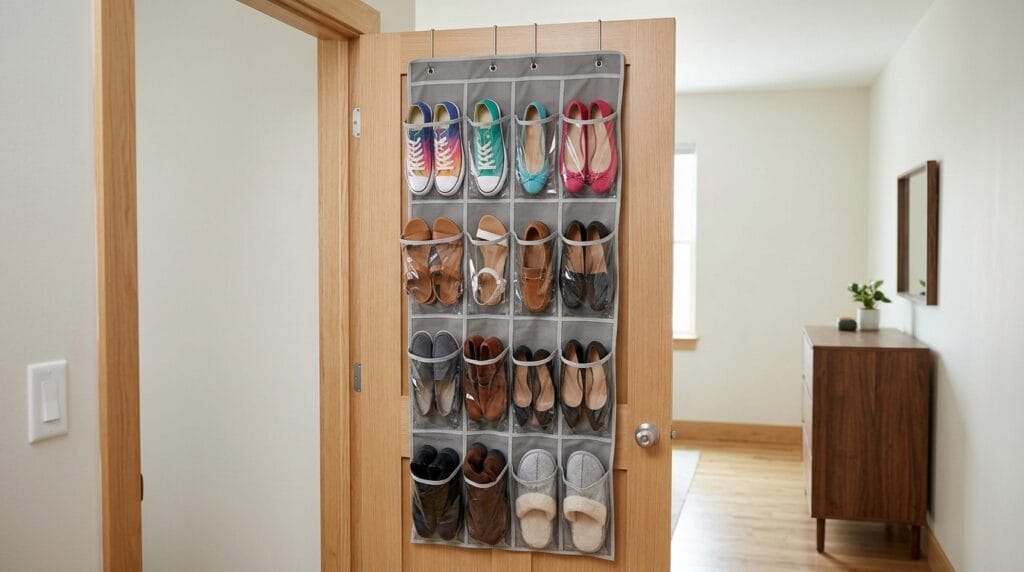
The back of a door is frequently overlooked as a storage surface. In compact rooms, every vertical surface adds meaningful organization capacity.
Over-door pocket organizers hang without tools and hold multiple pairs per panel. For shoe storage for small spaces, this adds capacity without occupying any floor area.
Deeper pockets accommodate sneakers and casual shoes, while fabric panels suit sandals and lightweight flats.
6. Under-Bed Shoe Storage
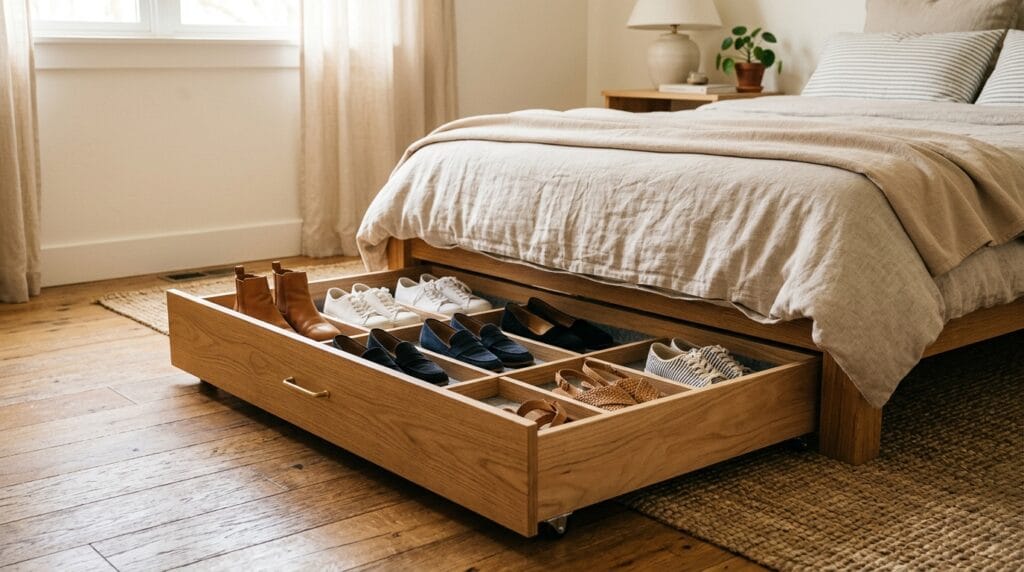
The area beneath a bed frame is one of the largest underutilized storage zones in any home. Flat rolling drawers maximize this space efficiently.
Underbed shoe storage works well for seasonal pairs or footwear worn less frequently. Divided interiors keep pairs from shifting, and wheeled versions allow smooth retrieval.
7. Wall-Mounted Shoe Racks
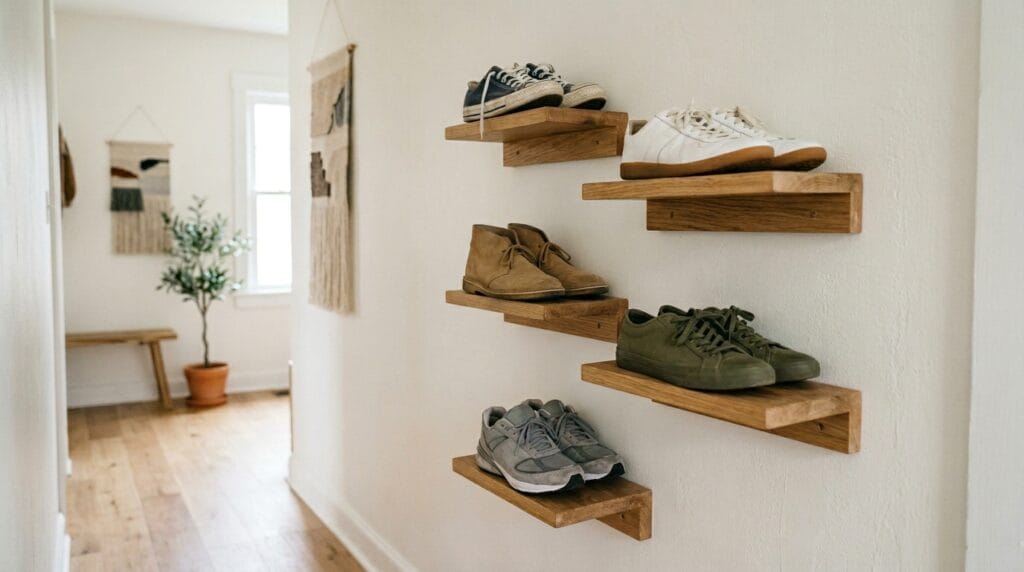
Mounting shoe holders directly to a wall clears floor space and creates a clean, defined storage area. This works especially well in narrow corridors. [25 words]
Wall shoe storage ideas include floating shelves, shoe ledges, and rail systems that hold footwear at the heel. Spacing between mounts can be customized to available wall height. [29 words]
8. Mudroom Shoe Storage Systems
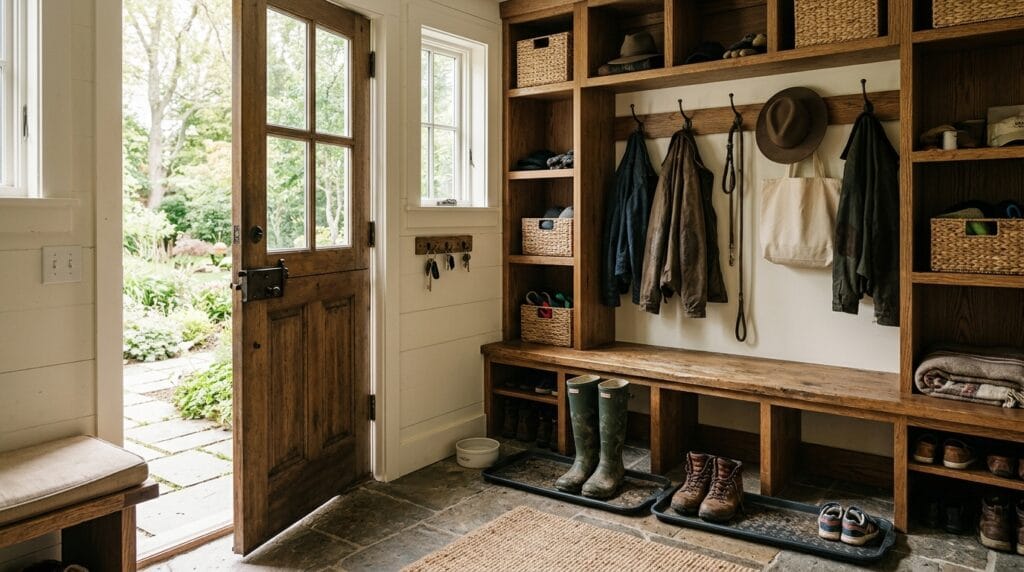
Homes with a mudroom benefit from designated zones that handle footwear before it enters the rest of the house. Without structure, wet shoes migrate indoors quickly.
Mudroom shoe storage ideas often combine open cubbies, bench seating, and floor trays. Each household member can have a designated compartment, reducing shared clutter through every season.
9. Storage Ottoman with Hidden Shoe Compartment
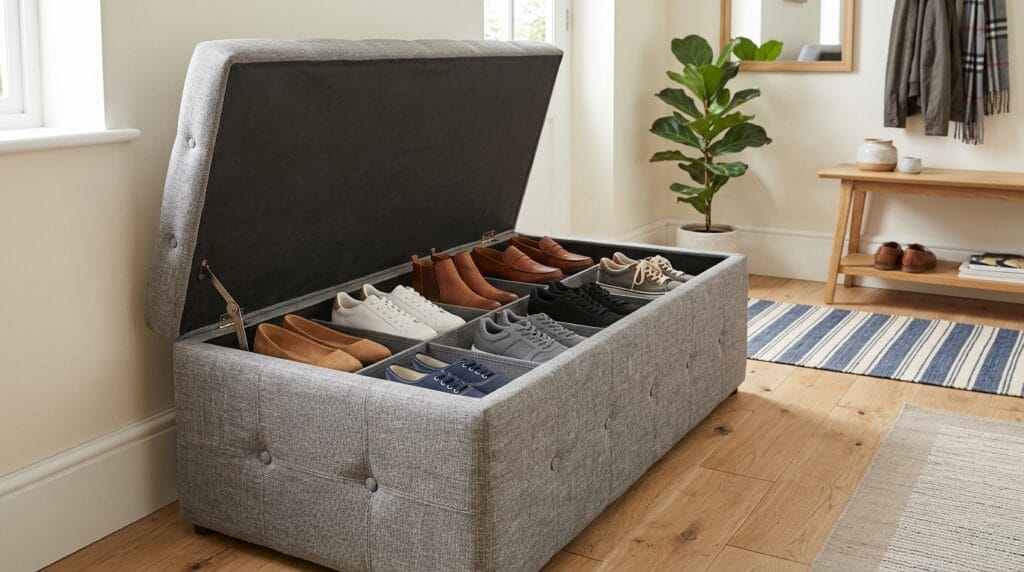
A padded storage ottoman serves as a seat, footrest, and concealed shoe container simultaneously—a practical choice for rooms where square footage is limited.
The shoe storage ottoman integrates naturally into living rooms or bedrooms. Shoes remain hidden while the surface stays functional as everyday furniture. Larger versions hold four to six pairs.
10. Garage Shoe Organization
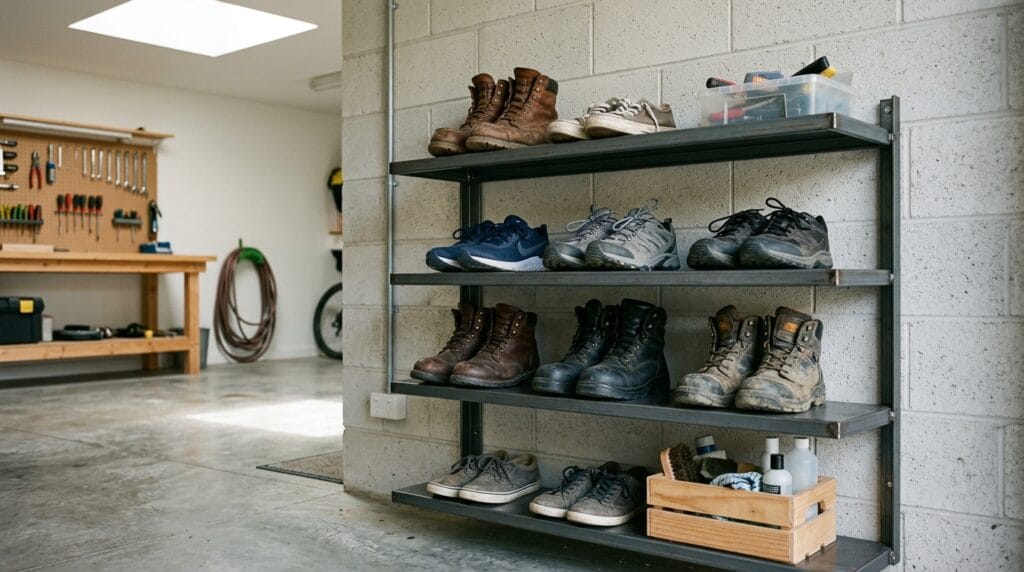
Work boots and athletic shoes often do better stored in a garage, where they stay contained and away from main living areas.
Garage shoe organization ideas include wall-mounted pegboards, freestanding metal shelves, and hanging organizers. Moisture-resistant materials handle temperature fluctuations, and positioning storage near the entry door simplifies daily transitions.
Building a Practical Organization Routine
Maintaining a shoe system depends on how well it fits daily habits. Even well-designed setups become cluttered without consistent upkeep.
Practical shoe storage ideas work best when every household member has a defined space. A seasonal rotation habit keeps any storage format functional over time.