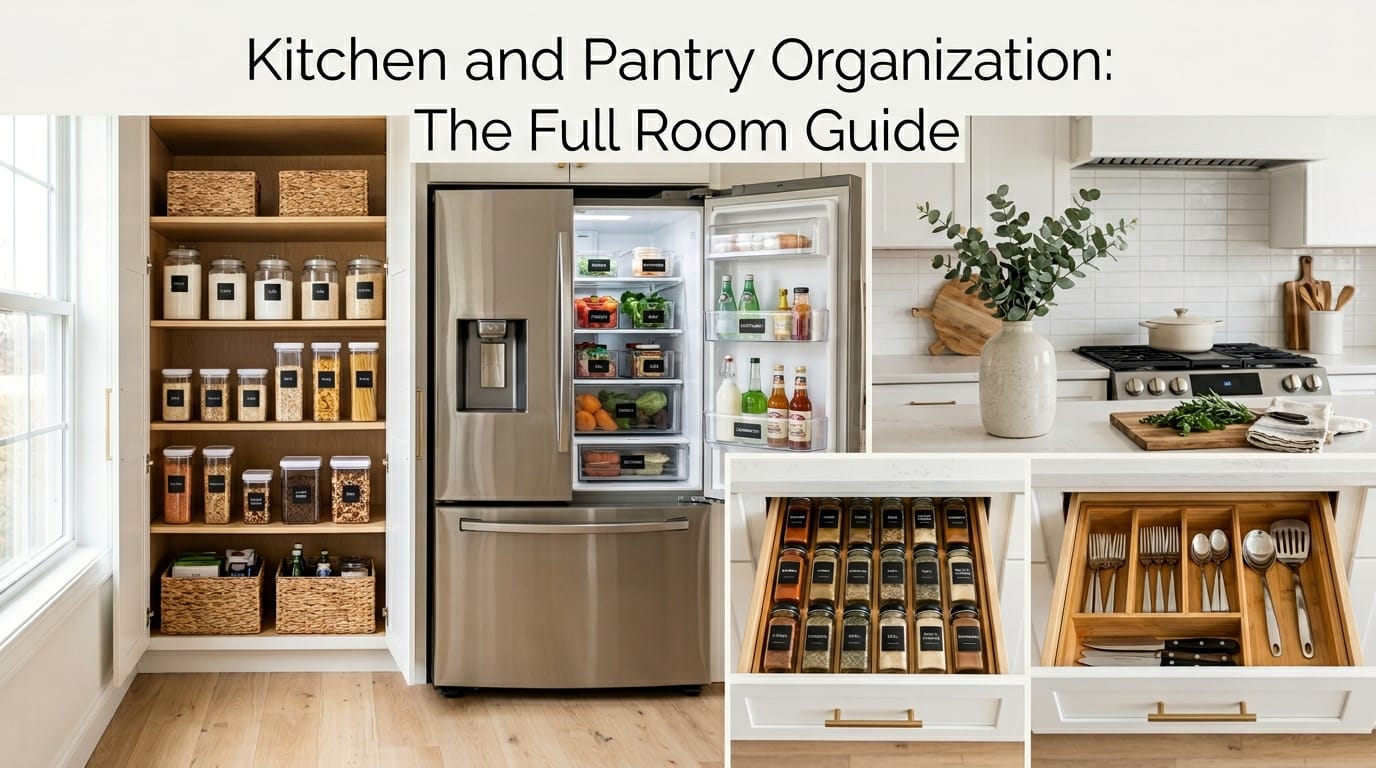
Keeping a kitchen functional requires more than tidying up — it demands a system. Thoughtful kitchen pantry organization transforms how a household cooks, shops, and stores food daily.
From crowded shelves to cluttered counters, most kitchens share the same core challenges. Small adjustments to how items are stored can reduce frustration significantly.
This guide covers practical solutions across every kitchen zone, from pantry shelving to refrigerator drawers and everything in between.
In this post you’ll find:
- How clear storage containers streamline pantry visibility and reduce everyday food waste.
- Refrigerator bins and trays that sort food categories and reduce spoilage.
- Drawer dividers and inserts that keep kitchen tools neatly separated and accessible.
- Labeling systems that create consistent organization routines across all kitchen zones.
- Cabinet organizers that maximize vertical space and improve shelf efficiency significantly.
- Under-sink organizers that turn awkward cabinet space into structured, functional storage.
This post contains affiliate links. As an Amazon Associate I earn from qualifying purchases, at no extra cost to you.
1. Clear Storage Containers
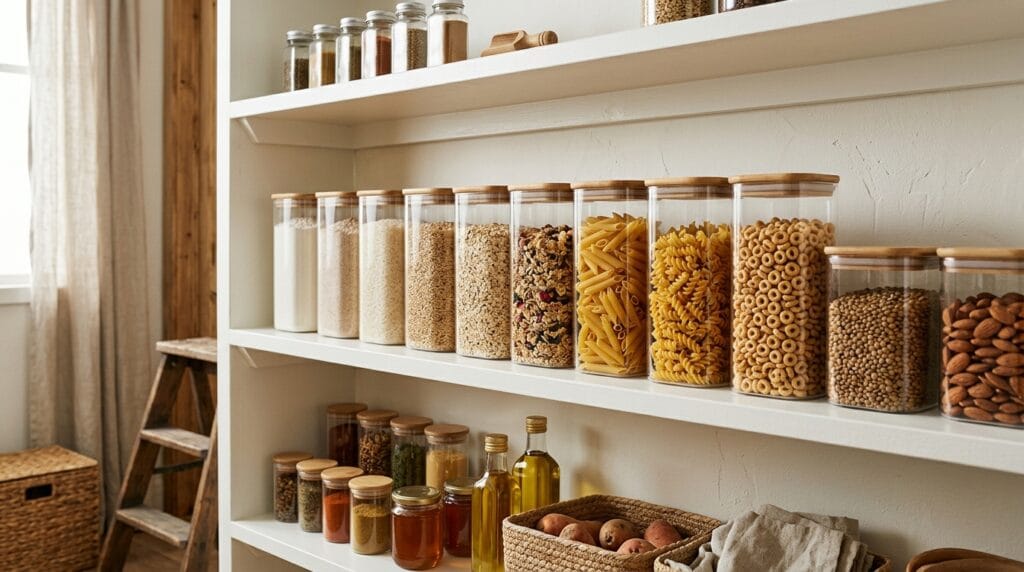
Visibility is the foundation of a well-functioning pantry. Storing dry goods in clear, uniform containers makes ingredients instantly identifiable and prevents forgotten duplicates on shopping runs.
Airtight containers extend shelf life and reduce spills. For those exploring pantry organization ideas in smaller kitchens, uniform containers stack efficiently and reclaim vertical shelf space.
2. Drawer Dividers and Inserts
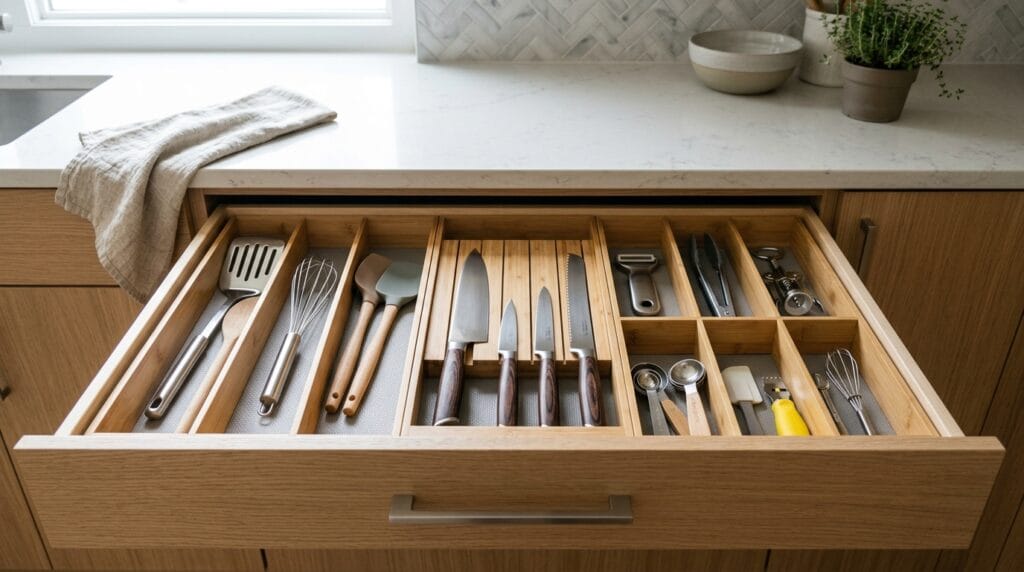
Cluttered kitchen drawers slow down meal prep and create daily frustration. Dividers solve this by creating defined zones for utensils, tools, and gadgets so each item has a consistent place.
Adjustable inserts fit most drawer widths. Structured kitchen drawer organization also simplifies resetting drawers after unloading the dishwasher each day.
3. Shelf Risers and Cabinet Organizers
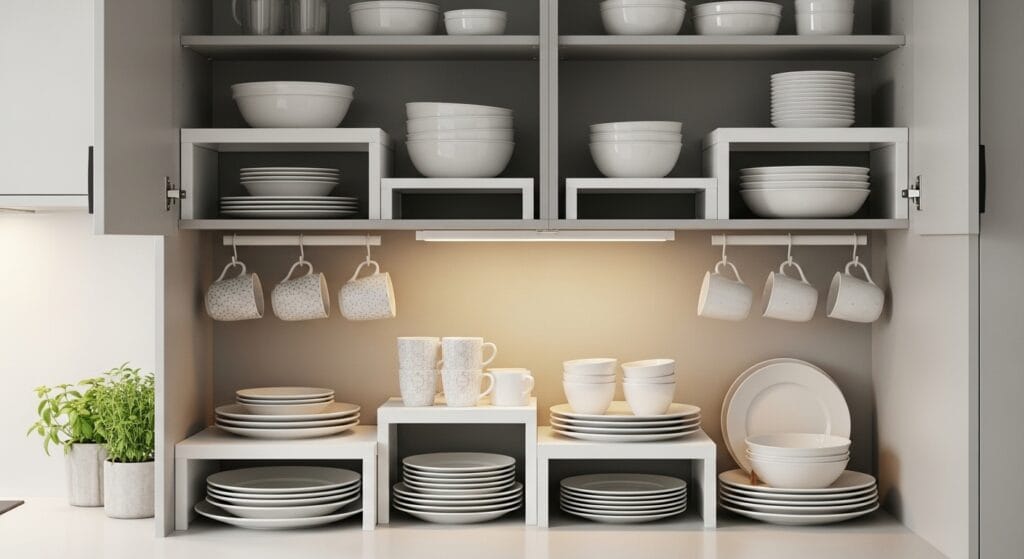
Space inside kitchen cabinets is frequently wasted because items stack directly on flat shelves without vertical separation. Shelf risers add a second level within the same compartment, immediately doubling storage capacity.
Pull-out inserts make rear shelves accessible. Upper kitchen cabinet organization using risers works particularly well for dishes, mugs, and canned goods stored overhead.
4. Pantry Bins and Baskets
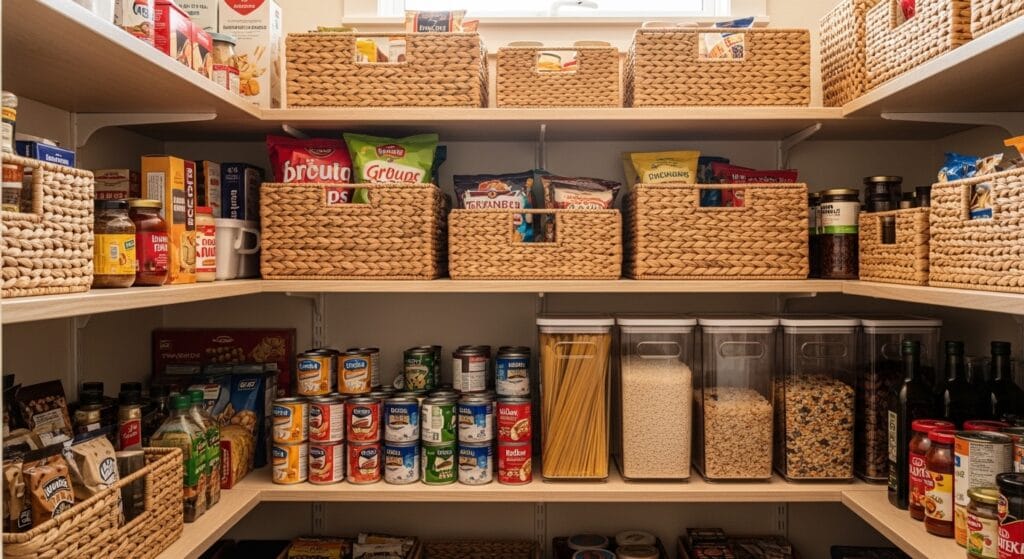
Loose items on pantry shelves create visual chaos and slow down the search for everyday ingredients. Bins and baskets group snacks, packets, and canned goods into dedicated sections that stay sorted after unpacking groceries.
Solid pull-forward bins suit deep pantry organization ideas especially well, bringing rear items within easy reach without rearranging the entire shelf.
05. Refrigerator Organization Bins
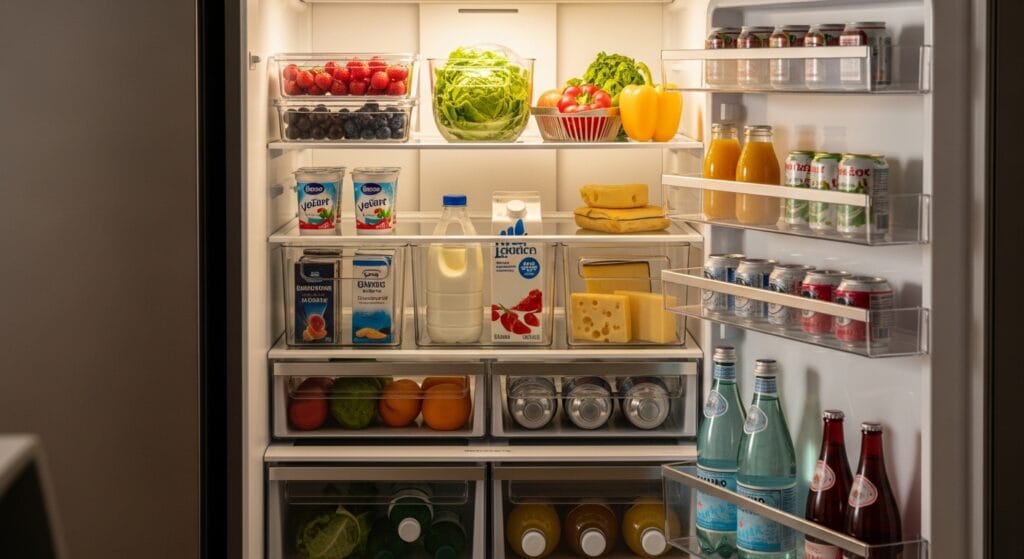
Food pushed to the back of refrigerator shelves gets forgotten and expires unnoticed. Stackable bins divide shelves by category — produce, dairy, beverages — making meal planning faster and reducing waste.
Shallow pull-out bins suit French door refrigerator organization especially well, keeping wide shelves visible and preventing items from disappearing in the back rows.
6. Spice Storage Solutions
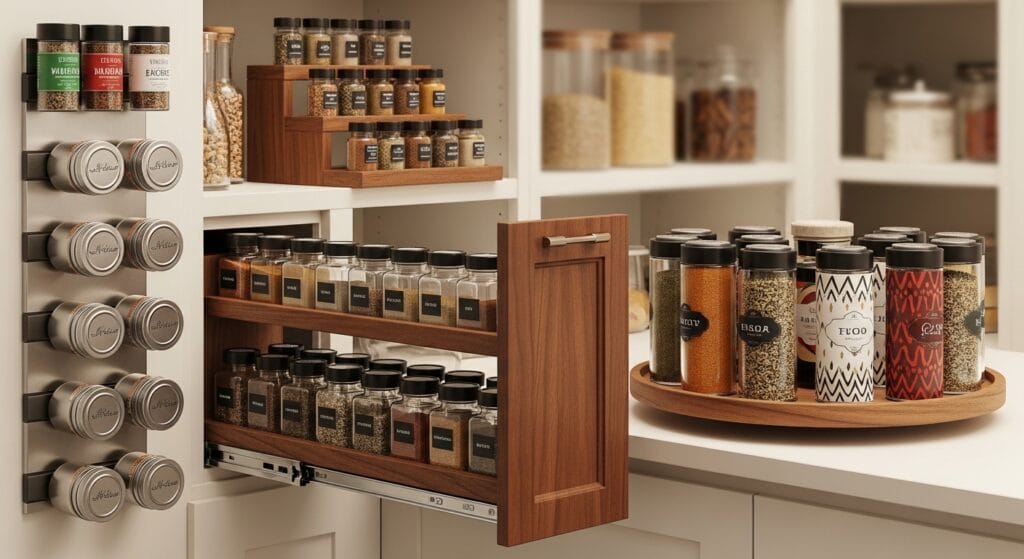
Mismatched spice bottles on crowded shelves make it difficult to find what you need during active cooking. Tiered racks and in-drawer spice trays display every label at once, so nothing is hidden behind another container.
Pairing tiered storage with pantry spice organization using uniform jars creates a system that stays consistent and easy to maintain long term.
7. Under-Sink Cabinet Organizers
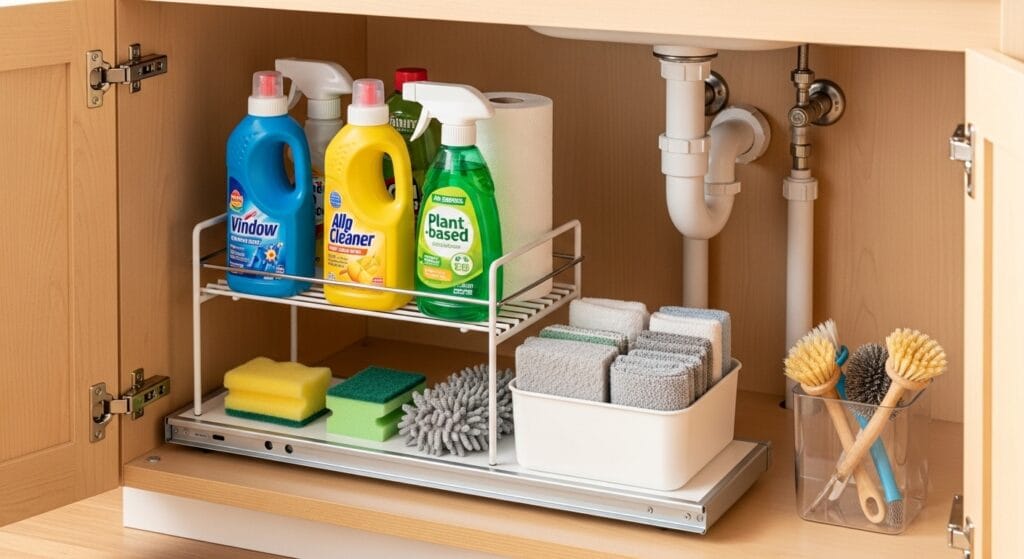
The space beneath the kitchen sink is one of the most structurally awkward cabinets to organize. Pipes interrupt usable shelf space and items pile up along the base without a system.
Adjustable two-tier organizers fit around plumbing and structure the space efficiently. Under kitchen sink organization with pull-out drawers makes cleaning supplies and sponges consistently accessible.
8. Labeling Systems
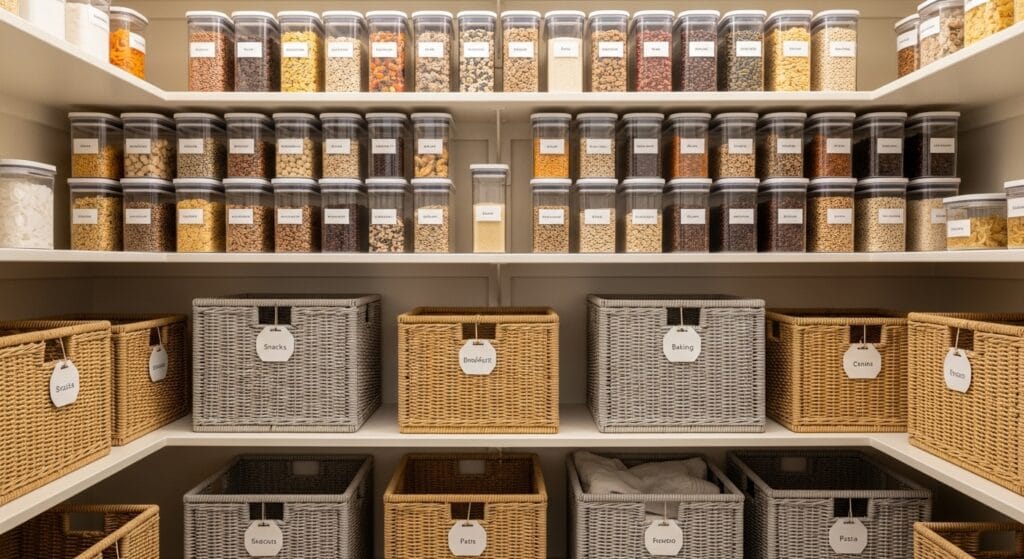
Without clear labels, even a well-organized pantry breaks down over time. Bins get misused and containers accumulate unrelated items when there is no visible identity attached to each space.
A consistent labeling approach — printed, handwritten, or label-maker generated — gives every zone a defined purpose. Pantry organization labels applied to containers, baskets, and shelves help everyone in the household maintain the system.
Building a Practical Organization Routine
No single solution creates a lasting system. Functional kitchens combine containers, bins, dividers, and labels matched to daily habits.
Consistent restocking and zone-resetting keeps kitchen pantry organization practical long term. Pantry categories organization provides structured methods for grouping items around how a household actually cooks.