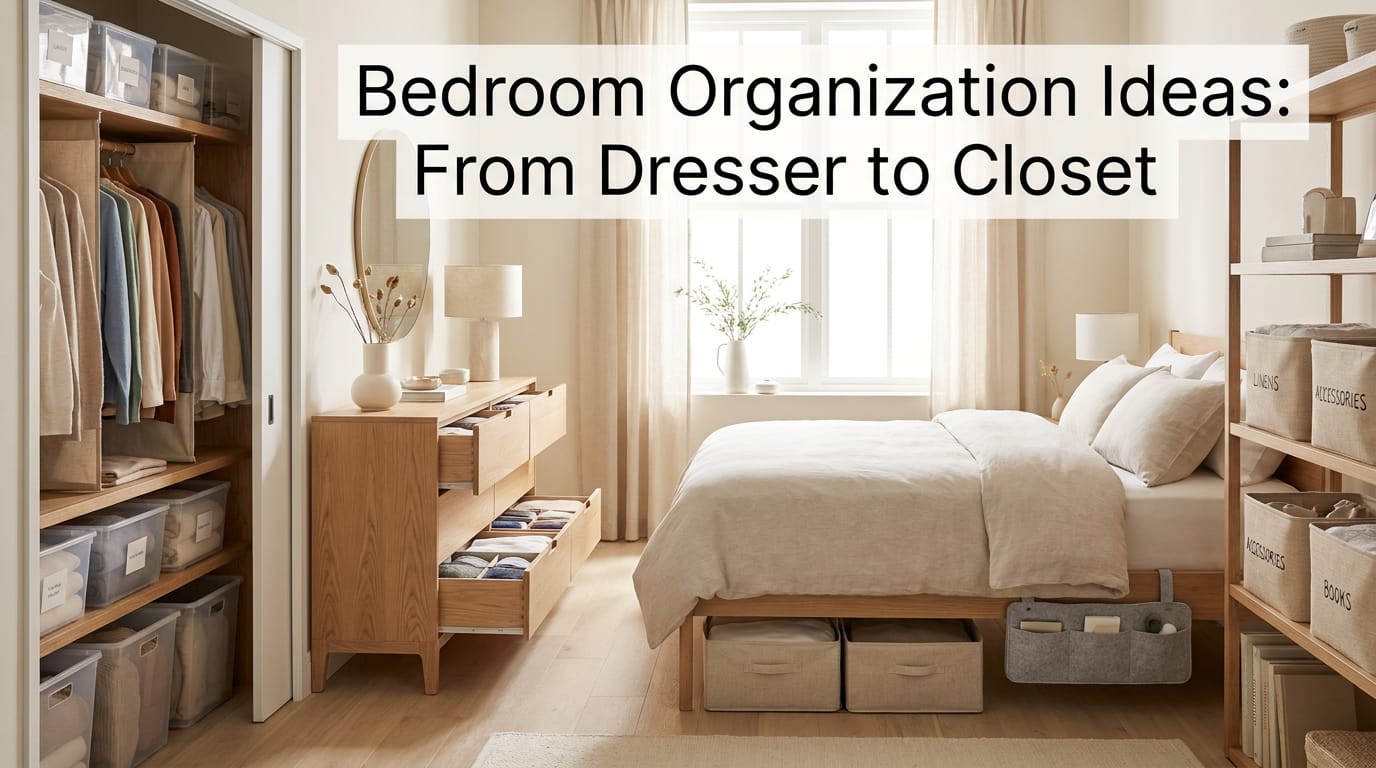
A cluttered bedroom makes rest harder to come by. When clothes pile up, drawers overflow, and closet space disappears, the room stops feeling like a retreat.
Applying practical bedroom organization ideas doesn’t require a full renovation. Small, consistent systems — from drawer dividers to closet organizers — can transform the way a space functions daily.
In this post you’ll find:
- How drawer dividers keep folded clothes sorted and easy to access.
- Hanging organizers that use vertical closet space for accessories and clothing.
- Closet shelf dividers that separate stacked items without added bulk.
- Bedside storage solutions designed to keep nighttime essentials within arm’s reach.
- Under-bed storage containers that reclaim often-wasted floor-level space efficiently.
- Labeled bins and baskets that create visual order on open shelving.
This post contains affiliate links. As an Amazon Associate, I earn from qualifying purchases, at no extra cost to you.
1. Drawer Dividers
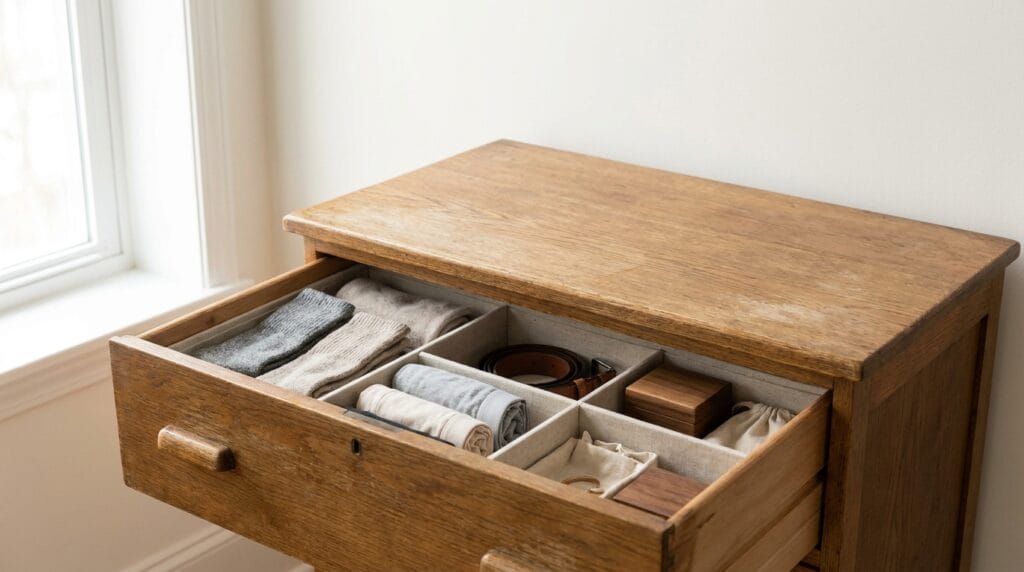
Folded clothing loses its structure the moment a drawer gets overfilled. Items shift during daily use, making it hard to locate anything without disrupting the entire stack.
Drawer dividers section off the interior into separate compartments. Each clothing type — socks, underwear, folded tees — stays in its own zone.
This reduces the time spent searching and keeps folded items from collapsing onto neighboring piles throughout the week.
2. Closet Shelf Dividers
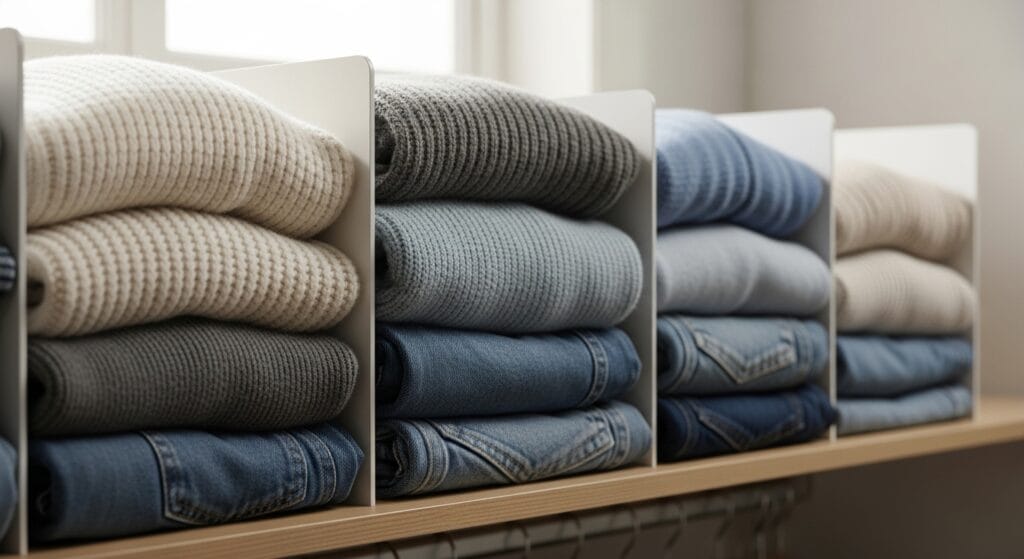
Stacked sweaters and folded jeans tend to lean and collapse, turning a tidy shelf into a tangled mess. Shelf dividers clip or slide onto existing shelves to create firm vertical boundaries.
Each section holds one clothing category upright without requiring additional furniture.
This approach works especially well in shared closets where two people’s items need to stay separated without conflict.
3. Under-Bed Storage Containers
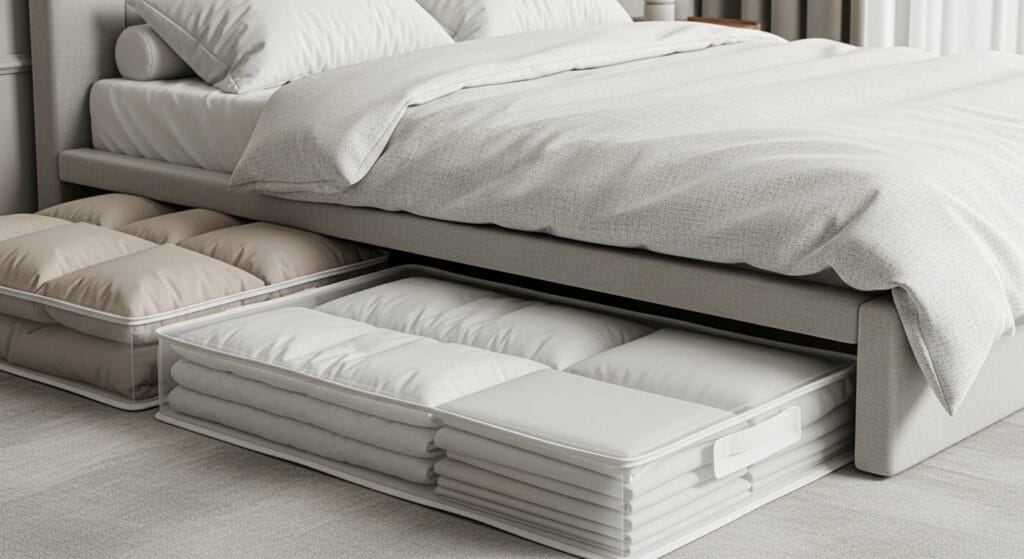
The space beneath a bed is one of the most underused areas in a bedroom. Low-profile containers with lids slide in easily and can hold seasonal clothing, extra linens, or spare pillows.
Wheeled versions allow full retrieval without bending or stretching.
Keeping off-season items here frees up closet space for what’s worn regularly, making daily dressing noticeably more efficient.
4. Hanging Closet Organizers
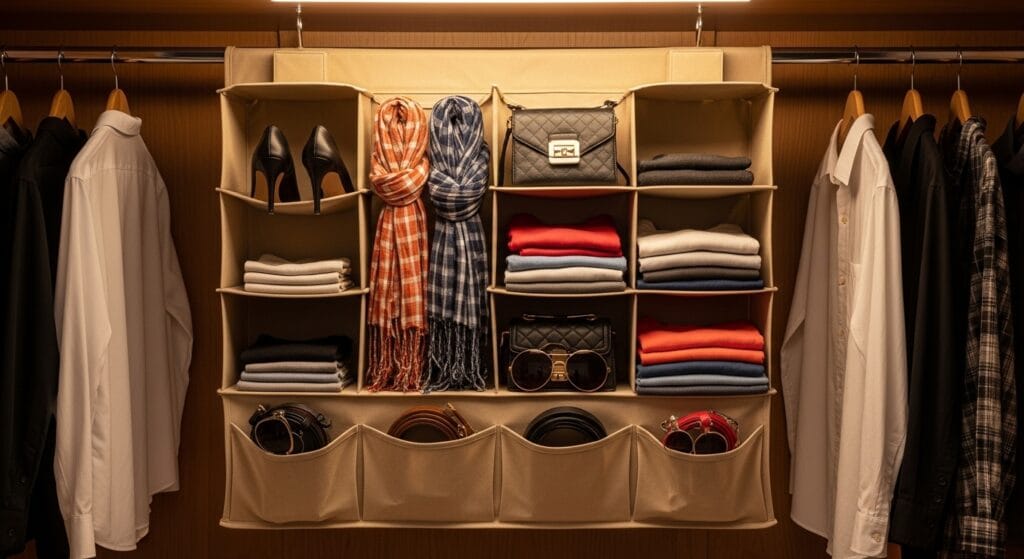
Vertical space inside a closet often goes unused when only a single hanging rod is present. Multi-pocket hanging organizers attach directly to the rod or closet door and hold accessories, folded items, shoes, or small bags.
They create layers of accessible storage without consuming floor space.
Narrow closets benefit most, as the organizer works within the existing footprint rather than requiring structural changes.
5. Bedside Caddies and Organizers

Nightstands fill quickly with items that don’t all need a permanent surface. Books, chargers, glasses, remotes, and water bottles compete for the same small area every night.
A bedside caddy attaches to the mattress or bed frame and holds frequently used items within reach while keeping the tabletop surface clear.
This simple shift reduces clutter without removing the accessibility that makes a nightstand useful.
6. Labeled Storage Bins and Baskets
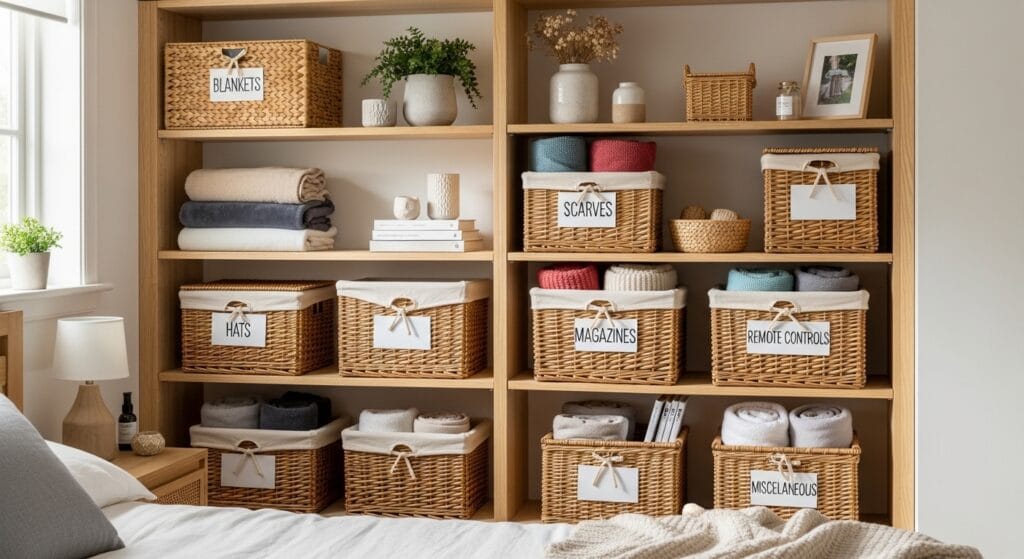
Open shelving in bedrooms can quickly shift from decorative to chaotic. Without clear boundaries, items accumulate without any logical grouping, making retrieval a guessing process.
Fabric or woven bins with labels assign each category a fixed home. Seasonal accessories, extra throws, and miscellaneous items each occupy a named container.
Labeling removes ambiguity. When every bin has a purpose, items return to the right place consistently.
7. Closet Rod Doublers
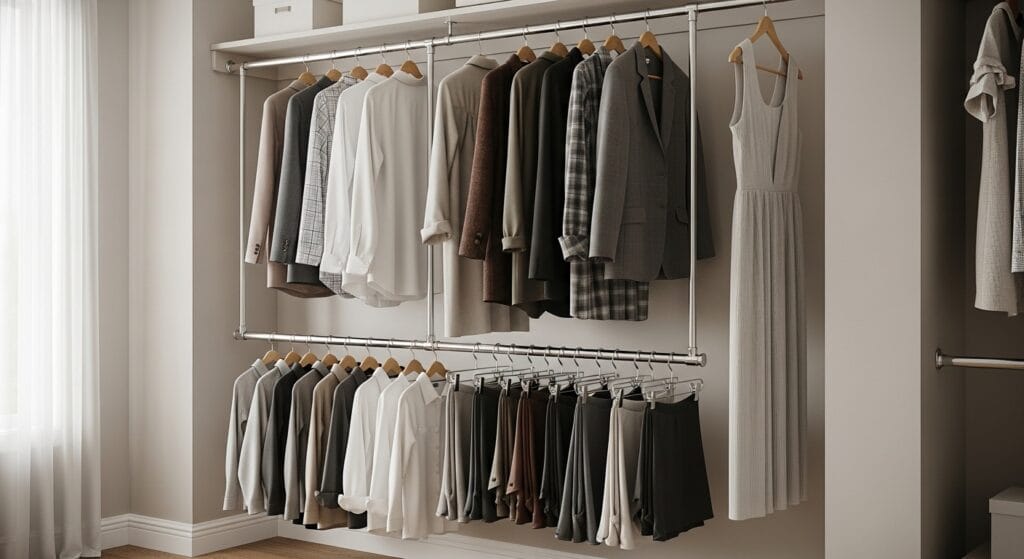
A single hanging rod wastes the lower half of most closet interiors. Shorter garments — shirts, jackets, blazers — only occupy the top portion, leaving empty space below.
A rod doubler hooks onto the existing rod and creates a second hanging level underneath. Short items now fill both tiers efficiently.
The result doubles hanging capacity without permanent installation, making it practical for renters and homeowners alike.
8. Stackable Dresser Top Organizers
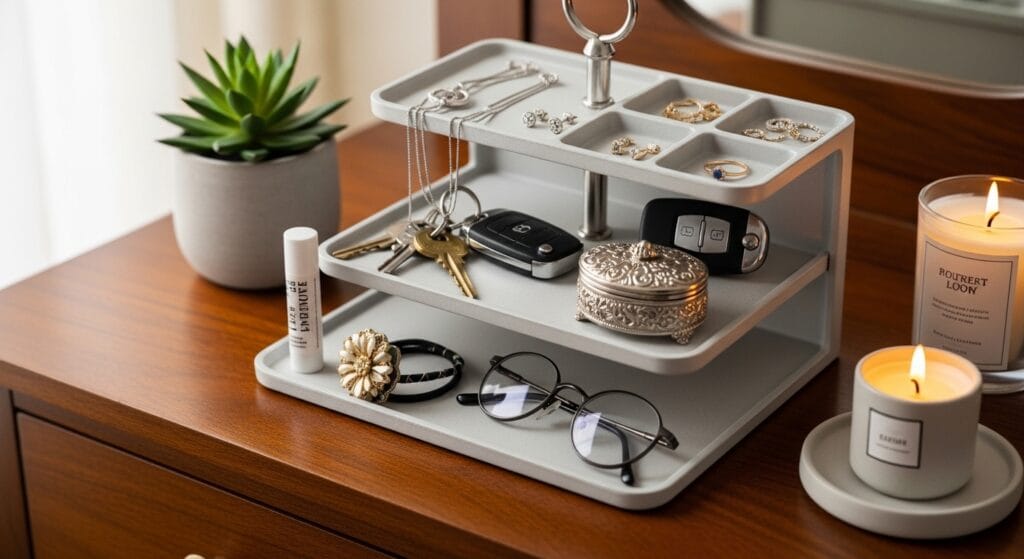
Dresser surfaces collect jewelry, coins, receipts, and miscellaneous items that never quite find a permanent home. Stackable organizers create tiered sections that give each category a defined spot.
Trays and small compartmentalized containers work together to keep jewelry separated and surface clutter contained.
This system also improves visibility — when items are sorted and elevated, locating them in the morning takes seconds rather than minutes.
9. Over-the-Door Organizers
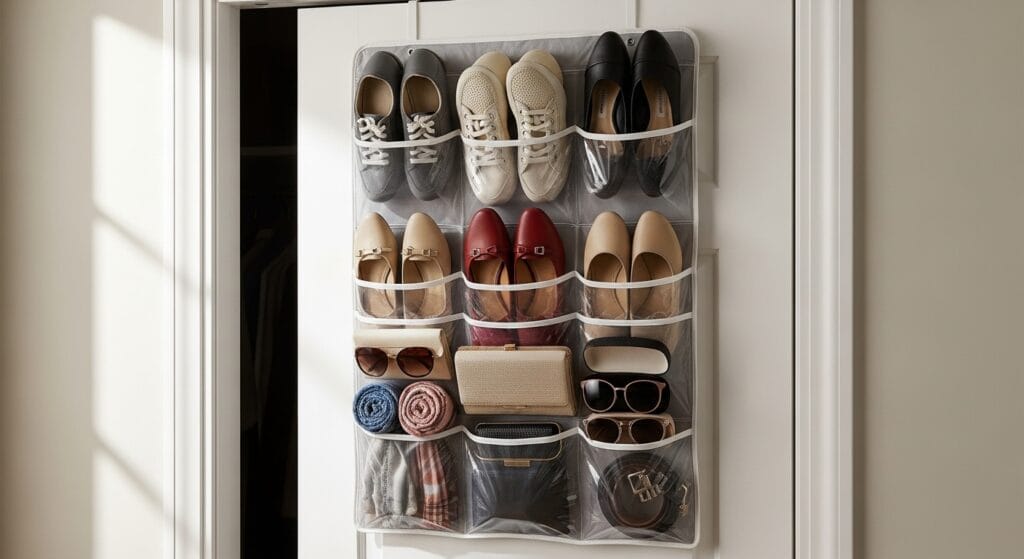
Bedroom doors represent a usable storage area that is frequently ignored. The back of a closet door or bedroom door can hold shoes, accessories, cleaning supplies, or small personal items.
Over-the-door organizers mount with hooks or tension bars and require no drilling.
They work particularly well in smaller rooms where every inch of wall and floor space is occupied, turning dead zones into functional storage.
10. Vacuum Storage Bags
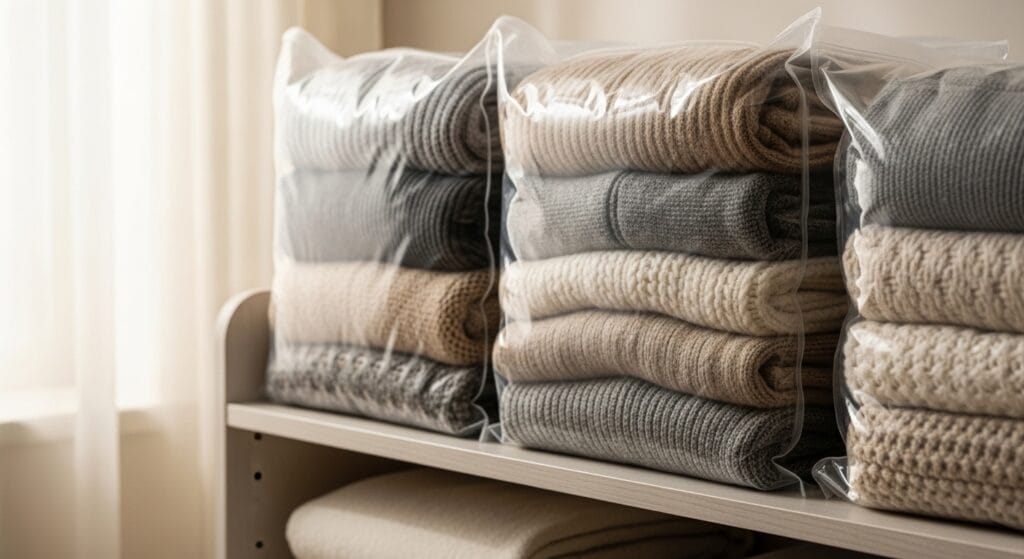
Seasonal clothing — heavy coats, bulky sweaters, extra blankets — takes up a disproportionate amount of closet and dresser space during off-season months.
Vacuum storage bags compress these items to a fraction of their original size. The air is removed manually or with a vacuum, and the sealed bag is stored flat under a bed or on a high shelf.
This frees active storage for what’s currently in rotation.
11. Shoe Racks and Shoe Shelves
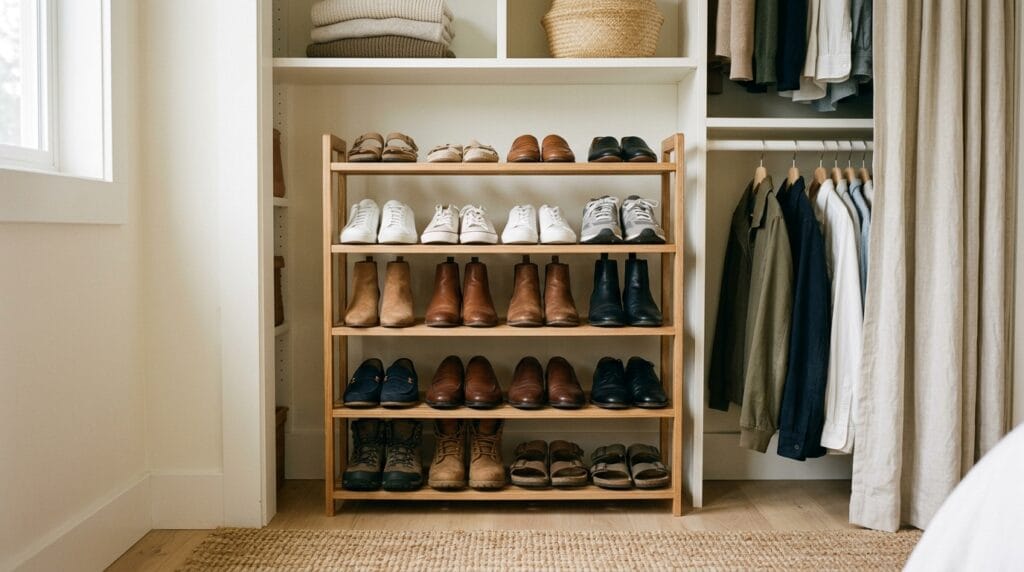
Shoes scattered across a closet floor make the entire space feel chaotic, even when clothing is neatly hung above. A tiered shoe rack brings footwear off the floor and into visible, accessible rows.
Adjustable models accommodate different shoe heights, from flats to boots.
Keeping shoes at a consistent level also makes the closet easier to sweep and maintain throughout the year.
12. Jewelry Organizers
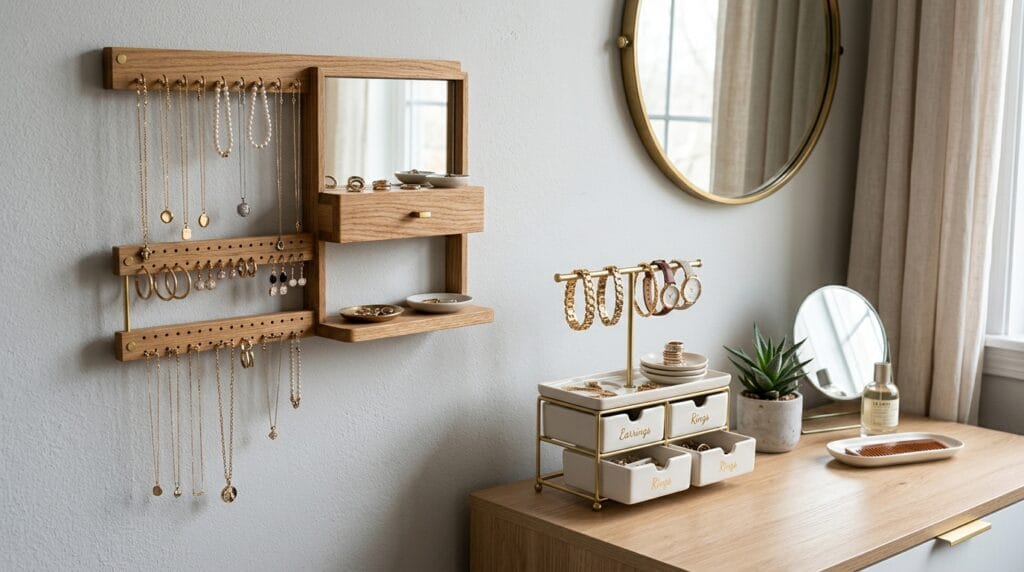
Tangled necklaces and mismatched earrings are a persistent frustration in most bedroom routines. Wall-mounted or countertop jewelry organizers give each piece a designated hook, slot, or compartment.
Hanging versions keep necklaces separated and visible, which reduces the time spent untangling before getting dressed.
Drawer inserts work well for rings and smaller pieces, ensuring nothing gets lost beneath larger items.
13. Folding Storage Ottomans
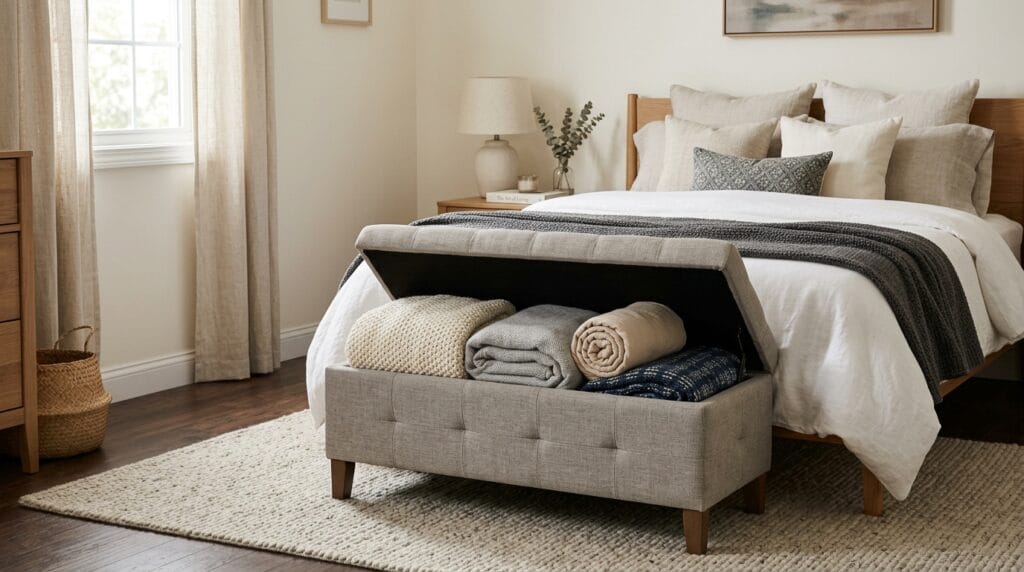
Seating at the foot of the bed often becomes a dumping ground for clothes that aren’t quite dirty but aren’t ready to be folded. A storage ottoman addresses two needs simultaneously.
The lid lifts to reveal interior space for extra blankets, pillows, or seasonal items. The top functions as a seat or surface.
This dual-purpose approach suits bedrooms where every piece of furniture needs to earn its space.
14. Closet Shelf and Drawer Systems
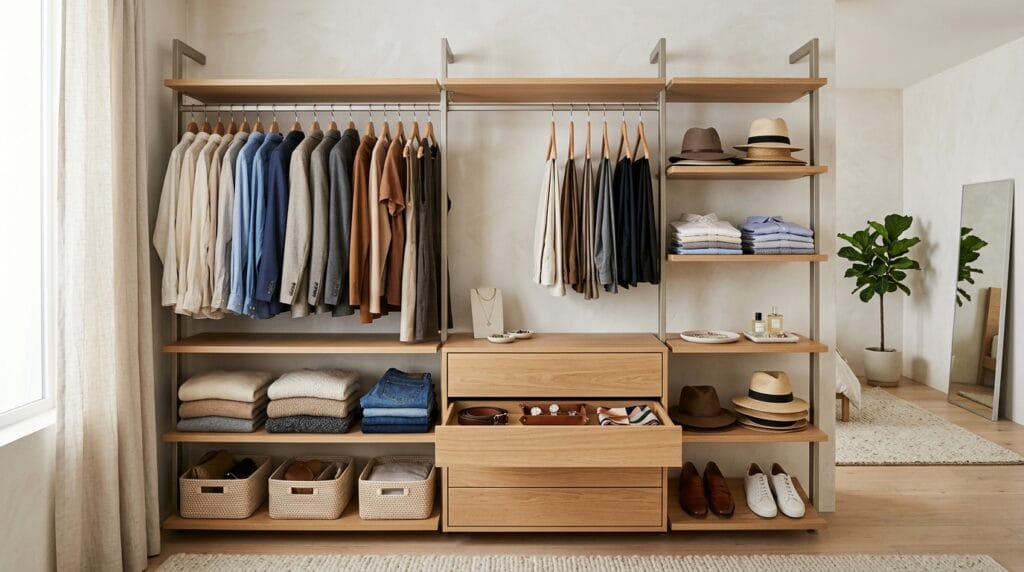
Built-in or modular closet systems replace a single hanging rod with multiple storage zones. Shelves, short hang sections, drawers, and cubbies all work together in a single footprint.
Modular units can be configured to match clothing habits — more drawers for folded items, more hang space for dresses or suits.
A well-structured closet system reduces the need for overflow storage elsewhere in the room.
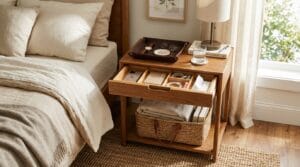
15. Nightstand with Built-In Storage
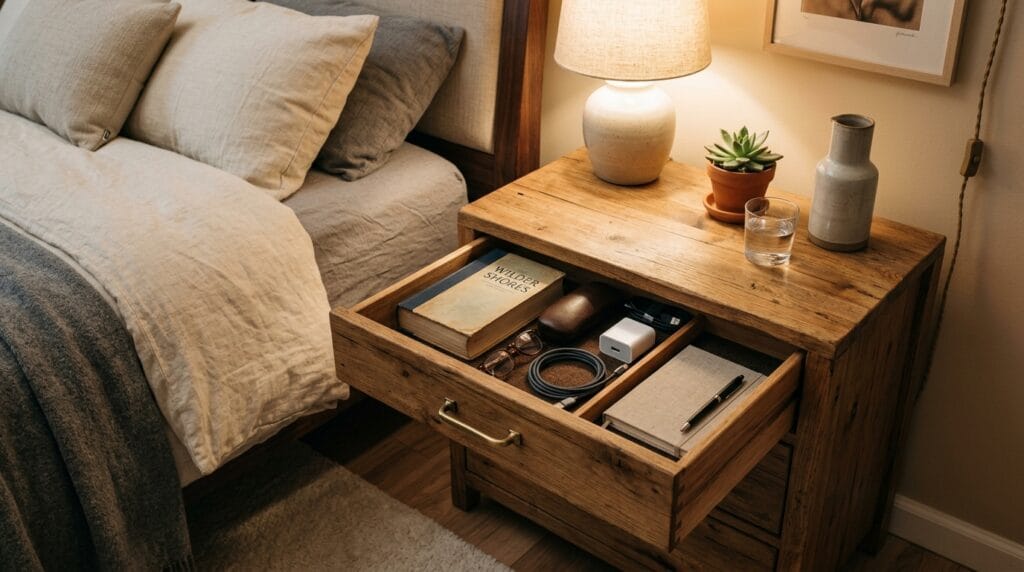
A nightstand without drawers limits what can be stored near the bed. Models with drawers, shelves, or both provide discreet storage for items that would otherwise crowd the surface.
Books, charging cables, reading glasses, and personal care items stay accessible but out of view.
For smaller bedrooms, a nightstand with interior storage replaces the need for additional shelving units, keeping the room visually calm and uncluttered.
Building a Practical Organization Routine
Effective bedroom organization ideas work best when they align with daily habits rather than fighting them. Choosing storage that matches how a space is actually used makes systems easier to maintain over time.
Starting with high-traffic areas — the closet, dresser, and bedside — creates an immediate improvement that motivates continued effort throughout the room.