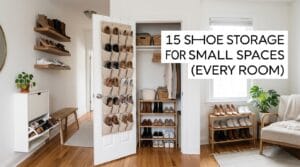
Traveling in a camper means working with limited square footage, and RV organization becomes essential for a comfortable daily life. Every drawer and cabinet needs a clear purpose.
A thoughtful storage system helps travelers find items quickly and keep small living spaces functional. With the right bins and organizers, any camper can stay tidy no matter how often it travels.
In this post you’ll find:
- Clear bins keep pantry items visible and secure while driving.
- Under-bed storage uses hidden space for bulky seasonal gear.
- Drawer organizers separate utensils, tools, and small camper essentials neatly.
- Label systems simplify locating items across tight cabinet spaces.
- Shelf dividers stabilize stacked linens and prevent shifting during travel.
- Storage carts add mobile, flexible organization for compact kitchens.
This post contains affiliate links. As an Amazon Associate I earn from qualifying purchases, at no extra cost to you.
01. Clear Storage Bins
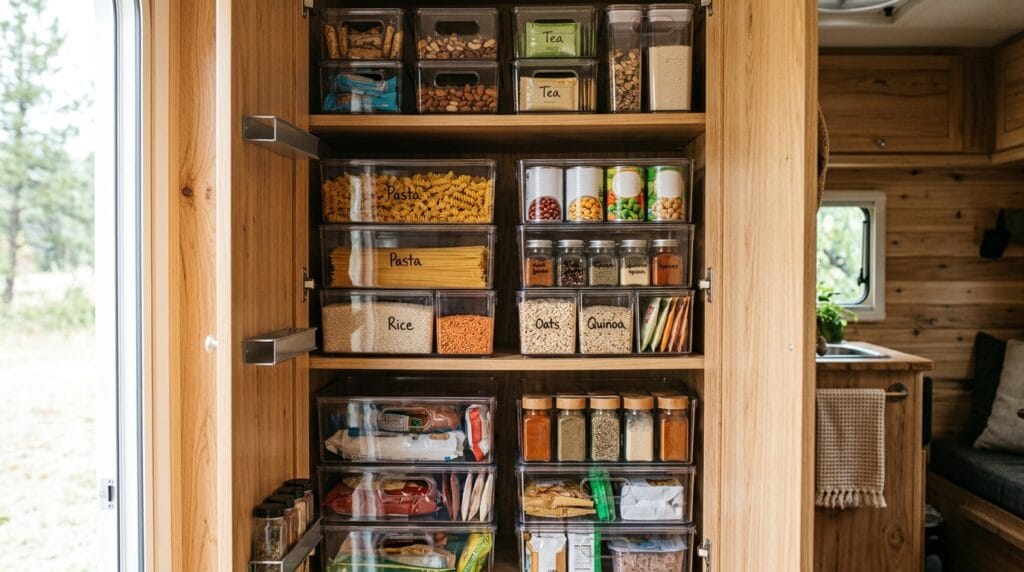
Camper kitchens rely on smart containment to prevent shifting during travel. Clear storage bins keep pantry goods visible and easy to grab.
Stacking bins use vertical space efficiently inside cabinets and under seating areas. Clear sides make identifying contents simple without opening every container.
This approach reduces clutter while keeping food supplies secure through bumpy roads and frequent stops.
02. Drawer Organizers
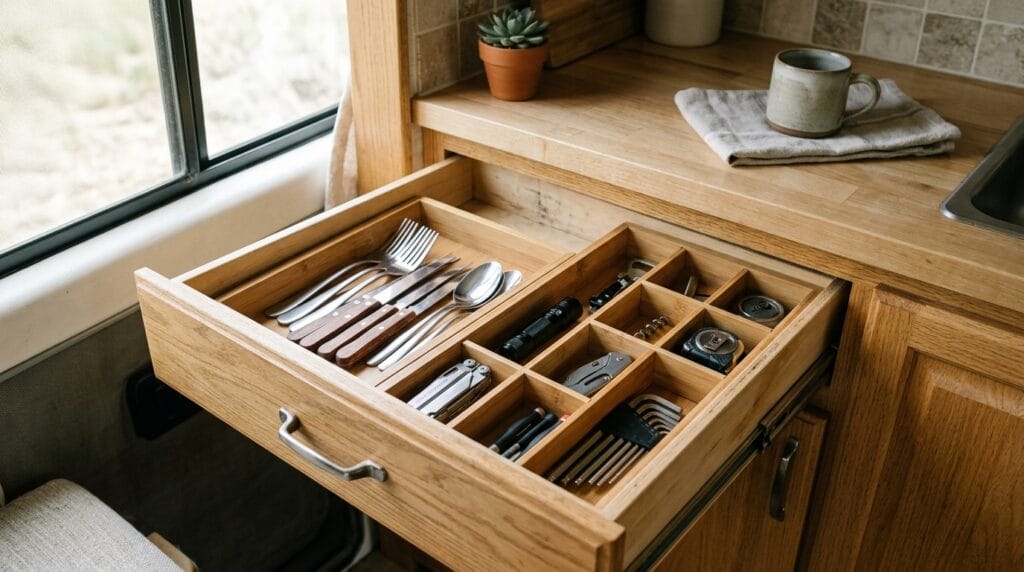
Small drawers in an RV often become catch-alls without structure. Adjustable drawer organizers divide space for utensils, tools, and travel documents.
Separated compartments prevent items from sliding around while the vehicle is in motion. This keeps drawers functional even on uneven terrain.
Campers gain quicker access to daily essentials without digging through mixed contents each morning.
03. Shelf Dividers
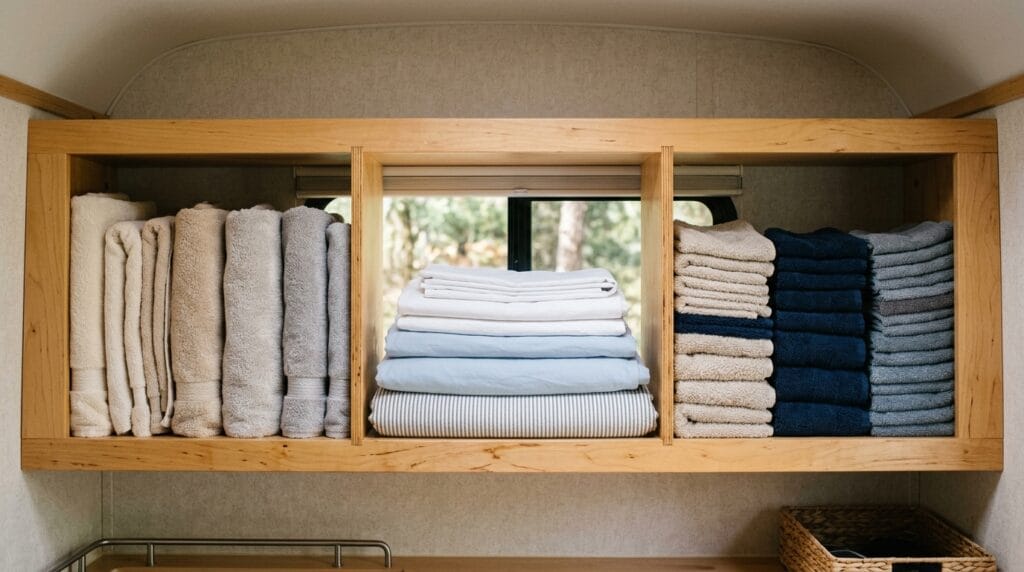
Stacked towels and clothing tend to topple in a moving vehicle. Metal shelf dividers create separate sections that hold items upright.
Dividers work well in closets, pantries, and bathroom cabinets throughout a camper. They allow multiple categories to share one shelf without mixing.
This structure keeps storage areas neat, even after hours of highway travel and sharp turns.
04. Storage Baskets
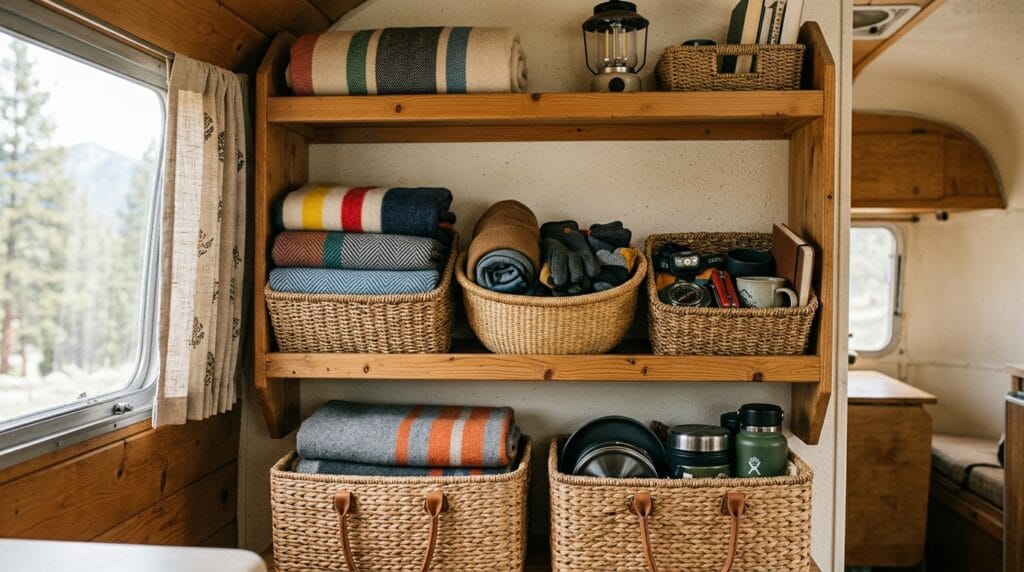
Open shelving is common in campers, and loose items can look chaotic quickly. Woven storage baskets group similar belongings into tidy, portable sections.
Baskets suit blankets, electronics, or outdoor gear that doesn’t fit neatly into drawers. They also make packing and unpacking during trips much faster.
Soft-sided options reduce noise and damage risk compared to rigid containers during transit.
05. Cabinet Organizers
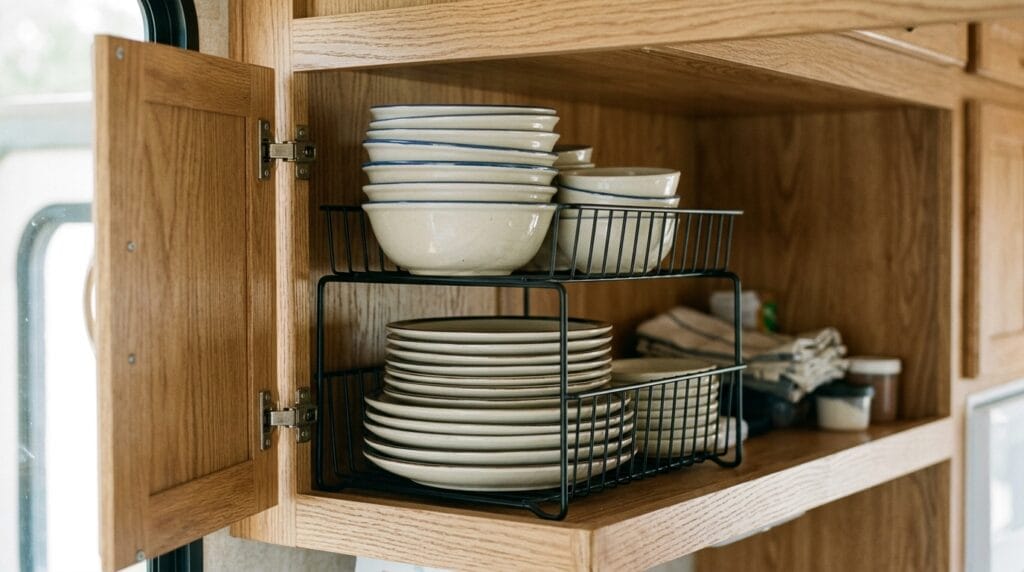
Cabinet space inside a camper is often narrow and awkwardly shaped. Stackable cabinet organizers maximize vertical room for dishes and cookware.
Tiered designs prevent plates and bowls from sliding when the vehicle moves. This protects fragile items while keeping cabinets easy to navigate.
Travelers gain extra storage without needing to expand physical cabinet space.
06. Under-Bed Storage
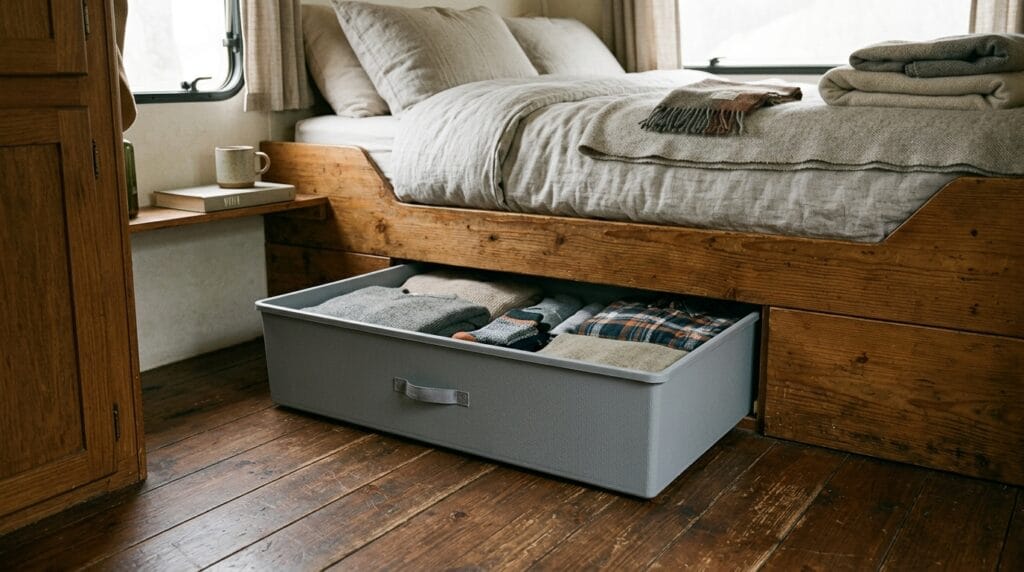
Sleeping areas in campers often sit above unused storage potential. Under-bed storage bins convert that hidden space into practical room for bulky items.
Seasonal clothing, tools, or extra bedding fit well in these low-profile containers. Slim designs slide easily beneath mattresses without blocking access.
This keeps living areas open while still accommodating gear needed for longer trips.
07. Pantry Containers
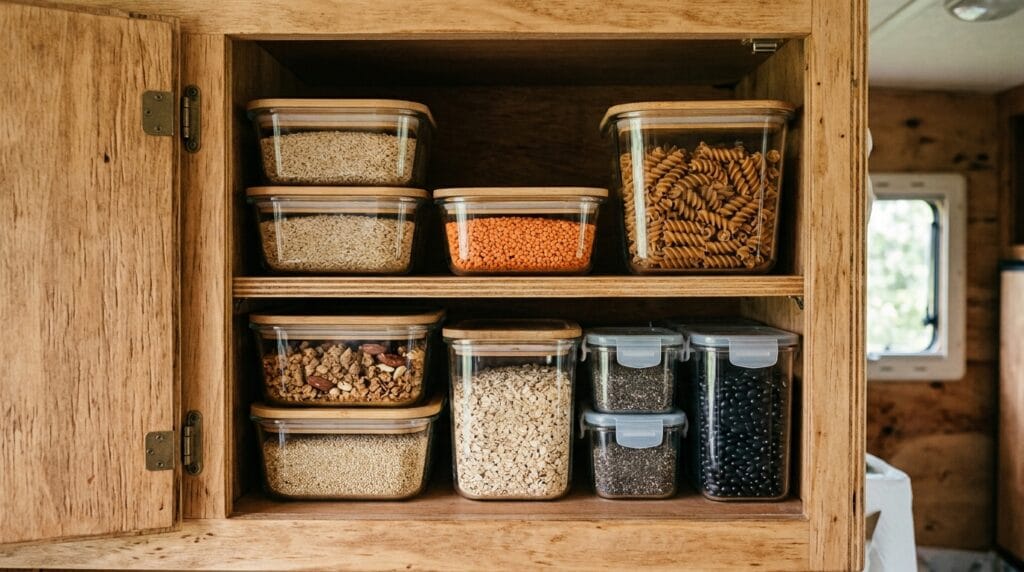
Food storage in a camper kitchen needs to stay compact and secure. Stackable pantry containers keep dry goods fresh while saving valuable shelf space.
Uniform shapes allow containers to stack neatly inside narrow cabinets. This prevents wasted gaps that often occur with mismatched packaging.
Meal prep becomes easier when ingredients are visible and consistently organized during travel.
08. Label Systems
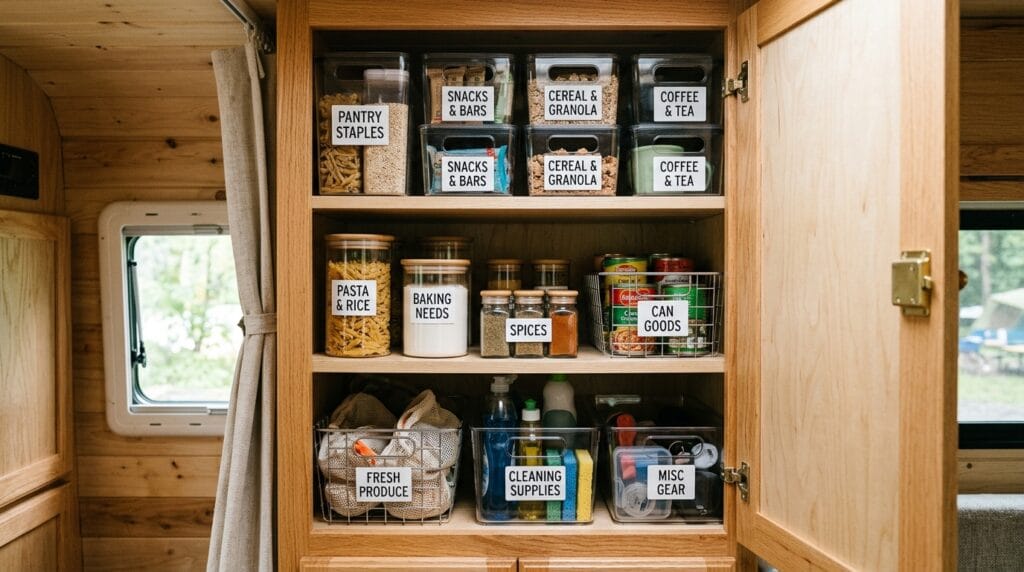
Finding specific items quickly matters in a compact living space. Adhesive label systems mark bins, drawers, and containers for faster identification.
Clear labeling reduces the need to search through multiple compartments during setup or cleanup. This is especially helpful when sharing camper space with family members.
A consistent labeling method keeps the organization functional even as contents change from trip to trip.
09. Entryway Organizers
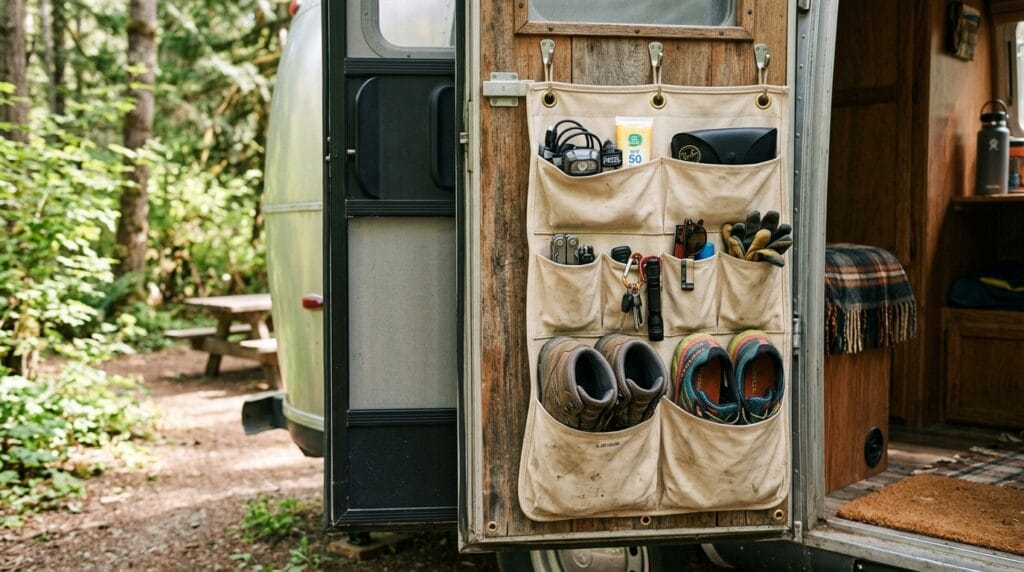
Camper entry points collect shoes, keys, and outdoor gear throughout a trip. Hanging entryway organizers give these items a defined, accessible home.
Pocketed designs mount easily near doors without requiring extra floor space. This keeps walkways clear and reduces tripping hazards inside tight quarters.
Guests and family members benefit from a consistent drop zone for daily essentials.
10. Closet Organizers
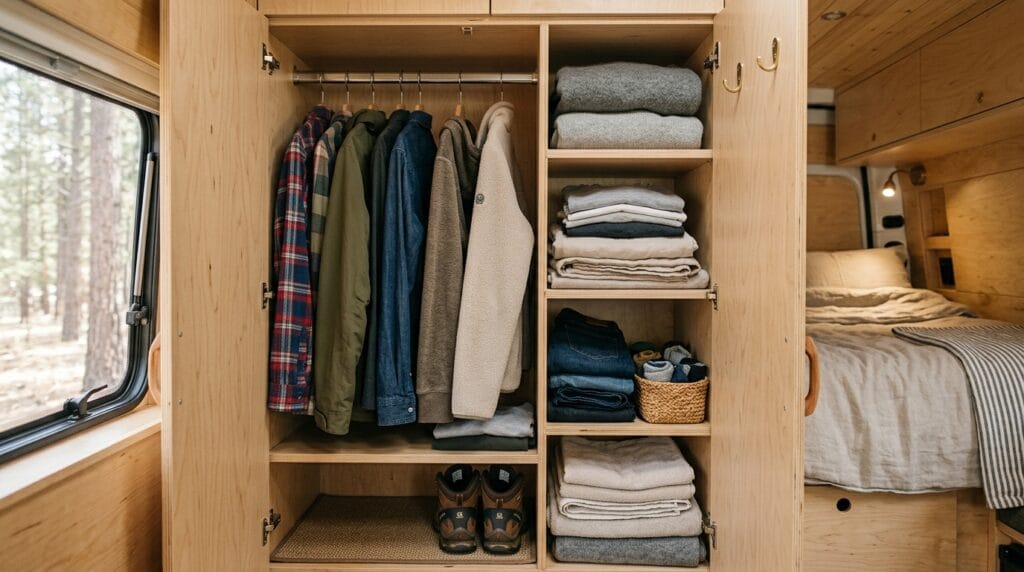
Camper closets are typically narrow, limiting how much clothing can be stored. Compact closet organizers add shelving and hanging space within tight dimensions.
Modular shelves adjust to fit various closet widths found in different camper models. This flexibility helps travelers pack efficiently for varying trip lengths.
Organized closets make daily outfit choices simpler during extended time on the road.
11. Storage Carts
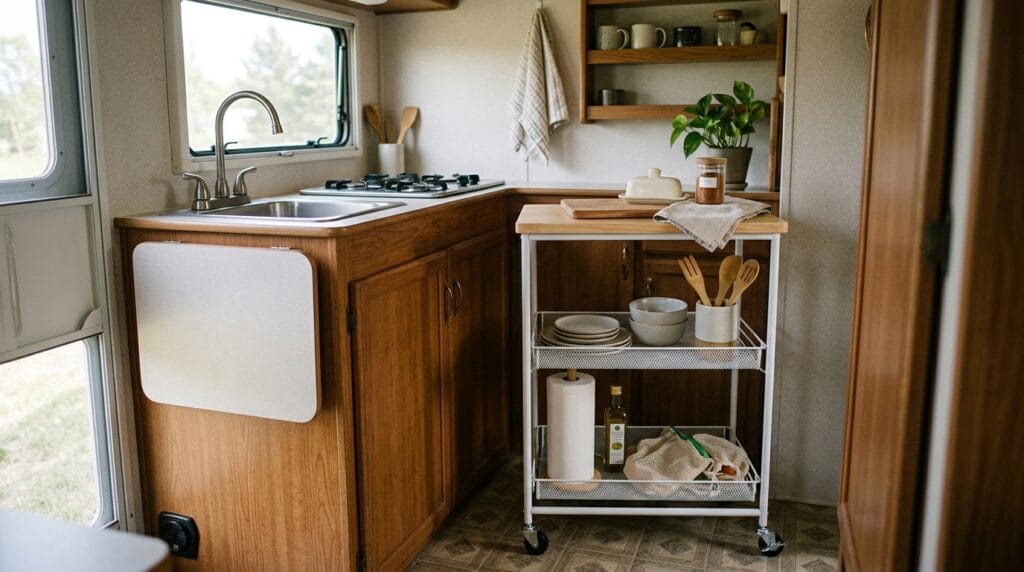
Kitchens in campers often lack a counter and storage space for cooking supplies. Rolling storage carts add mobile surface area that can be moved as needed.
Carts hold spices, utensils, or snacks while remaining easy to tuck away after use. Wheels allow quick repositioning depending on the day’s activities.
This flexible setup supports cooking routines without permanently altering the camper’s layout.
12. Space-Saving Accessories
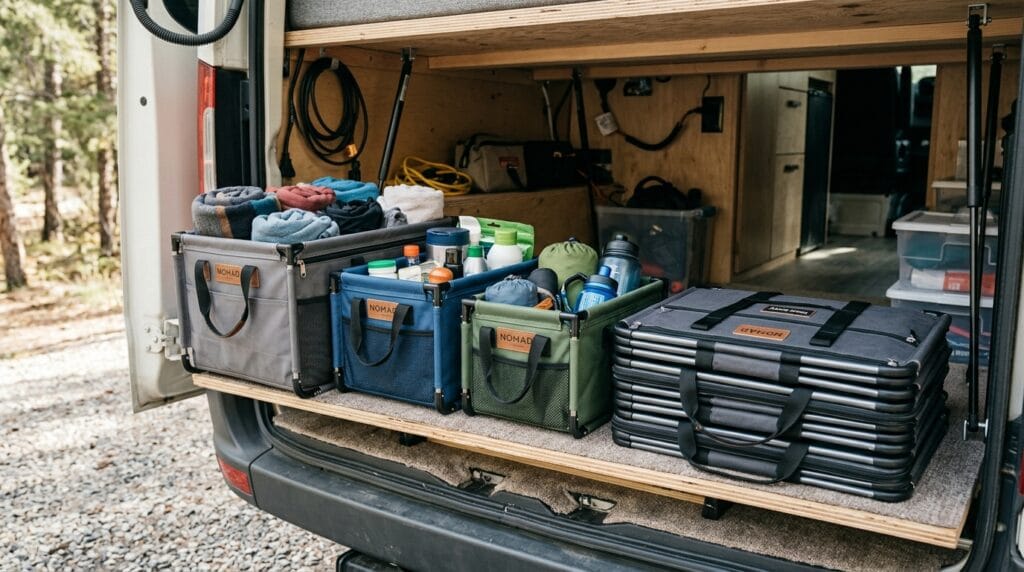
Every inch matters when organizing a compact travel vehicle. Collapsible space-saving containers fold flat when not in use, freeing up room.
These accessories work well for extra linens, laundry, or seasonal items used occasionally. Collapsible designs make storage adaptable to changing needs throughout a trip.
Travelers gain flexible options without permanently committing space to bulky containers.
13. Desk Organizers
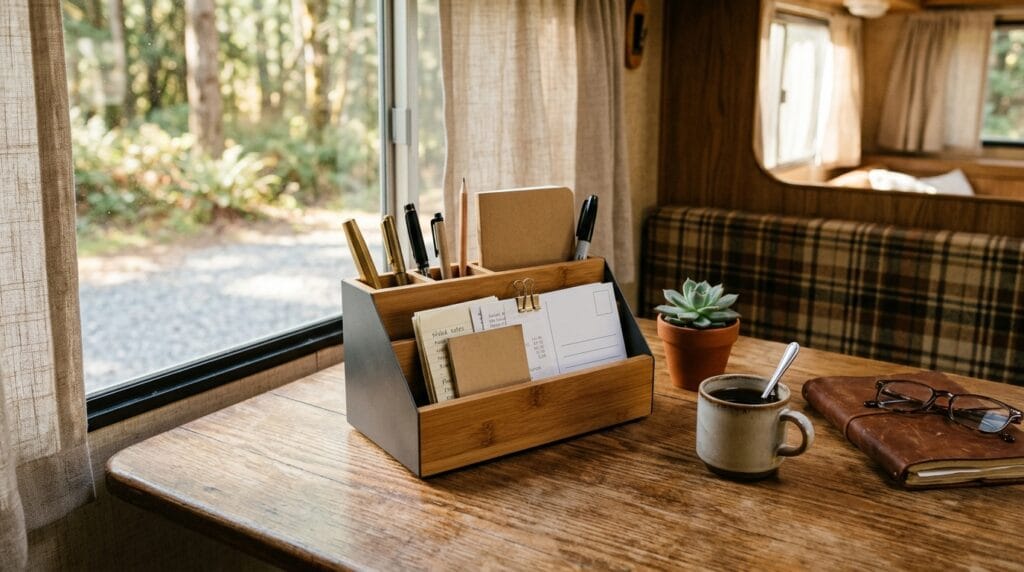
Many campers include a small dinette or workspace for planning and paperwork. Compact desk organizers keep pens, chargers, and documents contained in one spot.
Small trays and compartments prevent loose items from sliding during travel. This keeps a shared workspace tidy between meals and activities.
A defined organization spot supports remote work or trip planning while on the road.
14. Laundry Organizers
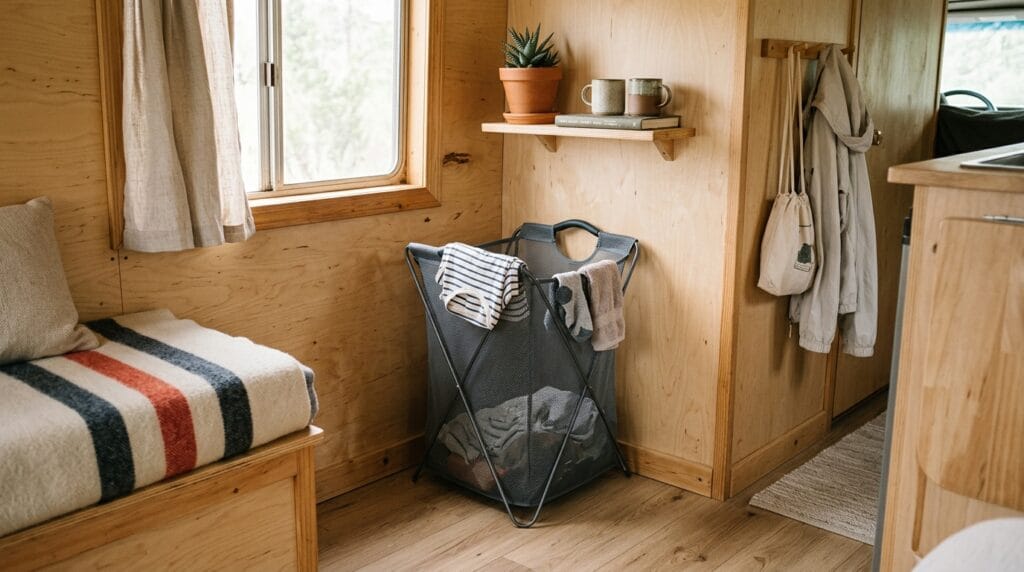
Limited space makes managing dirty clothes a common camper challenge. Collapsible laundry organizers contain laundry without taking up permanent floor space.
Mesh or fabric designs allow airflow while keeping items separated from clean belongings. Foldable options tuck away easily when not in active use.
This keeps camper interiors fresher and more organized during multi-day trips.
Building a More Functional Space
RV organization works best as an ongoing system rather than a one-time setup. Small adjustments after each trip help maintain order as needs change.
Pairing practical storage with adaptable under-bed storage solutions creates a camper that stays functional through frequent travel and daily use.