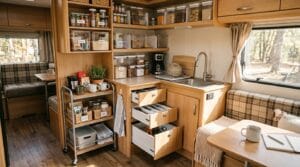
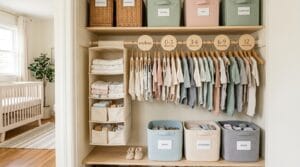
Keeping storage areas functional often requires more than occasional decluttering. Thoughtful systems help reduce daily frustration and make belongings easier to locate.
Drawer organizer ideas can improve how clothing, accessories, paperwork, and household essentials are stored. Small adjustments across different rooms often create a more manageable living environment.
In this post you’ll find:
- Drawer compartments that separate clothing and everyday accessories efficiently.
- Containers that simplify sorting supplies throughout different living spaces.
- Vertical storage tools that improve closet visibility and access.
- Workspace solutions that reduce clutter around documents and essentials.
- Underutilized spaces converted into practical household storage areas.
- Labeling methods supporting long-term organization across multiple storage zones.
This post contains affiliate links. As an Amazon Associate I earn from qualifying purchases, at no extra cost to you.
01. Drawer Organizers
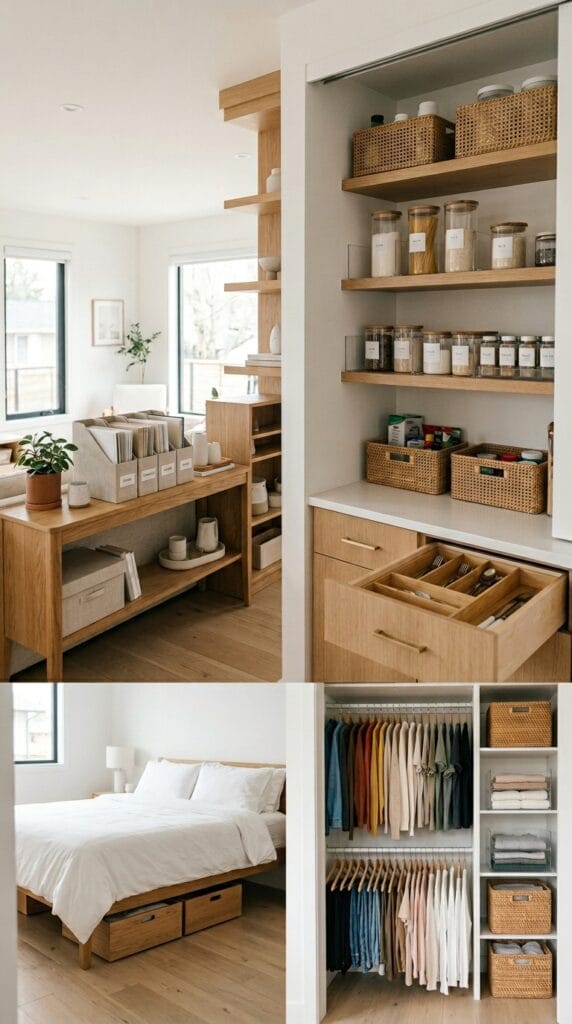
Messy clothing drawers often make daily routines slower than necessary. Drawer organizers create dedicated sections for socks, undergarments, accessories, and folded garments.
They work particularly well alongside organized dresser layouts. Clear divisions help maintain order and reduce time spent searching through stacked items.
02. Shelf Dividers
Closet shelves frequently become crowded when folded clothing shifts throughout the week. Shelf dividers help maintain vertical boundaries between stacks.
Their structure keeps sweaters, jeans, and linens from collapsing into neighboring piles. They pair naturally with organized compact wardrobe systems where shelf space is limited.
03. Storage Baskets
Bedrooms often collect loose accessories, seasonal items, and miscellaneous belongings. Storage baskets provide contained storage while keeping frequently used items accessible.
Placed on shelves, inside closets, or beside dressers, they help categorize belongings. Consistent grouping creates a cleaner appearance and simplifies everyday room maintenance.
04. Closet Organizers
Limited hanging space can quickly affect clothing visibility and accessibility. Closet organizers introduce additional sections for garments, shoes, handbags, and accessories.
By assigning dedicated storage zones, wardrobes become easier to manage. They support daily routines while reducing overcrowding in frequently used clothing areas.
05. Under-Bed Storage
Many homes overlook valuable storage space beneath the bed. Under-bed storage containers make use of that hidden area without adding visual clutter.
Seasonal clothing, spare bedding, and less-used items remain accessible yet out of sight. This approach helps free drawer capacity for belongings needed more regularly.
06. Desk Organizers
Work surfaces often become crowded with paperwork and small supplies. Desk organizers help separate documents, stationery, chargers, and daily essentials.
A structured workspace complements efficient home systems. Many households combine them with functional office setups to maintain consistency throughout the room.
07. Pantry Containers
Kitchen storage becomes easier to maintain when categories remain clearly separated. Pantry containers create designated homes for dry goods and frequently used ingredients.
Uniform containers improve visibility and reduce overcrowding on shelves. They fit naturally within structured food storage systems.
08. Storage Carts
Some rooms require flexible storage that can move where needed. Storage carts offer portable organization for clothing accessories, grooming supplies, and household items.
They are especially useful near vanity areas and shared spaces. Mobility allows storage to adapt as routines and household needs change.
09. File Organizers
Paper clutter can spread quickly when documents lack dedicated storage. File organizers keep records, manuals, receipts, and important paperwork sorted.
Whether stored inside cabinets or drawers, categorized files reduce searching time. Organized paperwork contributes to cleaner rooms and more streamlined household management.
10. Label Systems
Even well-organized storage can become difficult to maintain over time. Label systems provide visual guidance for drawers, baskets, shelves, and containers.
Clear identification supports consistency among family members and guests. Labels also help maintain organization in spaces such as grooming stations.
11. Cabinet Organizers
Deep cabinets can hide items behind one another, creating unnecessary clutter. Cabinet organizers improve accessibility by separating categories within enclosed storage spaces.
They are useful for linens, toiletries, and household supplies. Similar approaches often support structured storage routines in organized washrooms.
Building a More Functional Space
Storage systems work more effectively when each room supports its daily purpose. Consistent drawer organizer ideas help reduce clutter while improving visibility and access.
Small adjustments across bedrooms, kitchens, bathrooms, and shared areas create lasting organization. Similar principles also support tidy family spaces throughout the home.