A small closet filled with too many clothes can quickly become overwhelming. Without a clear system, items pile up, and daily routines suffer.
Learning how to organize small closet spaces is more about strategy than simply adding more storage. Strong closet organization begins with understanding where your current setup works against you.
The solutions ahead address common challenges like limited hanging space, overcrowded shelves, and items that have no designated place.
In this post you’ll find:
- How double hanging rods can immediately expand your closet’s hanging capacity
- Over-the-door organizers that turn unused door space into active storage
- Why slim velvet hangers free up significant rod space for more clothes
- Stackable bins that group seasonal clothing and accessories in one area
- Using shelf dividers to keep folded clothing stacks neatly separated
- Floor-level shoe racks that reduce clutter and reclaim usable closet space
This post contains affiliate links. As an Amazon Associate I earn from qualifying purchases, at no extra cost to you.
01. Double Hanging Rods
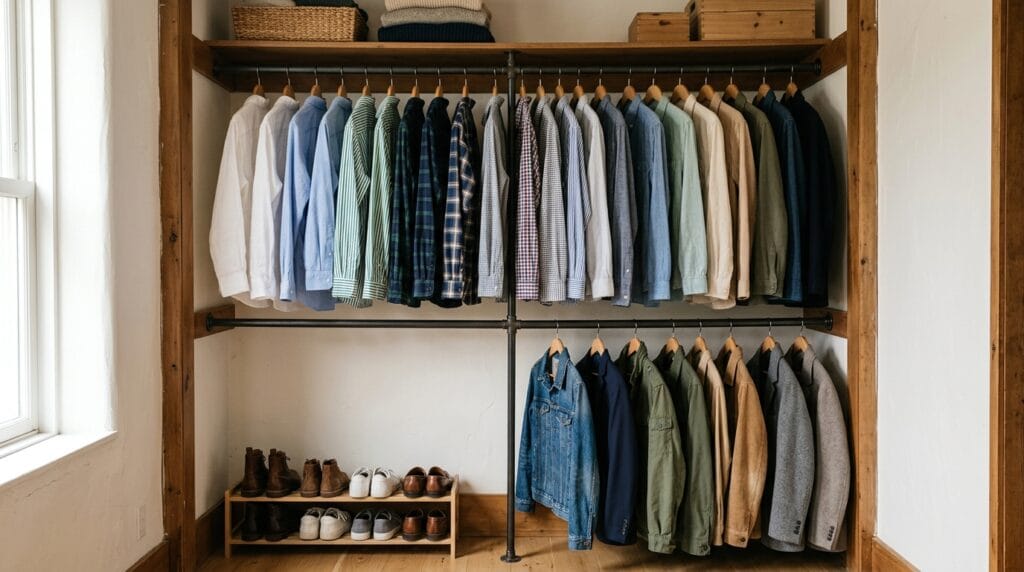
One of the most common wasted spaces in a small closet is the empty area below hanging clothes.
Adding a second rod underneath creates an entirely new hanging zone without occupying any floor space. This approach works especially well for shorter garments like shirts, jackets, and folded pants.
For those working through small closet organization ideas, adding a second rod is consistently one of the more practical starting points.
02. Slim Velvet Hangers
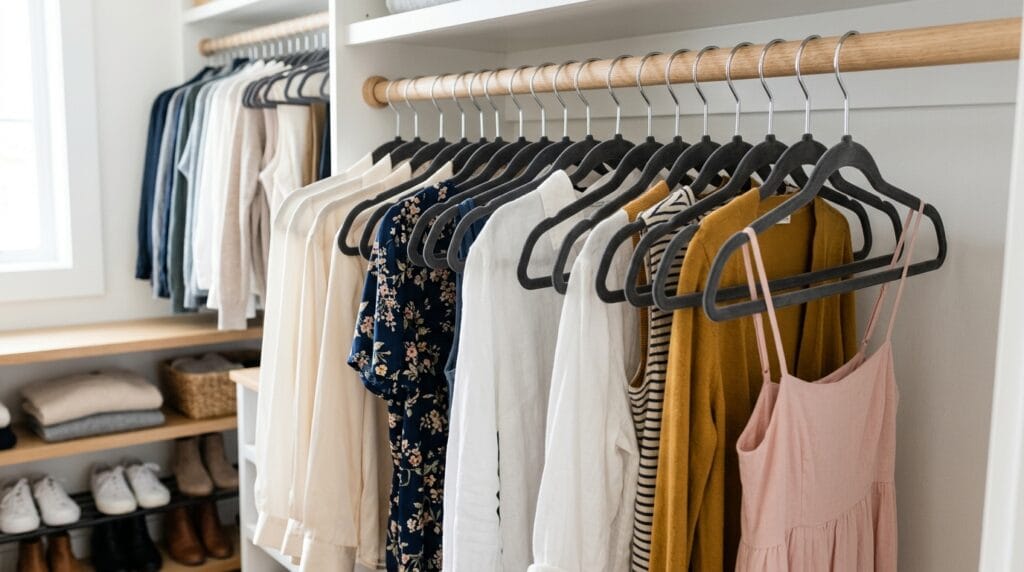
Standard plastic hangers take up far more rod space than most people realize.
Switching to thin, velvet-coated hangers reclaims a noticeable portion of hanging capacity. The non-slip texture also keeps clothing in place, reducing the need to rehang items that slip off.
This straightforward swap is especially valuable in closets where every inch of rod space matters.
03. Shelf Dividers
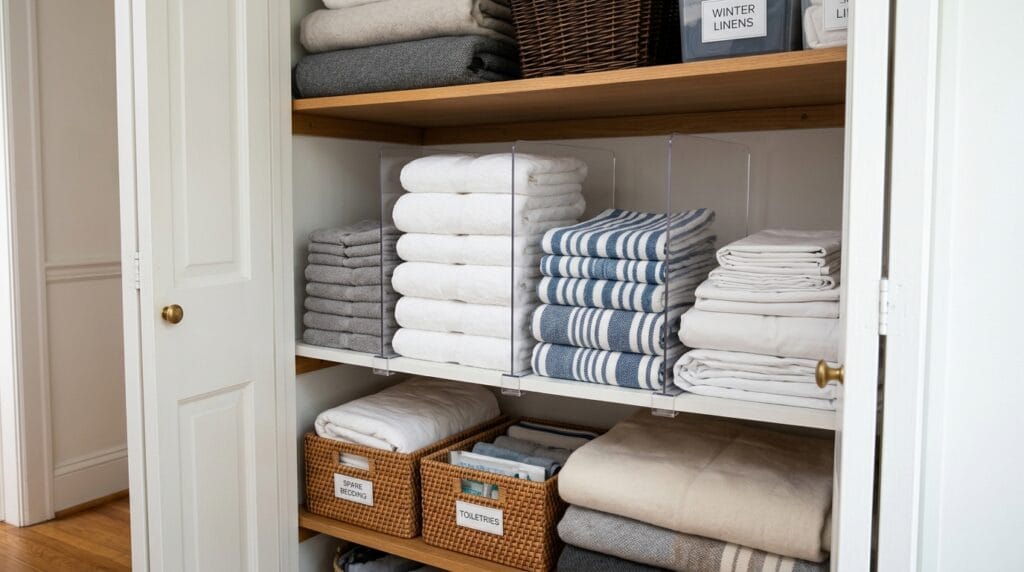
Folded sweaters and stacked jeans tend to lean and collapse on open shelving, turning neat piles into disorganized sprawl within days.
Shelf dividers clip onto existing shelves to create individual compartments for different clothing categories. They hold stacks upright and make it easier to retrieve one item without disturbing the rest.
They also work well for separating linens, accessories, or bags stored on higher shelves.
04. Over-the-Door Organizers
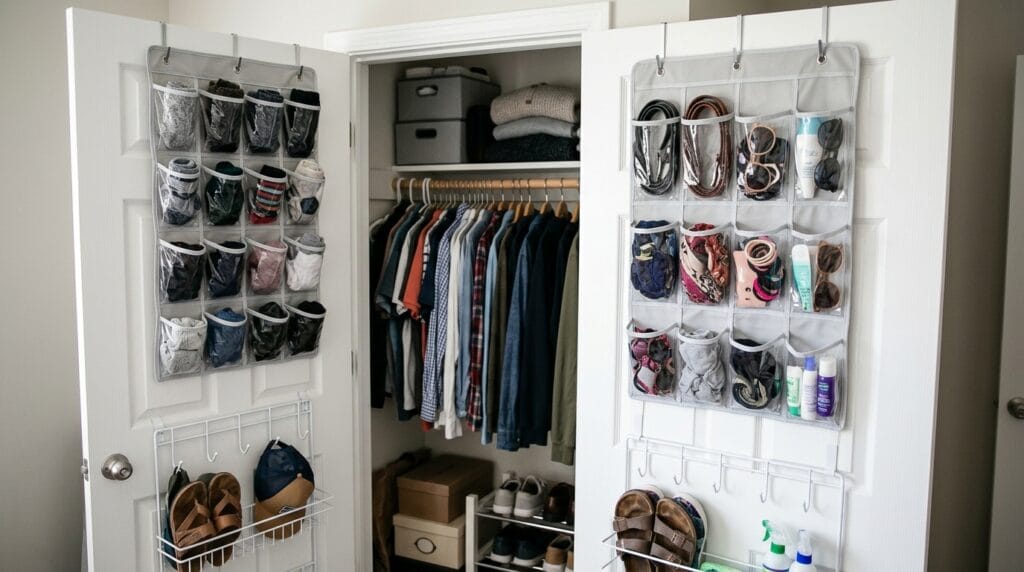
The back of a closet door is one of the most consistently overlooked storage surfaces in a bedroom.
Over-the-door organizers mount without tools and hold shoes, accessories, folded items, or small bags. They keep frequently used items visible and accessible without occupying shelf or floor space.
This type of storage appears regularly in practical small closet hacks because of how much capacity it adds without any installation.
05. Stackable Storage Bins
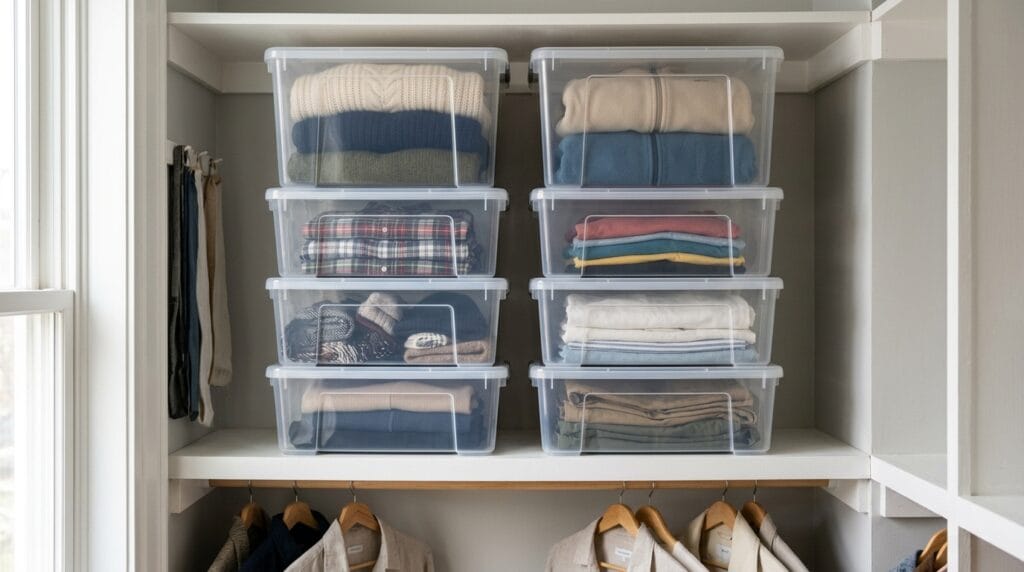
Seasonal clothing and rarely worn items often end up scattered across shelves, making everyday clothing harder to reach.
Stackable bins allow different clothing categories to be grouped and stored vertically, making efficient use of shelf height.
Clear containers make it easy to identify contents at a glance. Labeled bins are a practical staple in budget-friendly closet organization approaches that prioritize clarity over cost.
06. Hanging Fabric Shelves
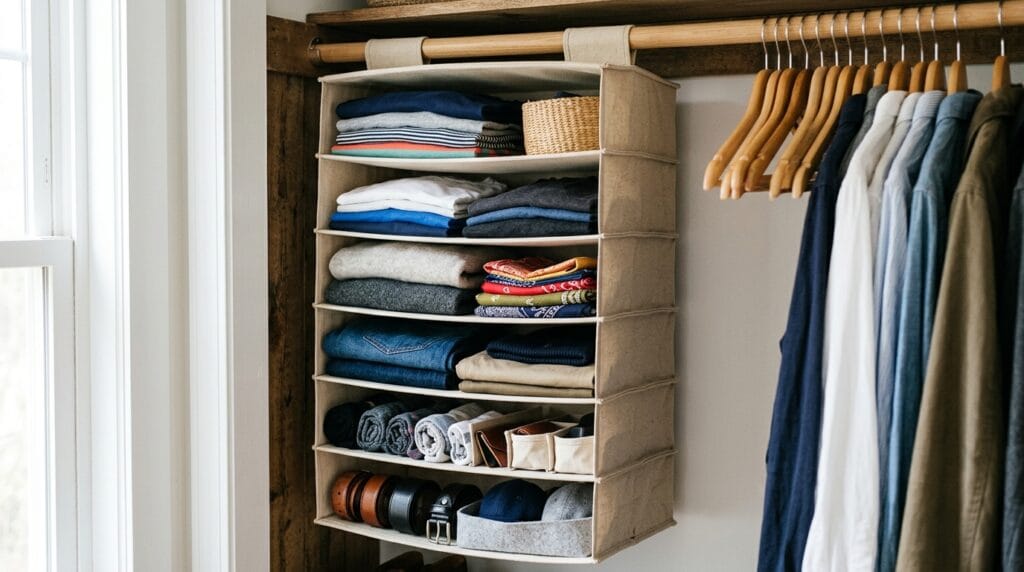
Hanging fabric shelves attach to an existing rod and convert an unused section into a multi-tier shelf.
They accommodate folded t-shirts, jeans, and accessories without requiring individual hangers. The fabric construction keeps them lightweight and easy to reposition as storage needs change.
This approach pairs well with double rods in small walk-in closet layouts where vertical space is the primary resource.
07. Vacuum Storage Bags
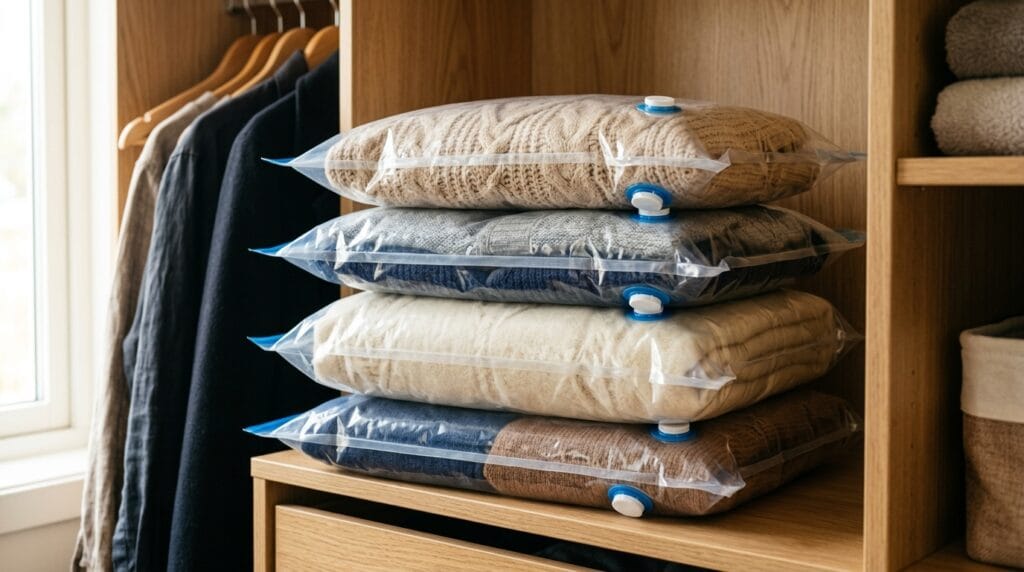
Much of a small closet’s available space disappears each season when bulky items like coats and thick sweaters take over.
Vacuum storage bags compress bulky clothing and bedding to a fraction of their original size. Sealed bags can be stored flat on shelves, slid under beds, or stacked in corners.
Clearing out seasonal volume is one of the most effective ways to restore functional space in a crowded closet.
08. Tiered Shoe Racks
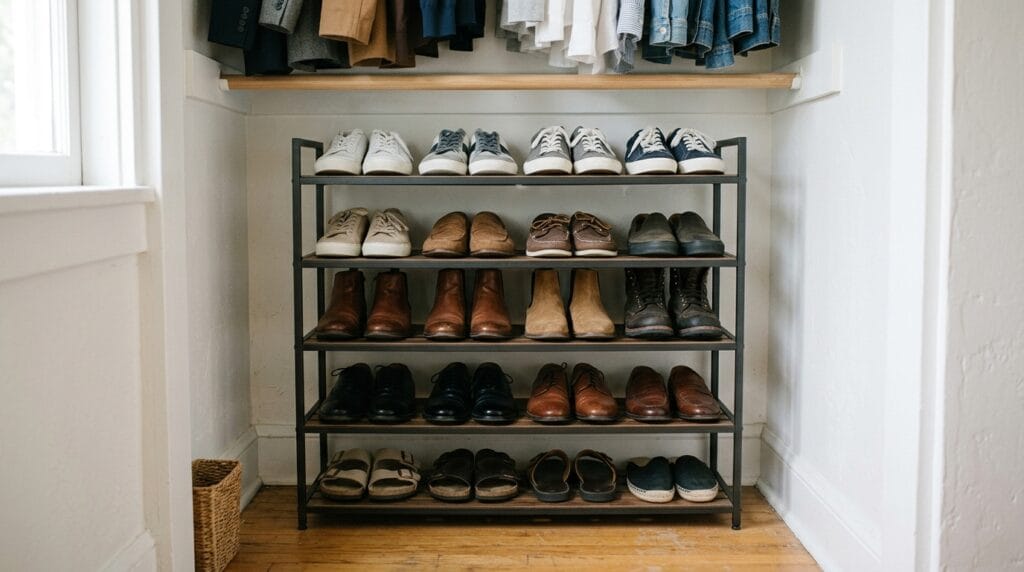
Shoes left on the floor of a small closet create clutter that makes the entire space harder to navigate.
A tiered shoe rack organizes footwear by category while keeping the floor clear for other uses. Vertical designs accommodate more pairs in a smaller footprint than flat floor storage.
Reclaiming floor space with a dedicated shoe rack reduces overall closet clutter and improves daily accessibility.
Building a Closet System That Works Every Day
Knowing how to organize a small closet means choosing solutions that match your habits, not just the space.
Starting with one or two changes—like hanging capacity or floor-level storage—creates a solid foundation. These methods also connect naturally to broader bedroom organization ideas throughout the home.