Living with limited square footage means every inch counts — especially for footwear. Keeping shoes accessible without cluttering the floor is one of the most common household challenges.
There are more creative shoe storage approaches available today than most households realize, covering everything from vertical shelves to slim cabinets.
These 15 shoe storage ideas for small spaces span every room — from entryways and closets to bedrooms and beyond — with practical options for different layouts and lifestyles.
In this post you’ll find:
- Over-the-door organizers that turn unused door panels into shoe storage
- Under-bed drawers designed for seasonal and overflow shoe organization
- Stackable boxes keep pairs visible, protected, and easy to rotate
- Slim cabinets fit narrow hallways while concealing footwear behind closed doors
- Floating shelves that display footwear without using any floor space
- Rotating towers and pegboard systems, maximizing vertical closet and wall space
This post contains affiliate links. As an Amazon Associate I earn from qualifying purchases, at no extra cost to you.
01. Over-the-Door Shoe Organizer
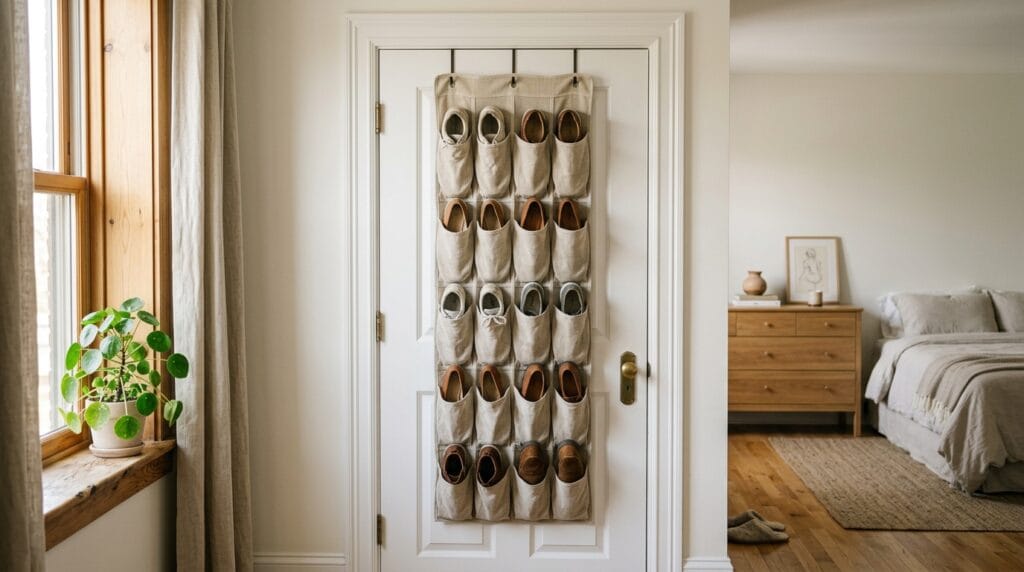
Doors are among the most underused storage surfaces in any home. An over-the-door shoe organizer converts that blank panel into functional storage without consuming floor space.
Most models hold 12 to 24 pairs in clear or fabric pockets, making it easy to locate shoes quickly.
They work equally well in entryways, bedrooms, and laundry rooms — offering a flexible option for households with limited closet space.
02. Stackable Shoe Boxes
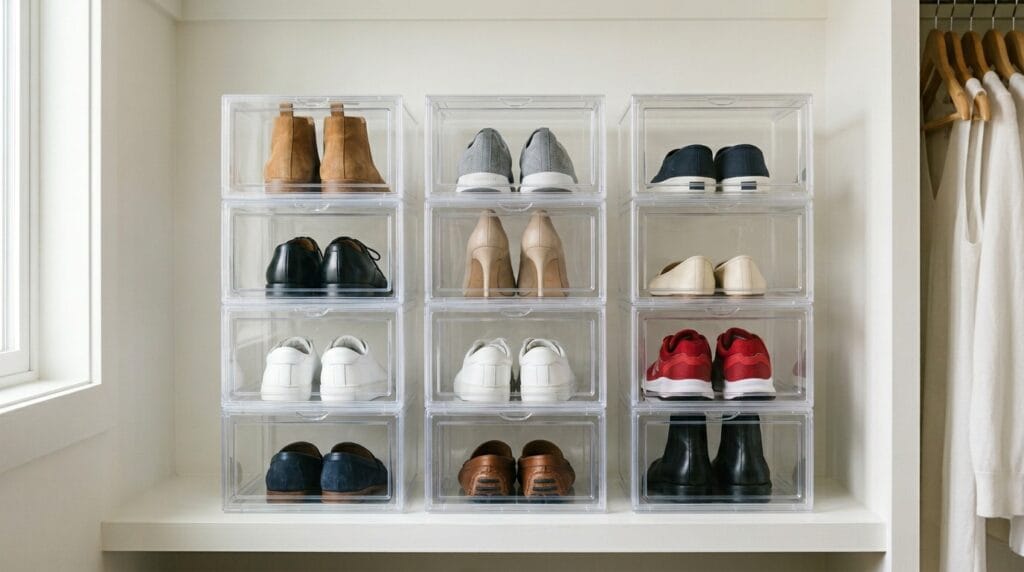
Rotating seasonal footwear in and out of a closet becomes much simpler with stackable shoe boxes. Clear-front designs let you identify contents at a glance.
Each box protects shoes from dust while keeping pairs intact. Stacking vertically also reclaims shelf space that loose shoes would otherwise waste.
03. Floating Wall Shelves
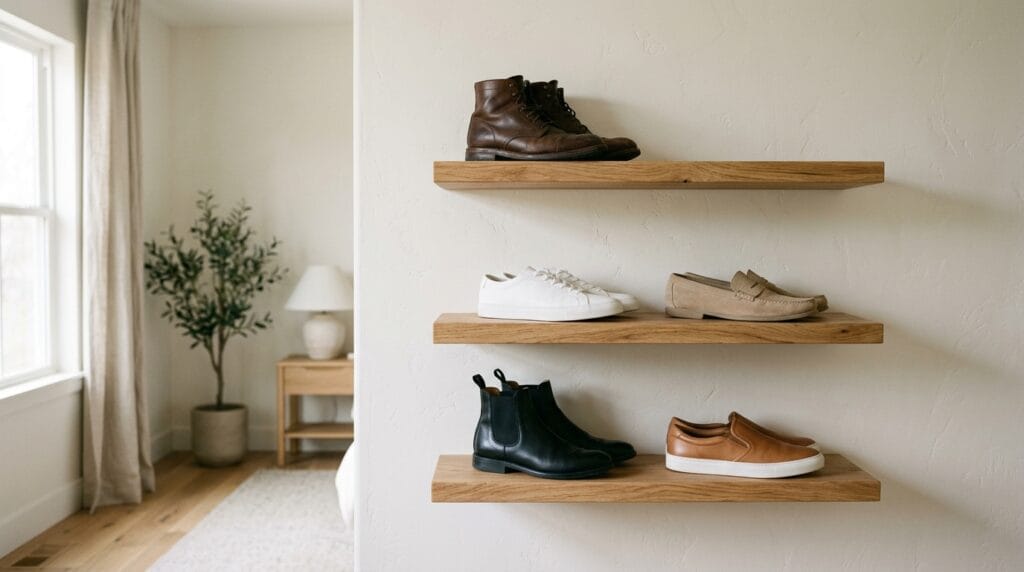
Wall-mounted shelves add visual interest to a room while solving a real storage problem. Floating wall shelves keep shoes visible, accessible, and off the floor.
Installed in a bedroom, hallway, or closet, they make use of vertical wall space that typically goes unused in small rooms.
04. Under-Bed Shoe Storage
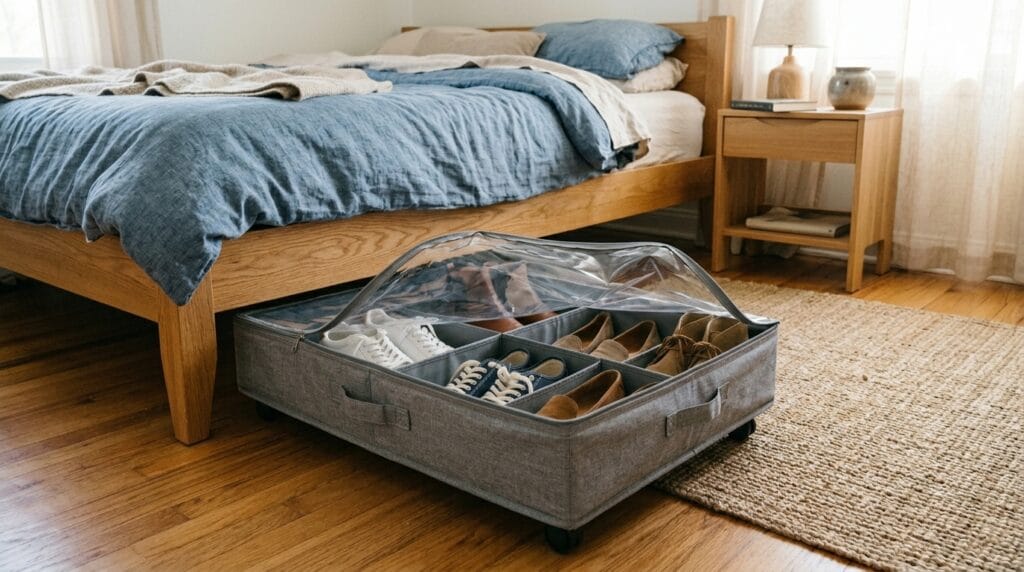
The space beneath a bed is rarely used to its full potential. Flat, rolling under-bed shoe storage drawers fit neatly beneath most bed frames.
Most designs include a zip-top cover or lid to protect footwear from dust and pet hair.
This option works especially well for seasonal shoes, boots, or pairs worn less frequently throughout the week.
05. Entryway Storage Bench
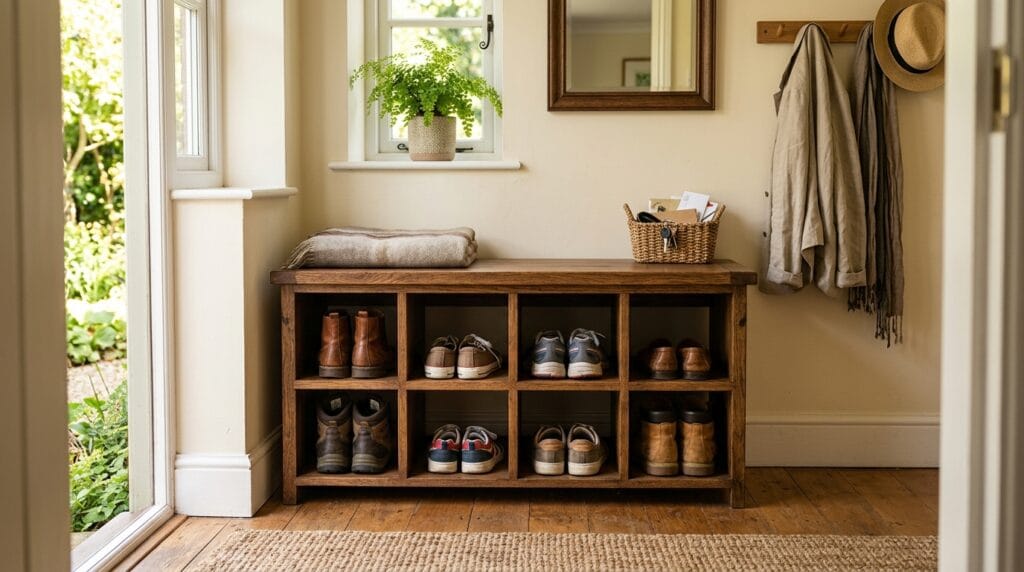
Dual-function furniture is especially useful when square footage is limited. An entryway storage bench provides a seat for putting on shoes while concealing footwear in the compartment below.
Households looking for organized entryway shoe solutions that blend with home décor often choose benches with lift-top or cubby-style storage below.
06. Slim Shoe Cabinet
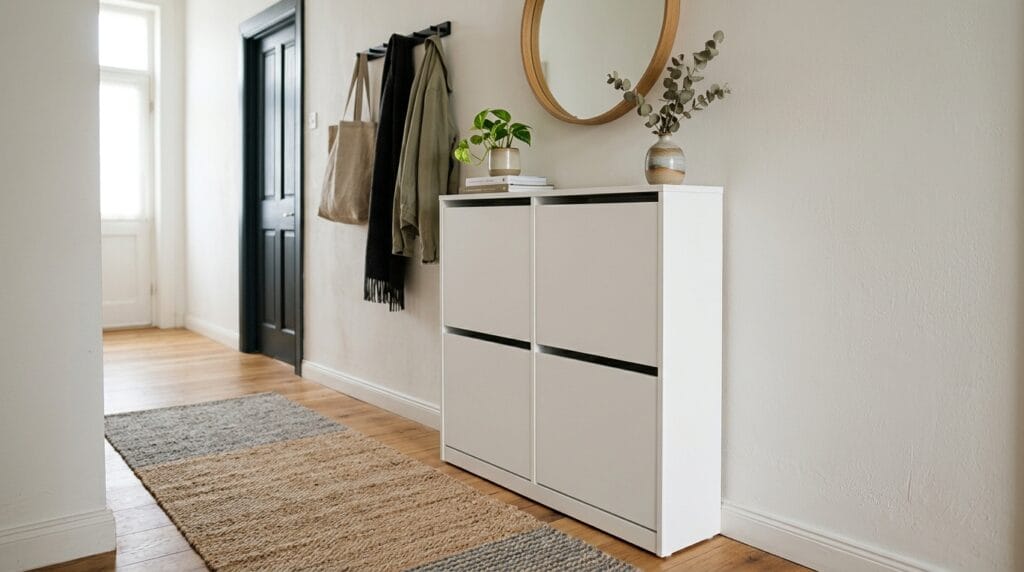
Narrow hallways rarely have room for a full shelving unit. A slim shoe cabinet conceals up to 12 pairs behind closed doors in minimal floor space.
The closed design keeps footwear hidden, making rooms appear tidier without requiring any reorganization of existing furniture.
Some models include a flip-open front panel, allowing quick access without bending down or opening standard cabinet doors.
07. Hanging Closet Shoe Organizer
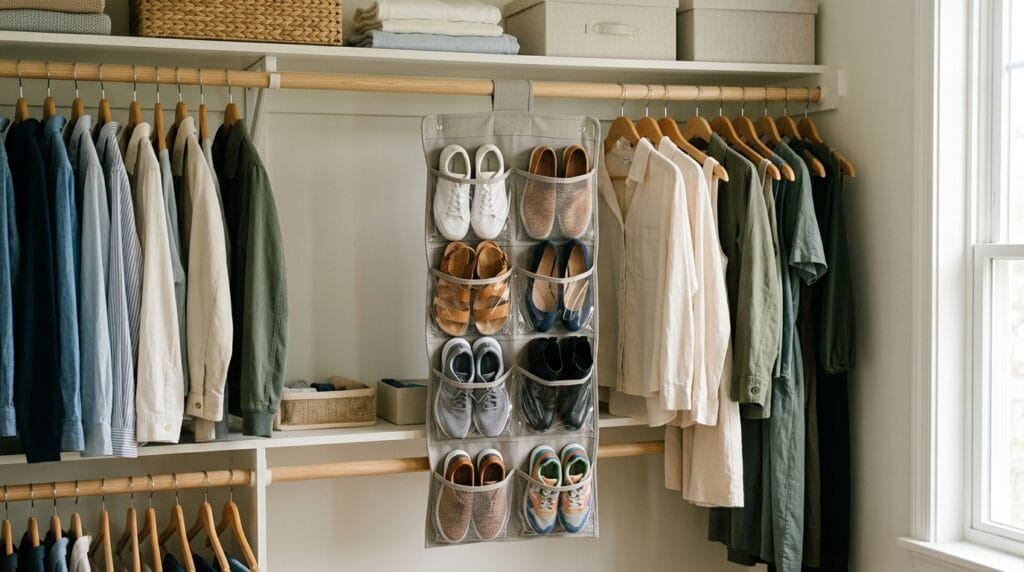
Scattered shoes across a closet floor disrupt any morning routine. A hanging closet shoe organizer moves footwear up to rod level, clearing the floor below.
For households building stronger closet shoe organization systems, hanging organizers offer a low-cost entry point that works with most standard closet setups.
08. Tiered Shoe Rack
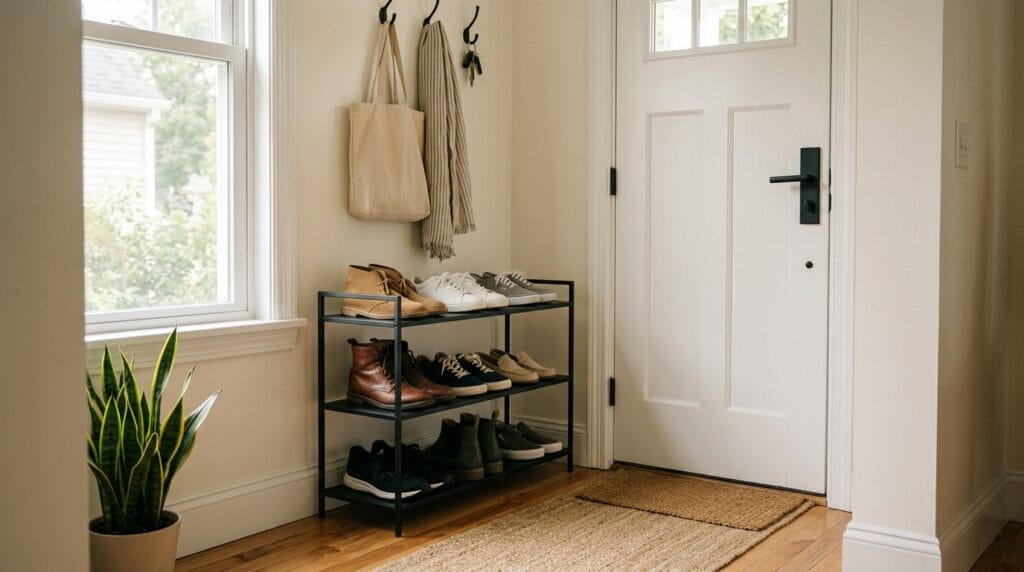
When floor space is available but limited, a tiered shoe rack uses vertical stacking to hold more pairs than a flat surface could accommodate.
Three- to five-tier models hold between 9 and 20 pairs, depending on shoe size and spacing configuration.
They work well in closets, beside entryway doors, or inside a mudroom where multiple household members store shoes daily.
09. Storage Ottoman
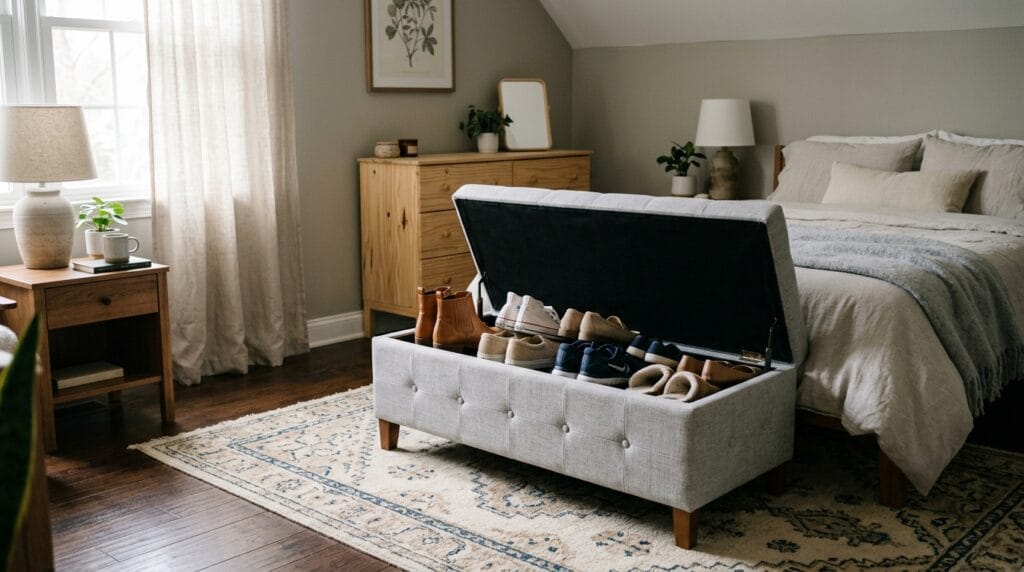
Furniture that pulls double duty is especially valuable in small living areas. A storage ottoman functions as a seat, footrest, and concealed shoe compartment all at once.
The lift-top design keeps footwear out of sight while adding a polished look to living rooms or bedroom corners.
10. Corner Shelf Unit
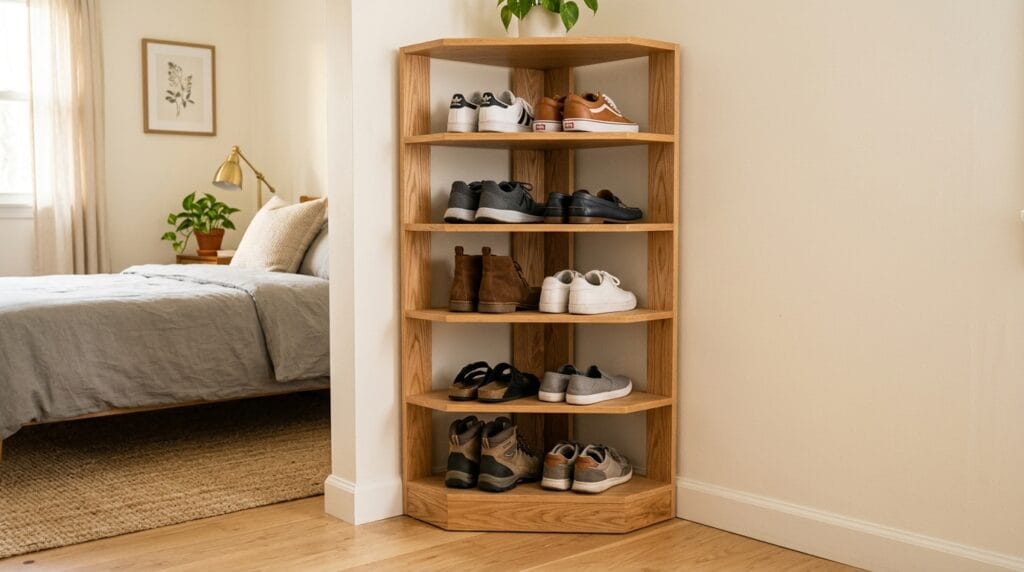
Corner areas in bedrooms and closets are often left empty simply because standard shelving does not reach them. A corner shelf unit fills that gap directly.
Triangular or L-shaped designs maximize the unused corner space, creating multiple tiers for shoes, bags, or everyday accessories.
11. Fabric Shoe Cubbies
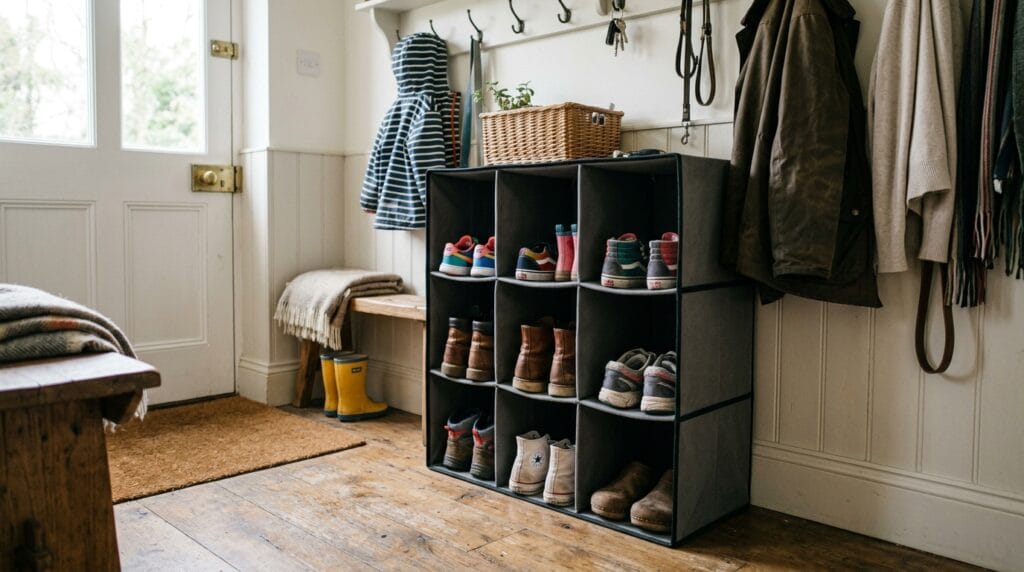
Households with children often struggle to keep shoes separated and findable in a shared space. Fabric shoe cubbies organize multiple pairs into individual, labeled compartments.
Foldable designs collapse flat when not in use, making them easy to reposition or store away during seasonal changeovers.
Cubbies work well in mudrooms, bedroom closets, or laundry areas where quick shoe access is a daily priority.
12. Rotating Shoe Tower
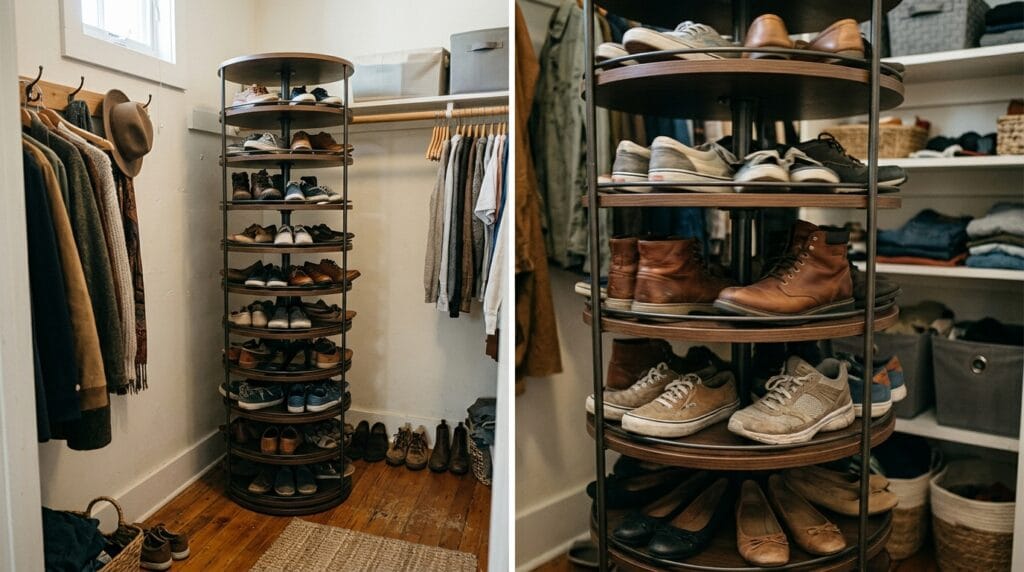
Closet height often goes unused in small homes. A rotating shoe tower reclaims that vertical space with spinning tiers that make every pair easy to reach.
Most towers accommodate between 20 and 36 pairs and stand freely in a closet corner or bedroom alcove.
The rotating function means no pair gets pushed to the back — every shoe stays within reach.
13. Shoe Tray Organizer
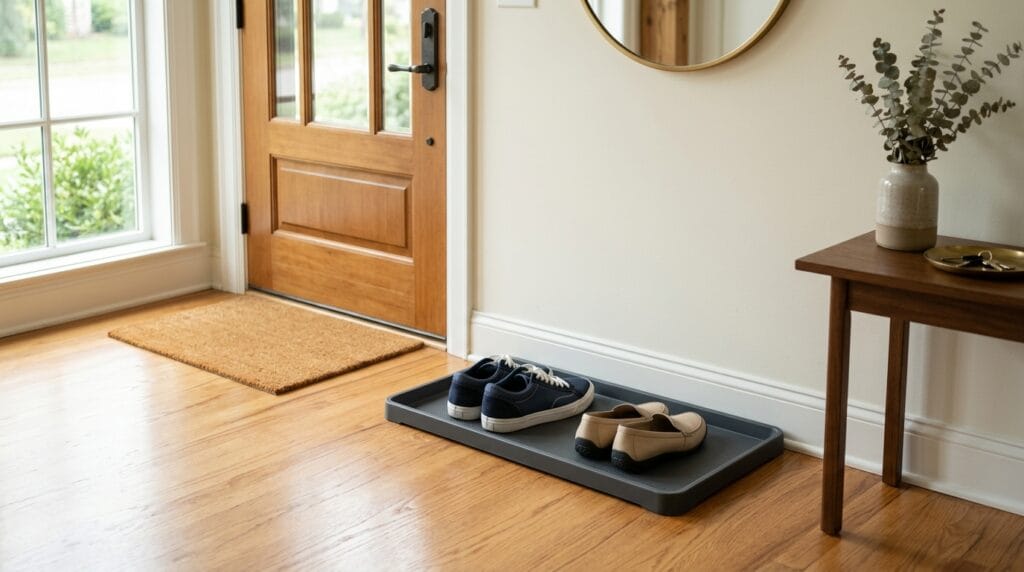
Keeping an entryway floor clean starts at the door itself. A shoe tray organizer catches dirt, debris, and moisture from shoes as they are removed.
Low-profile trays hold two to four pairs while keeping the surrounding floor area dry and presentable.
Trays with raised edges or drainage grids prevent water from spreading — useful during wet or muddy seasons.
14. Shoe Storage Bags
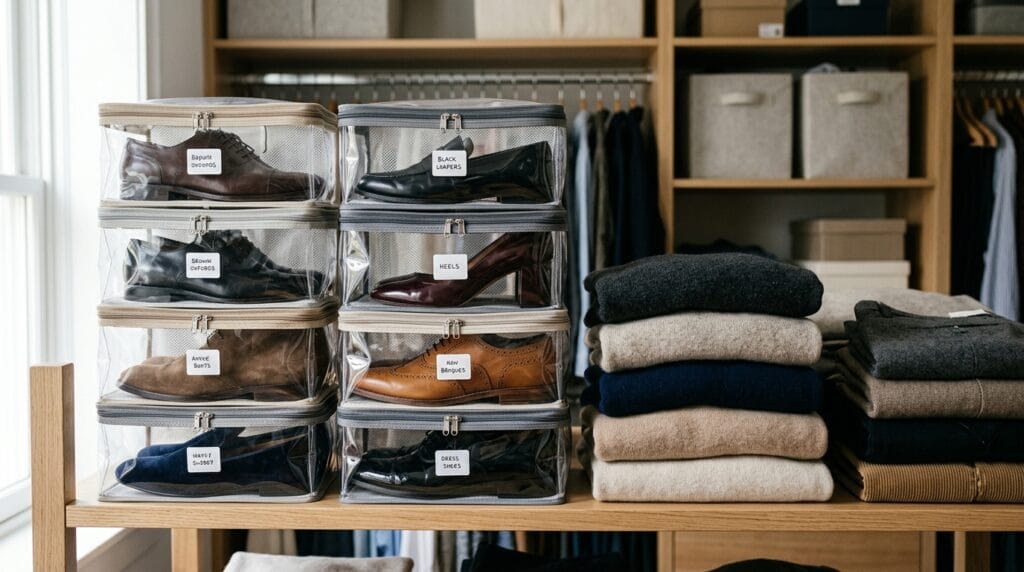
Heels, dress shoes, and special-occasion footwear often take up space without being worn regularly. Individual shoe storage bags protect and separate infrequently used pairs from daily rotation.
Transparent or mesh designs allow quick identification of contents, reducing time spent rummaging through bins or shelves.
Bags stack easily on closet shelves or in suitcases, extending their usefulness beyond everyday home organization.
15. Pegboard Wall System
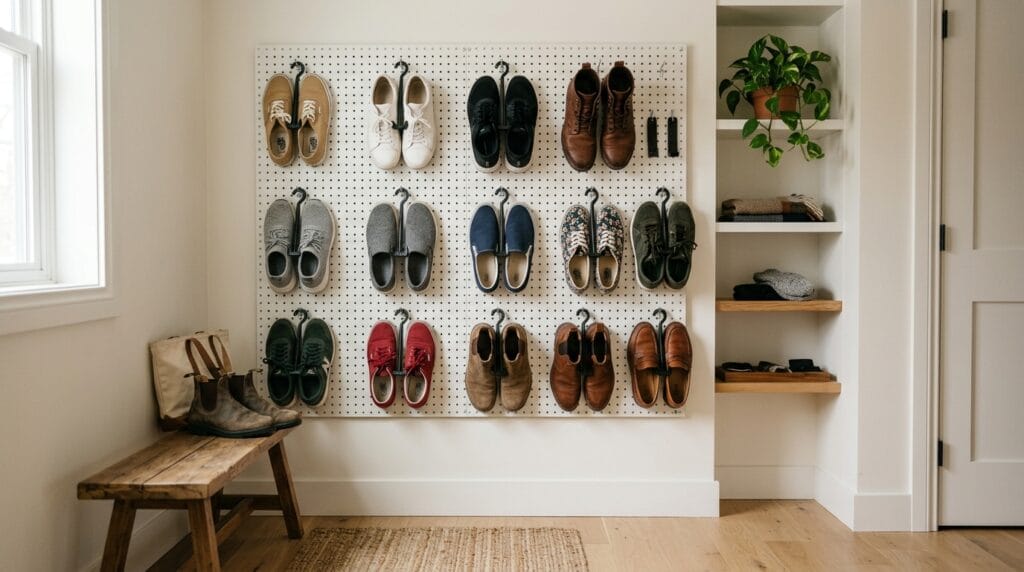
Vertical wall surfaces inside closets hold more storage potential than most people use. A pegboard wall system suspends shoes on hooks to keep floors completely clear.
Modular hook placements can be adjusted as shoe sizes or collection volumes change over time.
This solution pairs well with other wall-mounted accessories, creating a customizable system tailored to individual storage needs.
Building a Shoe Storage System That Actually Sticks
Keeping shoe storage in small spaces manageable means combining solutions that suit the layout and household routine.
Exploring budget-friendly shoe storage options alongside these ideas helps build an organized approach without overspending on a home improvement project.