Overflowing drawers make small spaces feel chaotic, even when the rest of a room looks tidy. Loose items shift around, and socks disappear within days.
Diy drawer dividers solve this without a full renovation. Cardboard, small boxes, and simple organizers create separated sections that keep everyday items visible and easy to find.
This guide covers free and low-cost dividing methods alongside ready-made organizer options for kitchens, bathrooms, closets, and desks.
In this post you’ll find:
- Free cardboard dividers built from cereal boxes and shipping materials at home.
- Fabric bins designed for soft items like socks and undergarments.
- Adjustable dividers that expand to fit drawers of nearly any width.
- Label systems that keep divided sections identifiable at a quick glance.
- Bamboo tray systems suited for kitchen utensils and cutlery separation.
- Desk drawer solutions for organizing office supplies and small tools.
This post contains affiliate links. As an Amazon Associate I earn from qualifying purchases, at no extra cost to you.
01. Cardboard Box Dividers
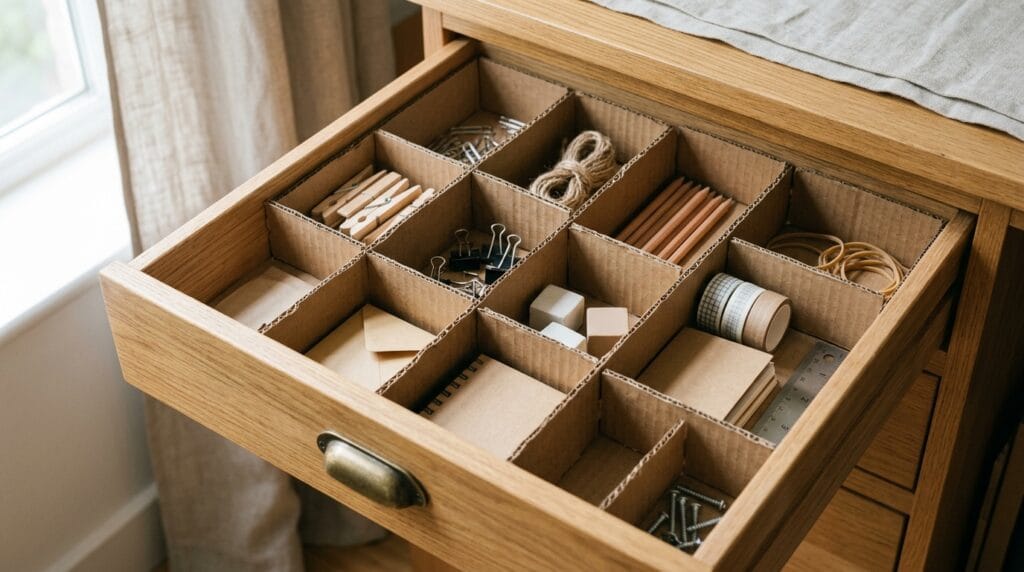
Cutting up cereal boxes or shipping cartons is the cheapest way to divide a drawer. Taped rectangles create instant boundaries between socks, cables, or kitchen tools.
This method suits anyone learning how to organize a small closet, since cardboard scraps are already on hand.
Cardboard drawer dividers can be resized freely, making this hack flexible for narrow drawers.
02. Adjustable Drawer Dividers
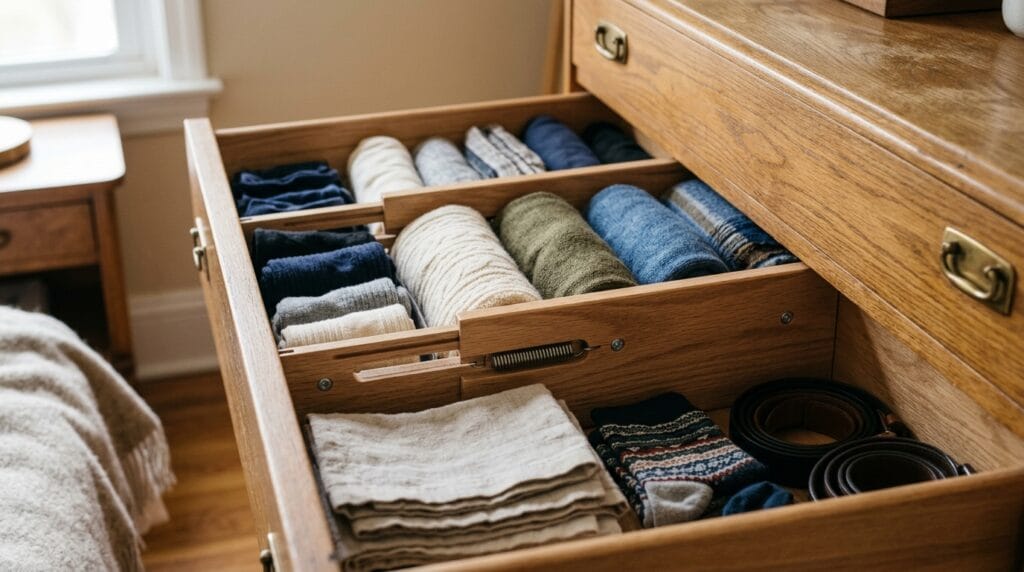
Not every drawer is the same width, which makes fixed dividers frustrating over time. Adjustable drawer dividers expand and lock into place, fitting dressers and desks without cutting anything.
Spring-loaded designs hold position under daily use, so sections stay separated even when drawers open and close repeatedly.
They suit renters especially well, since nothing gets permanently altered.
03. Bamboo Drawer Organizer Trays
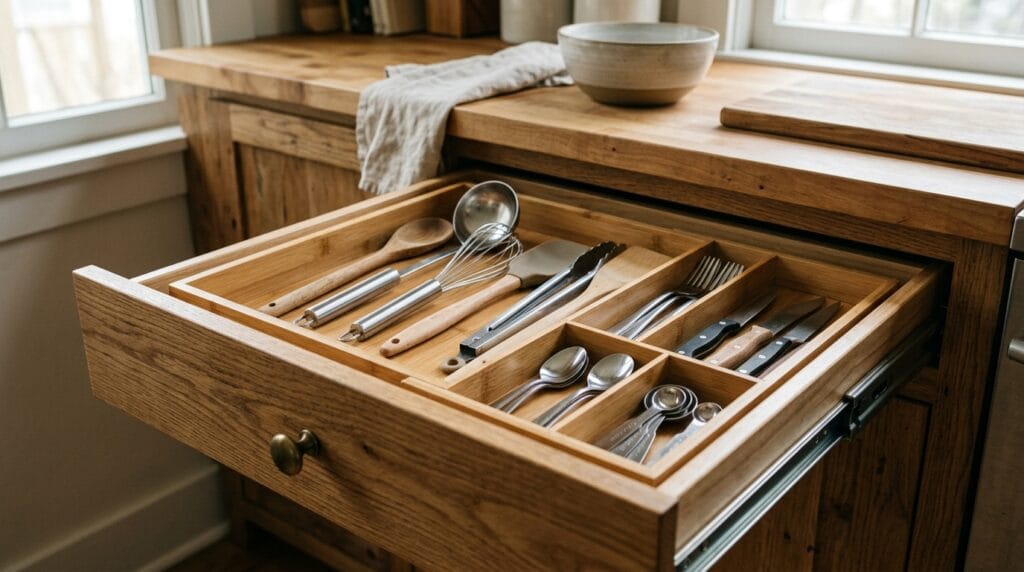
Kitchen drawers collect mismatched tools unless something keeps sections defined. Bamboo drawer organizer trays bring a natural material into that role, separating spatulas and small gadgets.
Wood grain finishes fit traditional and modern kitchens alike, avoiding the plastic look many organizers default to.
Trays lift out easily for cleaning underneath, which matters in drawers that see daily use.
04. Cutlery Trays
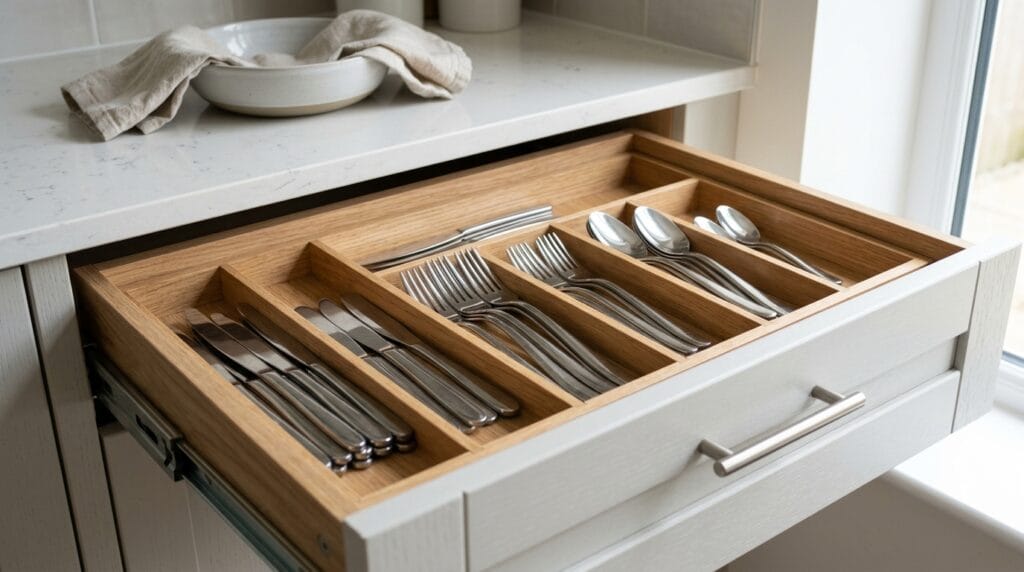
Silverware drawers without dividers turn into a tangled mess within days of unpacking. A cutlery tray separates forks, spoons, and knives into fixed compartments sized for standard flatware sets.
Some trays include a narrow section for kitchen tools like peelers or can openers, expanding their everyday usefulness.
Non-slip bases keep the tray steady when drawers open quickly.
05. Clear Storage Bins
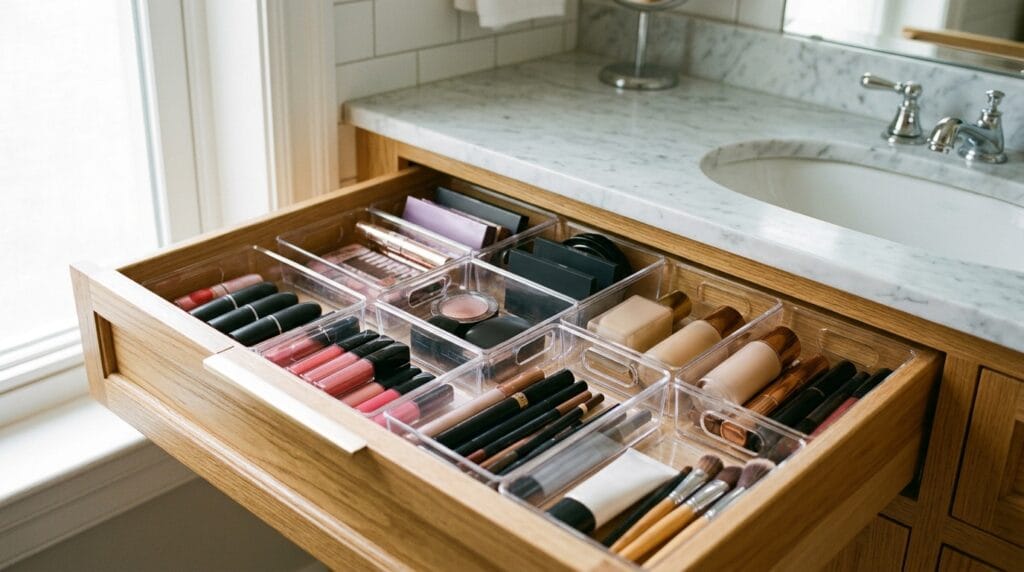
Seeing contents at a glance saves time during busy mornings. Clear storage bins placed inside deeper drawers group small items together without hiding what’s inside.
Bathroom drawers benefit especially, since cosmetics, hair accessories, and toiletries often blend without visible separation.
Stackable clear bins also work above or below drawers, extending the same system through an entire cabinet.
06. Fabric Drawer Organizers
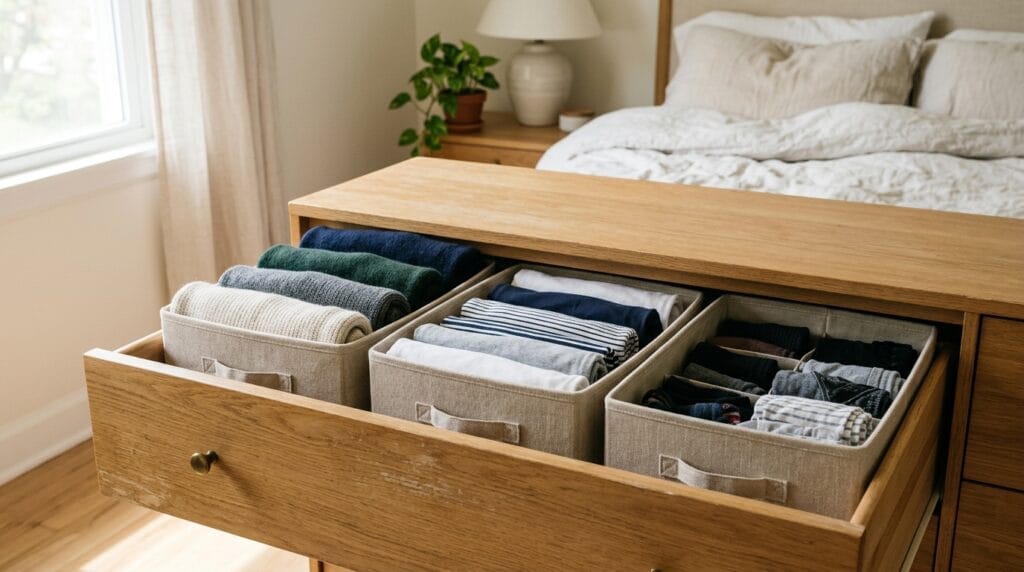
Soft, collapsible bins suit drawers holding clothing rather than hard tools. Fabric drawer organizers section off socks, underwear, and folded items without scratching wood or laminate interiors.
This approach pairs naturally with [INTERNAL LINK: compact bathroom storage strategies | small bathroom organization], since fabric bins fit vanity drawers as easily as bedroom dressers.
Machine-washable fabric keeps the system easy to maintain long-term.
07. Mesh Storage Baskets
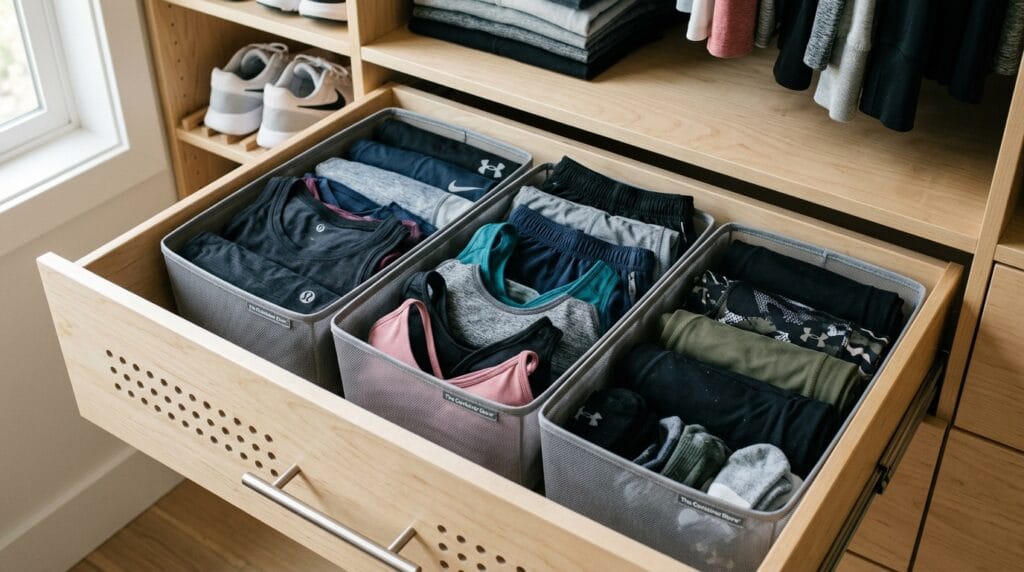
Ventilated storage matters in drawers holding damp or frequently used items. Mesh storage baskets allow airflow around swimwear, gym clothes, or cleaning cloths stored between uses.
Their open weave also makes contents visible without lifting anything out, speeding up daily routines.
Lightweight construction means baskets can be rearranged whenever drawer needs change.
08. Label Systems

Dividers only stay useful if sections remain identifiable weeks later. Label systems mark each compartment clearly, reducing the guesswork that leads to re-cluttered drawers.
Removable labels allow categories to shift as household needs change throughout the year.
This small addition keeps multi-person households from mixing up shared drawer space.
09. Expandable Drawer Organizers
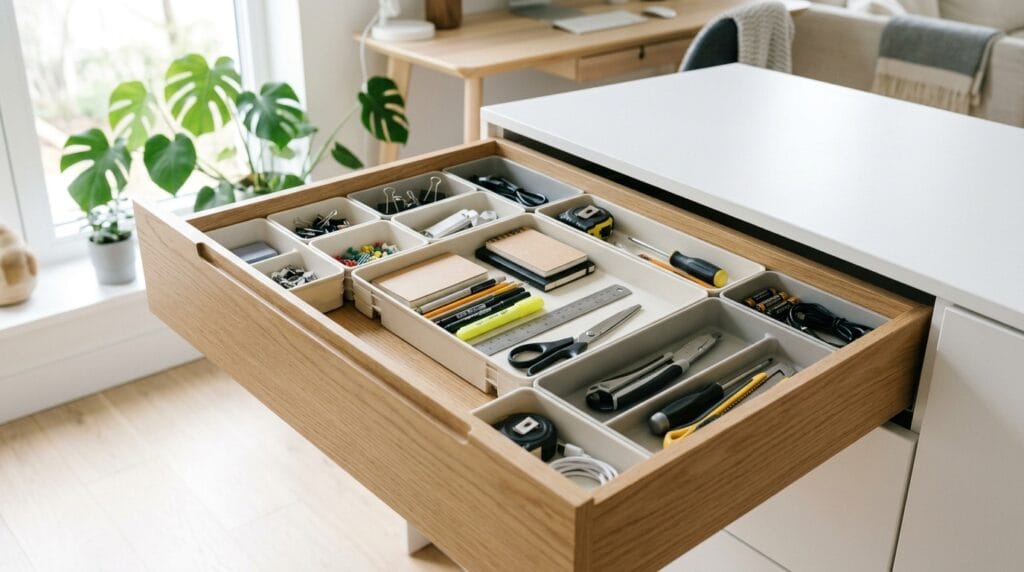
Some drawers change function over time, holding office supplies one year and craft materials the next. Expandable drawer organizers adjust to those shifts without needing full replacement.
Interlocking trays can be rearranged into new configurations whenever drawer contents change unexpectedly.
This adaptability makes them practical for multi-purpose rooms and shared workspaces.
10. Desk Drawer Organizers
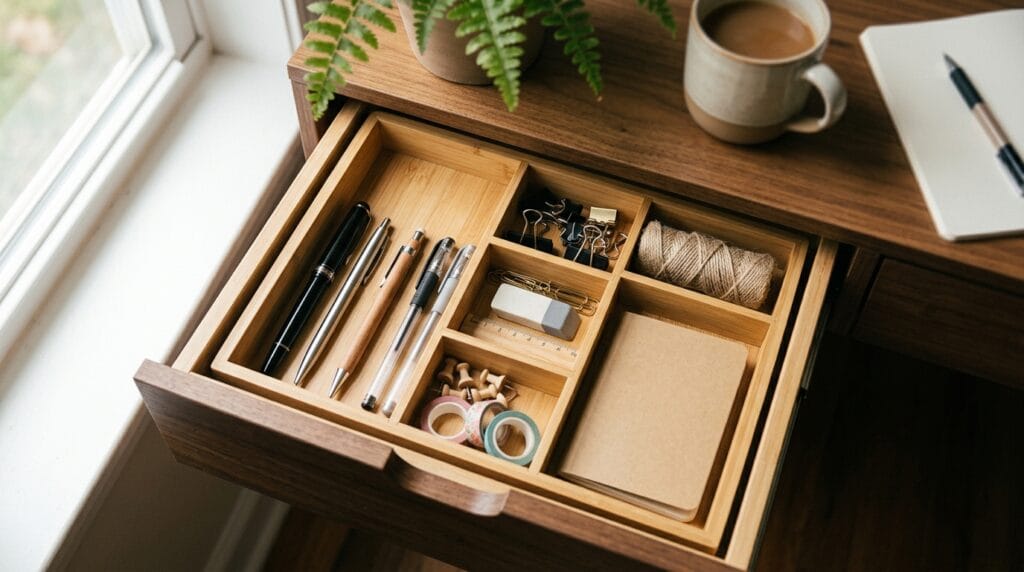
Office supplies scatter quickly without defined sections to hold them. Desk drawer organizers separate pens, sticky notes, and small tools into compartments sized for everyday desk items.
Shallow drawer depth often limits options, so slim trays work better than bulkier bin styles.
Keeping supplies sorted reduces time spent searching mid-task.
Building a More Functional Space
A workable drawer system stays simple enough to maintain without resetting constantly. Mixing free hacks with a few organizers covers most household needs affordably.
For deeper planning, drawer organizer ideas for every room can extend diy drawer dividers into one consistent home system.